Charlotte Perriand: A Pioneer of Modernist Design and Architecture
Charlotte Perriand was a visionary designer and architect who redefined the relationship between humans and their living spaces. Moving away from the ornate, handcrafted luxury of her era, Perriand embraced the machine age—a philosophy that prioritized industrial materials, functionality, and accessibility. Her journey took her from the avant-garde salons of Paris to the mountains of Savoie and the cultural landscapes of East Asia, leaving an indelible mark on modernism.
The Rise of a Modernist Talent
Perriand first gained prominence in 1927 with her Bar sous le Toit (Bar under the roof), showcased at the Salon d'Automne. This project was a recreation of her own apartment, featuring a built-in wall bar constructed from aluminium, glass, and chrome. By utilizing light-reflecting nickel-plated surfaces and steel—a medium then dominated by men—she signaled a departure from the rare woods and decorative arts common at the time.
Despite her early success, Perriand sought a more egalitarian approach to design, focusing on serial production and low-cost housing. This ambition led her to Le Corbusier. Though initially rejected with the dismissive remark, "We don't embroider cushions here," Le Corbusier was won over after visiting the Bar sous le Toit, subsequently hiring her for furniture design.
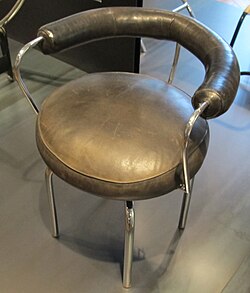
Collaboration with Le Corbusier (1927–1937)
Working alongside Le Corbusier and Pierre Jeanneret, Perriand described their partnership as being "three fingers on one hand." She was primarily responsible for interior work and the promotion of their designs through exhibitions.
In 1928, guided by Le Corbusier's belief that a chair should be a "machine for sitting," Perriand developed three distinct tubular steel chairs tailored to specific human needs:
- B301 sling back chair: Designed for conversation.
- LC2 Grand Confort chair: Designed for relaxation.
- B306 chaise longue: Designed for sleeping.
By the 1930s, Perriand's work shifted toward a more populist and egalitarian direction. She began incorporating affordable, traditional materials like cane and wood, drawing inspiration from the vernacular furniture of Savoie, where her grandparents lived. During this period, she also became active in leftist organizations and helped found the Union des Artistes Modernes.
Global Influence: Japan and Vietnam (1940–1946)
Following a period of collaboration with Jean Prouvé on metal objects and military barracks, Perriand left France in 1940 to avoid the German occupation of Paris. She traveled to Japan as an official industrial design advisor to the Ministry for Trade and Industry, where she helped Japanese industry elevate design standards for Western markets.
Her journey was interrupted by the war, leading to a forced exile in Vietnam. This period proved transformative; she studied weaving and woodwork and was deeply influenced by Eastern design philosophy. Specifically, The Book of Tea became a cornerstone of her intellectual and creative approach for the remainder of her career.
Return to Paris and Late Career
Returning to Paris in 1946, Perriand's expertise was in high demand. She collaborated again with Jean Prouvé between 1951 and 1953 and designed the interiors and kitchens for the landmark Unité d'habitation. Her portfolio expanded to include diverse projects such as the Méribel ski resort, the League of Nations building in Geneva, and the remodeling of Air France offices in Tokyo, Paris, and London.
The Les Arcs Project
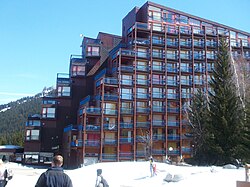
The climax of Perriand's career arrived with the development of the Les Arcs ski resort in Savoie. Working with developer Michel Rocard and a team of architects including Gaston Regairaz and Guy Rey-Millet, she integrated her interests in prefabrication, standardization, and mountain architecture.
Perriand implemented a "minimal cell" style for the rooms, acknowledging that guests spent most of their time outdoors. By standardizing "wet units" (bathrooms and kitchens), the team efficiently produced 500 inhabitable studios. The resort, which grew to 28,000 units, emphasized open spaces that connected residents with nature.
Key Facts
- Signature Style: Transitioned from industrial chrome and steel to organic wood and cane.
- Major Collaboration: Worked as part of a trio with Le Corbusier and Pierre Jeanneret.
- Key Innovation: Developed the concept of the chair as a "machine for sitting."
- Global Reach: Served as an industrial design advisor in Japan and studied traditional crafts in Vietnam.
- Architectural Peak: Designed the Les Arcs resort, focusing on standardization and minimal living cells.
| Period | Primary Focus | Key Materials/Influences | Notable Project |
|---|---|---|---|
| 1927–1937 | Modernist Furniture | Tubular steel, Chrome, Nickel | LC2 Grand Confort |
| 1930s (Late) | Populist Design | Wood, Cane, Vernacular Savoie | Union des Artistes Modernes |
| 1940–1946 | Industrial & Eastern Design | Woodwork, Weaving, Zen philosophy | Japanese Ministry for Trade |
| 1946–1982 | Architecture & Urbanism | Prefabrication, Standardization | Les Arcs Resort |
Frequently Asked Questions
What was the "machine for sitting" concept?
This was a principle adopted from Le Corbusier, suggesting that furniture should be designed as a functional tool. Perriand applied this by creating three different chairs—the B301, LC2, and B306—each specifically engineered for a different activity: conversation, relaxation, and sleeping.
How did Perriand's materials change over time?
Early in her career, she favored industrial materials like aluminium, chrome, and tubular steel to represent the machine age. Later, she shifted toward more affordable and traditional materials such as wood and cane to make her designs more accessible and egalitarian.
What impact did Asia have on her work?
During her time in Japan and Vietnam, Perriand studied traditional woodwork and weaving. She was particularly influenced by The Book of Tea, which integrated Eastern philosophies of simplicity and nature into her subsequent designs.
What is the significance of the Les Arcs project?
Les Arcs is considered the climax of her career because it synthesized her interests in industrialization, prefabrication, and mountain architecture. It demonstrated how standardization (especially in kitchens and bathrooms) could allow for the rapid creation of high-quality, functional housing.
Who were her primary collaborators?
Her most famous collaboration was with Le Corbusier and Pierre Jeanneret. She also had a significant and recurring professional relationship with the metalworker and designer Jean Prouvé.