French Architecture: A Journey Through Styles and Eras
French architecture is a rich tapestry of design, encompassing styles that originated within the borders of France and others that were imported and refined over centuries. From the imposing stone walls of Romanesque cathedrals to the sleek lines of modernism, the evolution of French building reflects the nation's political shifts, artistic ambitions, and global influence.
Key Facts
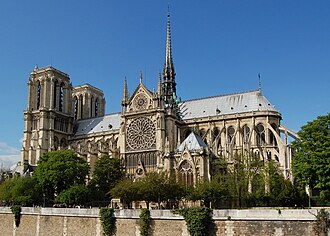
- Gothic Innovation: France pioneered the pointed arch and flying buttress, allowing for taller walls and more light.
- The Mansard Roof: A hallmark of the Second Empire style, this trapezoidal roof maximizes attic living space.
- Global Reach: French architectural influence extended to North America, the Caribbean, and Southeast Asia through colonial expansion.
- Beaux-Arts: This grandiose style, originating from the École des Beaux Arts, heavily influenced American architecture between 1880 and 1920.
- Modernist Pioneers: Architects like Le Corbusier redefined 20th-century living with functionalist designs.
Ancient and Early Medieval Foundations
Gallo-Roman Period
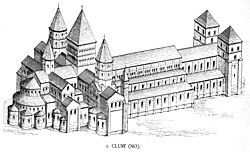
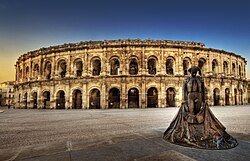
The roots of French architecture lie in the Gallo-Roman era. Notable survivors include the Maison Carrée in Nîmes and the Alyscamps in Arles. The latter is a massive Roman necropolis (ancient cemetery) that remained famous through the Middle Ages, mentioned in the works of Dante and Ariosto.
Pre-Romanesque and Merovingian Influence
With the unification of the Frankish kingdom under Clovis I, there was a surge in the construction of monastery churches. While many were timber-built in the East, stone was preferred in the West. A key Frankish innovation was the placement of the saint's sarcophagus or reliquary axially behind the altar to be visible to the congregation, a feature not found in Roman precedents.
The Great Cathedral Eras: Romanesque and Gothic
Romanesque Architecture
Romanesque style is characterized by sturdy walls and rounded arches. The Saint-Étienne in Caen served as a prototype for later Gothic facades. Other examples, such as the cathedral at Le Puy-en-Velay, utilized polychrome brick and blind arcades, while Angoulême Cathedral focused on dressed stone and figurative sculpture.
The Gothic Evolution
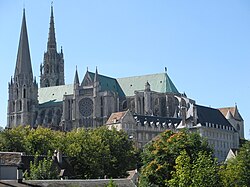
Prevailing from 1140 to 1500, French Gothic architecture evolved through four distinct phases: Early, High, Rayonnant, and Flamboyant. The transition began with the adoption of the pointed arch and the invention of flying buttresses—external supports that allowed walls to reach unprecedented heights.
Early Gothic structures, like the Abbey Church of St Denis, utilized four-tier walls (arcade, gallery, triforium, and clerestory). High Gothic, seen in Chartres and Amiens Cathedrals, streamlined this to three tiers and refined the rib vault from six ribs to four to enhance the upward visual thrust.
Renaissance, Baroque, and Rococo
The French Renaissance
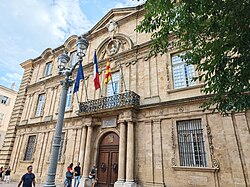
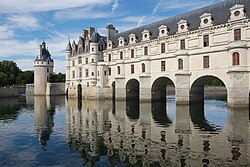
In the 16th century, wars in Italy brought Renaissance ideals to France. This led to a building boom in the Loire Valley, exemplified by the Château d'Amboise. The style later evolved into French Mannerism (the Henry II style), with architects like Philibert Delorme and Pierre Lescot integrating Italian influences into structures like the Louvre.
The Baroque and the "Magnificent Manner"
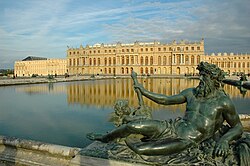
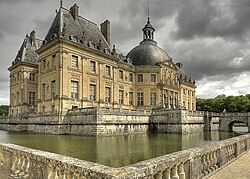
French Baroque, spanning the reigns of Louis XIII to Louis XV, moved toward a sober, classicizing direction. The Palais du Luxembourg established the three-wing layout, emphasizing the central corps de logis (main residential block). François Mansart further refined this by reconciling academic precision with French tradition at the Château de Maisons.
The era culminated in the "Magnificent Manner," where architecture and landscape merged. At Vaux-le-Vicomte, the collaboration between architect Louis Le Vau and gardener André Le Nôtre transformed the surrounding environment into a series of expansive vistas.
Rococo
By the 1730s, the Rococo style emerged, blending Baroque complexity with asymmetric compositions and Eastern-inspired designs. This decorative style extended beyond buildings into furniture, painting, and sculpture, eventually spreading to Germany and Austria.
Neoclassicism and the Second Empire
The Return to Antiquity
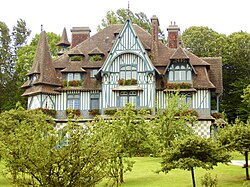
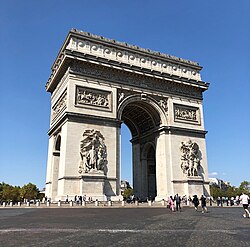
Neoclassicism arrived in two phases: the "Louis XVI style" and the later "Empire" style, characterized by the severe, astylar (column-less) Arc de Triomphe. While the Greek Revival was less popular in France than in other European capitals, it briefly flourished during the Second Empire via the Neo-Grec movement.
The Second Empire and Beaux-Arts
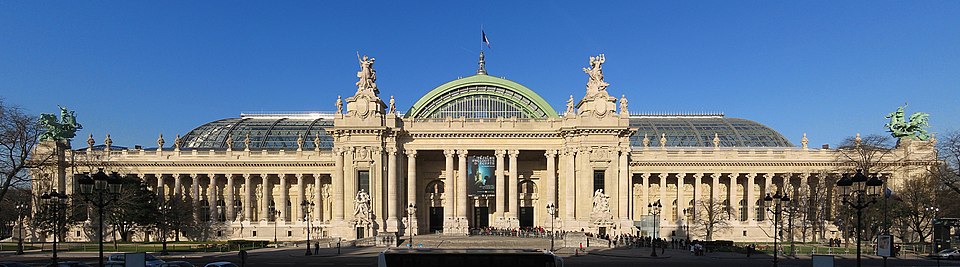
Under Napoleon III, Paris was transformed with imposing buildings featuring paired columns and the iconic mansard roof—a steep, trapezoidal roof that increases usable attic space. Simultaneously, the Beaux-Arts style emerged from the École des Beaux Arts, utilizing symmetrical facades and lavish stone ornamentation, which later became a dominant influence in the United States.
Colonial and Regional Variations
French Colonial Architecture
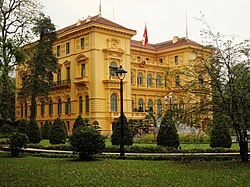
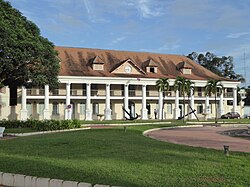
From the 17th to the 19th century, France exported its architectural grandeur to Quebec, Haiti, Senegal, and French Guiana. Massive structures modeled after Versailles were built in cities like Quebec City and Cap-François.
French Creole Style
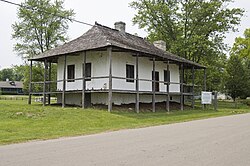
In the Mississippi Valley and Louisiana, a unique French Creole style developed. Designed for hot, humid climates, these homes featured:
- Raised living quarters to avoid flooding.
- Wide porches called "galleries" that served as hallways.
- Bousillage (a mix of mud, moss, and animal hair) for wall infill.
- Hipped roofs extending over the porches.
Modernism and Contemporary Design
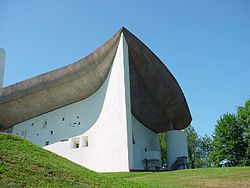
In the 20th century, France became a hub for modernist experimentation. Le Corbusier was a pivotal figure, known for the Villa Savoye and the Notre Dame du Haut. Other influential contemporary architects include Jean Nouvel, whose Institut du Monde Arabe showcases a blend of modern technology and traditional motifs.
| Era/Style | Key Characteristics | Notable Example |
|---|---|---|
| Romanesque | Rounded arches, thick walls, sturdy towers | Saint-Étienne, Caen |
| Gothic | Pointed arches, flying buttresses, ribbed vaults | Notre-Dame de Paris |
| Renaissance | Italian influence, symmetry, Loire Valley châteaux | Château d'Amboise |
| Baroque | Colossal orders, integrated gardens, symmetry | Palace of Versailles |
| Second Empire | Mansard roofs, paired columns, grandeur | Parisian townhouses |
| Beaux-Arts | Symmetrical stone facades, lavish ornamentation | Grand Palais |
| Modernist | Functionalism, concrete, open plans | Villa Savoye |
Frequently Asked Questions
What is a mansard roof?
A mansard roof is a four-sided gambrel-style hip roof characterized by two slopes on each side, with the lower slope being much steeper than the upper one. This design allows for more usable living space in the attic.
How did Gothic architecture change the way churches were built?
Gothic architecture introduced the pointed arch and flying buttresses, which shifted the structural load away from the walls. This allowed builders to create much taller buildings with thinner walls and larger windows, filling the interiors with light.
What defines the French Creole architectural style?
French Creole architecture is a blend of French, Caribbean, Spanish, and African influences. It is characterized by raised living quarters, wide porches (galleries) used as passageways, and the use of bousillage for wall construction to suit hot, wet climates.
What was the influence of the École des Beaux Arts?
The École des Beaux Arts promoted a grandiose, neoclassical style featuring symmetrical facades and lavish stone carvings. This style was highly influential in the United States from 1880 to 1920, particularly for public buildings and wealthy residences.
Who was Le Corbusier and why is he important?
Le Corbusier was a pioneering modernist architect who advocated for functionalism and the use of reinforced concrete. His works, such as the Villa Savoye, fundamentally changed 20th-century urban planning and residential design.