Charles University: A Legacy of Academic Excellence in Prague
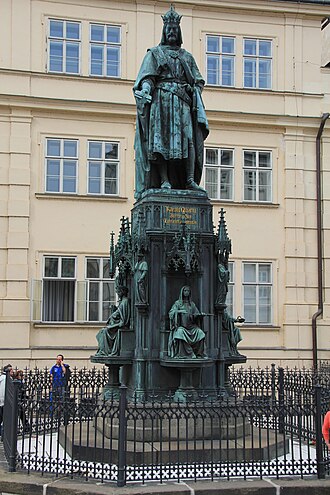
Founded in the heart of Bohemia, Charles University (Latin: Universitas Carolina) stands as one of the oldest and most prestigious institutions of higher learning in the world. Established on January 26, 1347, this public university has served as a beacon of intellectual growth in Prague for over six centuries, evolving from a medieval center of learning into a modern research powerhouse.
The university's journey is inextricably linked to the history of the Czech Republic and Central Europe, weathering political shifts, religious reforms, and national awakenings to maintain its status as a leading global academic institution.
Key Facts
- Established: January 26, 1347
- Location: Prague, Czech Republic
- Student Population: 51,438 (including 32,520 undergraduates)
- Academic Staff: 4,057 faculty members
- Budget: CZK 8.9 billion
- National Rank: 1st in the Czech Republic (ARWU, QS, THE)
Historical Evolution
The Medieval Foundation (1349–1419)
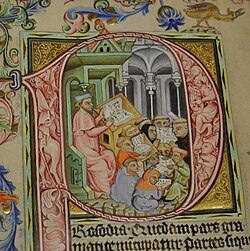
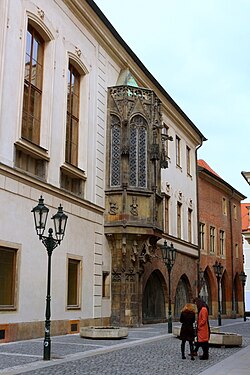
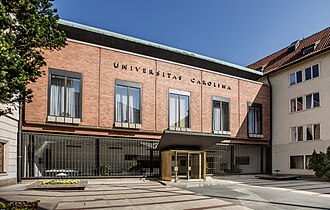
The university's early years were defined by the vision of Emperor Charles IV. The first graduate was promoted in 1359, and lectures were primarily held in colleges. The most notable of these was the Carolinum, established in 1366, which remains a symbolic center of the university today. By 1372, the Faculty of Law had achieved independence as a university entity.
From Protestant Academy to Imperial University
Between 1419 and 1622, the institution functioned as a Protestant academy. Following this period, it became known as the Charles-Ferdinand University (1622–1882), reflecting the influence of the Habsburg dynasty.
The Great Split and Modern Reunification
In 1882, the institution split into two separate entities: a Czech university and a German university. This division lasted until the mid-20th century. In 1920, the Lex Mareš (named after Professor František Mareš) officially designated the Czech university as the legal successor to the original foundation, reclaiming the name Charles University. The other entity became the German University in Prague.
Academic Structure and Organization
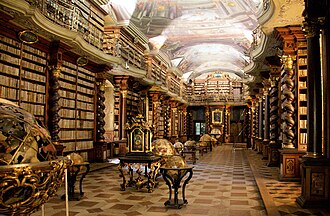
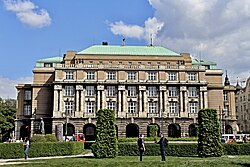
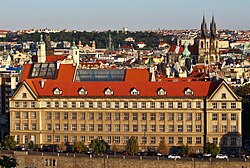
Today, Charles University operates as a comprehensive urban campus with a vast array of faculties and specialized research centers. Its organizational structure is designed to cover the full spectrum of human knowledge.
Faculties
The university comprises numerous faculties, including:
- Theology: Catholic, Protestant, and Hussite Theological Faculties.
- Medicine: First, Second, and Third Faculties of Medicine, as well as faculties in Plzeň and Hradec Králové, and a Faculty of Pharmacy.
- Law and Arts: The Faculty of Law and the Faculty of Arts.
- Sciences: Faculty of Science, Faculty of Mathematics and Physics.
- Humanities and Social Sciences: Faculty of Education, Faculty of Social Sciences, Faculty of Humanities, and Faculty of Physical Education and Sport.
Research and Innovation
Beyond traditional teaching, the university manages several academic institutes and joint research centers with the Czech Academy of Sciences, such as BIOCEV and the Center for Theoretical Study. It also fosters entrepreneurship through subsidiary companies like Charles Games (video game development) and GeneSpector (medical diagnostics).
Global Standing and Rankings
Charles University consistently ranks as the top institution in the Czech Republic and holds a prominent position in Eastern Europe. It is a member of prestigious networks including the 4EU+ Alliance and the Coimbra Group.
| Ranking Body | Global Rank / Range | Regional/National Rank | Year |
|---|---|---|---|
| QS World | =265 | #1 National | 2026 |
| USNWR Global | 226 | - | 2023 |
| CWTS World | 197 | - | 2022 |
| ARWU World | 301–400 | #1 National | 2025 |
| THE World | 401–500 | #1 National | 2024 |
Notable Alumni and Academics
The university has been the intellectual home to some of history's most influential figures. Its alumni list spans from theologians like Jan Hus to world-renowned writers such as Franz Kafka and Milan Kundera. In the realm of science and politics, the university counts Albert Einstein (academic), Jaroslav Heyrovský (Nobel laureate in Chemistry), and Tomáš Masaryk (first president of Czechoslovakia) among its distinguished associates.
The University Insignia
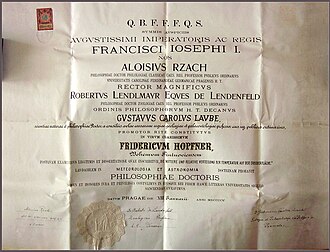
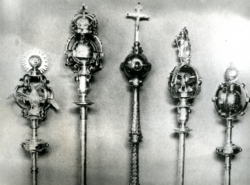
The university's insignia—including the scepters of the Rector and various faculties—represent its authority and tradition. These items have historically been a point of contention and significance, symbolizing the university's continuity and legal identity.

Frequently Asked Questions
When was Charles University founded?
Charles University was established on January 26, 1347, making it one of the oldest universities in the world.
What is the Karolinum?
The Karolinum is the oldest building of Charles University, dating back to the 14th century, and serves as the university's historic center.
How does the university rank nationally?
Charles University is consistently ranked 1st in the Czech Republic across major ranking systems, including ARWU, QS, and THE.
Who are some of the most famous alumni?
Notable alumni include writer Franz Kafka, poet Rainer Maria Rilke, and former Czechoslovak president Edvard Beneš.
Does the university engage in commercial activities?
Yes, the university has several subsidiary companies, including Charles Games for video game development and GeneSpector for medical diagnostic kits.