Catholic Emancipation: The Struggle for Religious Equality in the UK and Colonies
Catholic emancipation, also known as Catholic relief, was a prolonged political and legal process in the United Kingdom during the late 18th and early 19th centuries. Its primary goal was the systematic removal of restrictions placed upon Roman Catholics by a series of discriminatory laws, including the Act of Uniformity, the Test Acts, and the penal laws.
For decades, Roman Catholics faced severe burdens, including requirements to abjure—or formally renounce—the spiritual and temporal authority of the pope as well as the doctrine of transubstantiation. The journey toward equality was not a single event but a gradual dismantling of these barriers, culminating in landmark legislation that reshaped the political landscape of Britain and Ireland.
Key Facts
- The Roman Catholic Relief Act 1829 was the most significant measure in removing substantial restrictions on Catholicism in the UK.
- Daniel O'Connell led the campaign for emancipation through the Catholic Association.
- The Bill of Rights 1689 and Act of Settlement 1701 established that the British monarch cannot be a Roman Catholic.
- Early relief efforts began as early as 1766, with the Papists Act 1778 allowing Catholics to own and inherit land.
- Emancipation in colonies like Canada and Newfoundland followed different timelines and legal paths than in the UK.
The Era of Historic Restrictions
The legal framework restricting Catholics was designed to maintain a Protestant state. The Bill of Rights 1689 explicitly stated that it was inconsistent with the safety of the kingdom to be governed by a "Papist Prince," requiring the monarch to swear an oath to maintain the Protestant religion.
While many restrictions were eventually lifted, the monarchy remained a notable exception. To this day, a Roman Catholic heir can only inherit the throne by changing their religious allegiance. However, the Succession to the Crown Act 2013 modernized these rules by allowing heirs to marry Roman Catholics without losing their place in the line of succession.
The Path to Relief: 1766–1800
The dismantling of the penal laws began in 1766. In the colonies, the Quebec Act 1774 reduced restrictions for Catholics in Canada, though this was viewed unfavorably by the Thirteen Colonies, who labeled it one of the "Intolerable Acts."
In Great Britain and Ireland, the Papists Act 1778 allowed Catholics to own property and inherit land, provided they renounced Stuart claims to the throne and the pope's civil jurisdiction. This move sparked violent backlash, including the Gordon Riots in London in 1780.
Further progress followed with the Roman Catholic Relief Act 1781, which permitted the establishment of Catholic schools and bishops, and the Act of 1791, which allowed the free practice of the faith under certain restrictions. By 1793, the Irish Parliament extended the right to vote to Catholics holding land with a rental value of £2 per year, opening doors to the legal profession, universities, and the lower ranks of the judiciary and army.
The Act of Union and the Napoleonic Influence
When Great Britain and Ireland merged under the Act of Union 1800, full political emancipation was omitted to avoid opposition from Irish Protestants. However, the geopolitical climate shifted during the Napoleonic Wars. The significant number of Irish Catholics serving in the British army led to the granting of freedom of worship for soldiers in 1811.
This military contribution influenced the 1st Duke of Wellington, a Dublin-born Anglo-Irish Protestant, who eventually shifted his stance to support emancipation.
The 1820s: Daniel O'Connell and the Turning Point
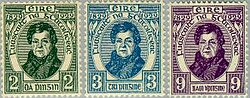
In 1823, Daniel O'Connell galvanized the movement by founding the Catholic Association. His victory in the 1828 County Clare by-election created a constitutional crisis: O'Connell had been elected by the people but was legally barred from taking his seat in the House of Commons.
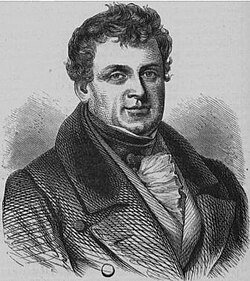
Public opinion in Britain shifted decisively in favor of emancipation during this period. While the House of Lords and King George IV remained opposed, the fear of a religious civil war in Ireland and the pressure from the Whigs forced a change. The Sacramental Test Act 1828 first removed requirements for public officials to belong to the established Church.
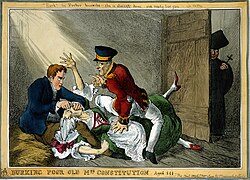
Finally, the Roman Catholic Relief Act 1829 was passed, removing the most substantial remaining restrictions. To offset the political shift, the government increased the minimum property qualification for voters from £2 to £10 per annum, effectively disenfranchising many poorer Catholics. Despite this, the Act allowed O'Connell to be re-elected and finally take his seat in Westminster.
Global and Colonial Perspectives
Emancipation in Canada and Newfoundland
In Canada, Catholics in Quebec enjoyed "grandfathered" religious freedoms. In other Atlantic provinces, restrictions lasted until 1823, when Laurence Kavanagh became the first English-speaking Roman Catholic to serve in a legislature in that region.
Newfoundland's experience was more volatile. Despite a large Catholic population, the 1829 Relief Act was initially ruled inapplicable to the colony because its laws were governed by royal prerogative rather than parliamentary statute. It was not until May 1832 that Governor Thomas John Cochrane was commissioned to remove Catholic disabilities in Newfoundland.
European Comparisons
The UK's process mirrored other European struggles, such as the dechristianisation of France (1790–1801) and the Kulturkampf in Germany during the 1870s. In Ireland, however, the resistance remained potent through the Orange Order, who famously claimed that "Home Rule was Rome Rule."
Summary of Key Legislation
| Year | Act/Event | Primary Impact |
|---|---|---|
| 1778 | Papists Act | Allowed ownership and inheritance of land. |
| 1793 | Relief Act (Ireland) | Extended voting rights to land-holding Catholics. |
| 1828 | Sacramental Test Act | Removed Church membership requirements for public officials. |
| 1829 | Roman Catholic Relief Act | Removed most substantial restrictions on Catholicism in the UK. |
| 1926 | Roman Catholic Relief Act | Removed almost all remaining disabilities (except monarchy). |
| 2013 | Succession to the Crown Act | Allowed marriage to Catholics without losing succession rights. |
Frequently Asked Questions
Why was the 1829 Act considered the "chief moment" of emancipation?
It removed the most substantial legal barriers preventing Roman Catholics from participating in the highest levels of government and the judiciary, and it allowed leaders like Daniel O'Connell to finally take their seats in Parliament.
Can a Roman Catholic become the British monarch?
No. Under the Bill of Rights 1689 and the Act of Settlement 1701, the monarch must not be a Catholic. An heir who is Catholic must change their religious allegiance to inherit the throne.
What was the role of the Catholic Association?
Founded by Daniel O'Connell in 1823, the Association organized a mass campaign for political rights, using electoral pressure and public mobilization to force the British government to grant emancipation.
How did the 1829 Act affect voting rights for the poor?
While it granted political rights to Catholics, it simultaneously raised the property qualification for voting from £2 to £10 per year, which significantly reduced the number of people eligible to vote.
Why did emancipation take longer in Newfoundland?
Local courts initially ruled that the 1829 Act did not apply to Newfoundland because the colony was governed by royal prerogative rather than the specific parliamentary statutes that the Act had repealed.