Kingdom of Ireland
The Kingdom of Ireland (Irish: Ríocht na hÉireann) existed as a formal political entity from 1542 to 1800. For much of its duration, it functioned as a dependency—first of England (1542–1707) and subsequently of Great Britain (1707–1800). While it was technically a kingdom in a personal union with the English and British crowns, meaning it shared the same monarch, it was effectively administered as a subordinate state from Dublin Castle.
The administration was led by a viceroy known as the Lord Lieutenant of Ireland. By the late 17th century, power was concentrated in the hands of the Protestant Ascendancy, a minority of Anglo-Irish Protestants who dominated the government, the parliament, and the state church.
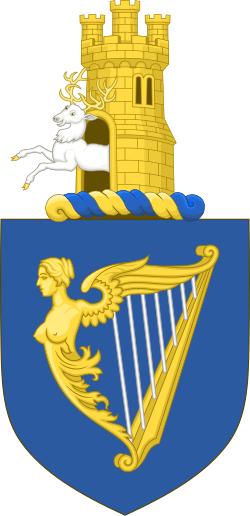
Key Facts
- Duration: 1542 to 1800.
- Status: Dependency of England, then Great Britain.
- Capital: Dublin.
- State Religion: Anglican (Church of Ireland), though the majority of the population remained Catholic.
- Key Legislation: The Crown of Ireland Act 1542 established the kingdom; the Act of Union 1800 dissolved it.
- Governance: Unitary parliamentary constitutional monarchy.
Foundations and the Tudor Conquest
The roots of the kingdom lay in the 1177 Lordship of Ireland, established by King Henry II following the Anglo-Norman invasion. For centuries, English rule was limited to the Pale, a small area around Dublin. Much of the island remained under the control of Gaelic nobles who operated independent principalities.
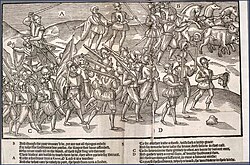
This changed in 1542 with the Crown of Ireland Act, which declared Henry VIII the "King of Ireland." This move theoretically elevated Ireland to a status coequal with England. However, this transition sparked decades of conflict, including the Desmond Rebellions and the Nine Years' War. By the early 17th century, the Tudor conquest was complete, resulting in the widespread confiscation of land from native Catholics to make way for Protestant settlers from Britain.
The Role of Education and Intelligence
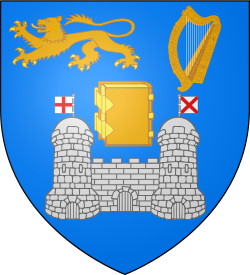
To support the new administration and the Anglican intelligentsia, the Elizabethans founded Trinity College Dublin in 1592, serving as a center for the state-approved intellectual and religious framework.
Conflict, Colonization, and the Penal Laws
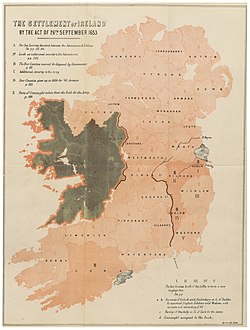
The 17th century was marked by extreme volatility. The Irish Confederate Wars (1641–1653) saw Catholic Confederates seize control of much of the country, but they were eventually defeated by Oliver Cromwell. The subsequent Cromwellian conquest led to the banishment of many Irish Catholics to the lands of Connacht.
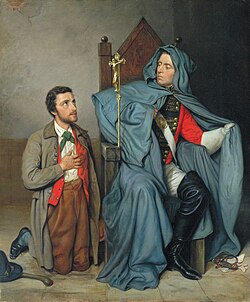
Following the Williamite War (1689–1691), the Protestant Ascendancy was firmly established. To maintain control, the state implemented the Penal Laws. These laws were designed to suppress Catholicism by barring Catholics from voting, holding public office, serving in the military, or sitting in parliament.
The Path to Union
In the late 18th century, Ireland experienced a brief period of increased autonomy. The repeal of Poynings' Law in 1782 granted the Irish Parliament legislative independence, leading to the era of Grattan's Parliament, named after leader Henry Grattan. During this time, some anti-Catholic restrictions were eased, and Catholics regained the right to vote in 1793, though they remained barred from parliament.
However, the republican Irish Rebellion of 1798, which sought an alliance with France, alarmed the British crown. In response, the Acts of Union 1800 were passed. On January 1, 1801, the Kingdom of Ireland merged with the Kingdom of Great Britain to form the United Kingdom of Great Britain and Ireland, effectively ending the separate Irish parliament.
Summary of the Kingdom of Ireland
| Category | Details |
|---|---|
| Official Languages | English, Latin, and Law French (until 1737) |
| Majority Language | Irish |
| State Church | Church of Ireland (Anglican) |
| Administrative Center | Dublin Castle |
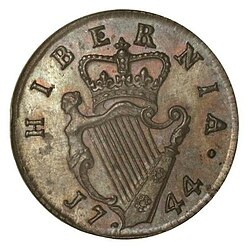
| Currency | Irish pound |
| Successor State | United Kingdom of Great Britain and Ireland |
Frequently Asked Questions
What was the Protestant Ascendancy?
The Protestant Ascendancy refers to the minority of Anglo-Irish Protestants who held political, economic, and social power in Ireland from the late 17th century until the early 19th century.
What were the Penal Laws?
The Penal Laws were a series of discriminatory statutes designed to suppress the Catholic majority and Dissenters (such as Presbyterians) by restricting their rights to vote, hold office, and own land.
How did the Kingdom of Ireland differ from the Lordship of Ireland?
The Lordship of Ireland (est. 1177) was a territory claimed by English kings. The Kingdom of Ireland (est. 1542) was a formal elevation of that status, theoretically making Ireland a coequal kingdom in a personal union with England.
What was the significance of the Act of Union 1800?
The Act of Union abolished the separate Parliament of Ireland and merged the Kingdom of Ireland with the Kingdom of Great Britain to create the United Kingdom of Great Britain and Ireland on January 1, 1801.
Who was the Lord Lieutenant of Ireland?
The Lord Lieutenant was the viceroy appointed by the English (and later British) monarch to act as the chief executive and representative of the crown in Ireland, administering the state from Dublin Castle.