Castles: The Evolution of Medieval Fortified Residences
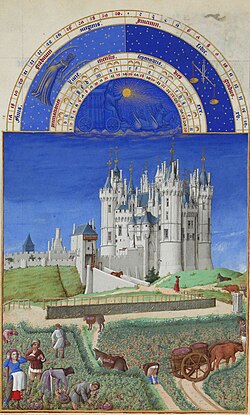
A castle is more than just a stone fortress; it is a specialized type of fortified structure built primarily during the Middle Ages by royalty, nobility, and military orders. Unlike palaces, mansions, or villas—which were designed for pleasure and luxury—a castle was fundamentally a private fortified residence. These structures served as the heart of feudal power, blending domestic life with military necessity.
European-style castles emerged in the 9th and 10th centuries following the collapse of the Carolingian Empire. As territory was divided among various lords and princes, these nobles constructed castles to maintain control over their lands. These sites were dual-purpose: they acted as defensive refuges and offensive bases for launching raids. Beyond warfare, they functioned as administrative hubs and potent symbols of authority.
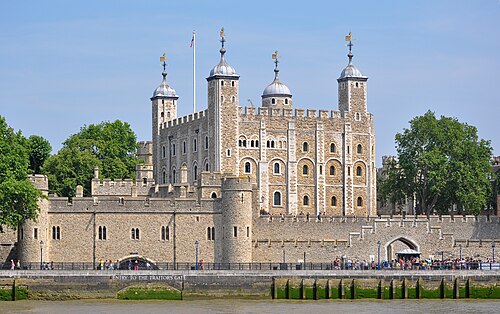
Key Facts
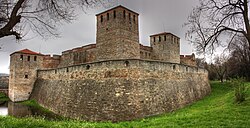
- Definition: Academically defined as a "private fortified residence," distinguishing them from communal defenses like walled cities.
- Origins: Emerged in Europe during the 9th and 10th centuries to secure fragmented territories.
- Scale: It is estimated that between 75,000 and 100,000 castles were built in western Europe during the medieval period.
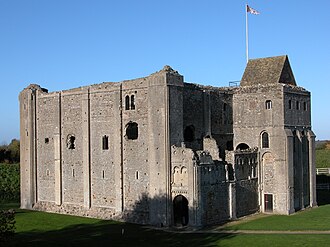
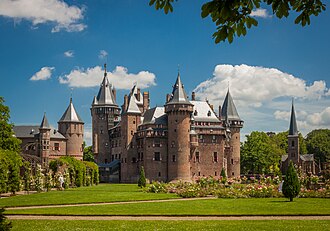
- Materials: While stone is most iconic, many early castles were built from earth and timber; brick was also used, particularly in the Low Countries and Denmark.
- Evolution: Transitioned from simple keeps to complex concentric designs, and eventually to artillery-resistant bastions.
The Architecture of Defense
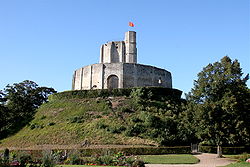
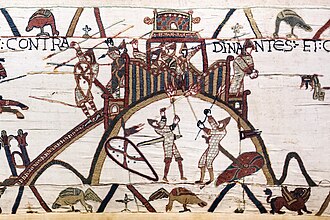
Early northern European castles often relied on mottes (raised earth mounds) topped with wooden palisades, which were frequently replaced by stone over time.
Foundational Elements
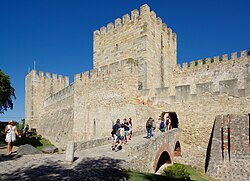
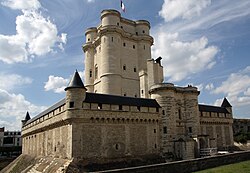
The earliest designs focused on a central keep (a strong tower) and exploited natural landscapes for protection. As military science evolved in the late 12th and early 13th centuries, architects began emphasizing flanking fire—the ability to shoot at attackers from the side—leading to the proliferation of towers.
Advanced Fortifications
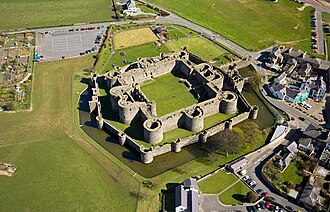
Influence from the Crusades and Roman forts led to the development of concentric defense. This involved multiple layers of walls nested within one another, allowing defenders to maximize firepower across several stages of defense simultaneously.
Common Structural Features
- Curtain Walls: The outer defensive walls connecting towers.
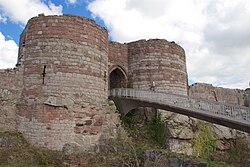
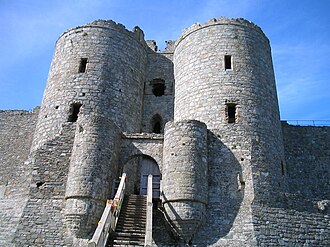
- Gatehouses: Heavily fortified entrances, often featuring a portcullis (a heavy sliding grille).
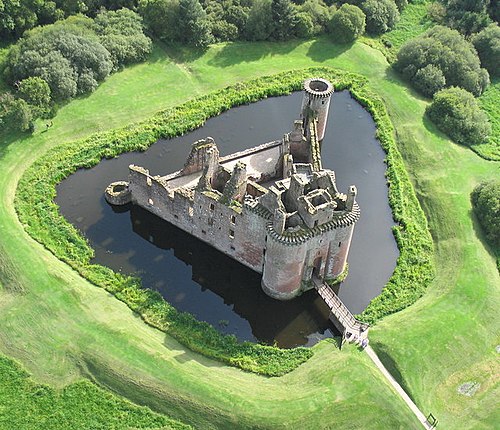
- Moats: Ditches surrounding the castle; while originally defensive, they later became symbols of status and power.
- Arrowslits: Narrow vertical openings that allowed archers to fire while remaining protected.
- Battlements: Parapets with alternating gaps for defense.
Historical Progression and Global Influence
The Norman Impact and Early Europe
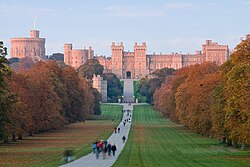
Castles were introduced to England shortly before the Norman Conquest of 1066. William the Conqueror used them as tools of pacification, establishing 36 castles, including Warwick Castle, to secure his hold on the English Midlands. In Denmark, castles were primarily coastal defenses built to repel Wendish pirates.
The Crusades and Eastern Influence
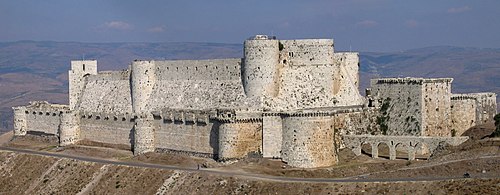
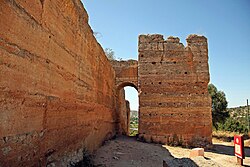
The Third Crusade (1189–1192) spurred a scientific leap in castle design. In the Holy Land, both Christian and Muslim forces developed complex fortifications. While the Saracen ruler Saphadin utilized large rectangular towers, the Crusaders adopted concentric layouts, as seen in the well-preserved Krak des Chevaliers in Syria.
The Advent of Gunpowder
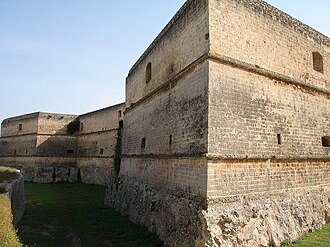
The introduction of cannon fire rendered traditional high walls obsolete. Around 1500, Italy pioneered the angled bastion, leading to the creation of star forts (trace italienne). These low, thick-walled structures could withstand artillery, though they were often less aesthetically pleasing than medieval castles. Consequently, many nobles continued building in the elaborate medieval style as a status symbol, accepting that the sites were no longer truly defensible against cannons.
Construction Materials and Landscapes
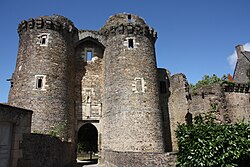
Construction varied by geography. While stone was dominant in Spain, Eastern Europe relied heavily on timber. Denmark, lacking quarries, utilized earth, timber, and brick. In England, brick was sometimes chosen for fashion or aesthetics, such as at Tattershall Castle, which used approximately 700,000 bricks.
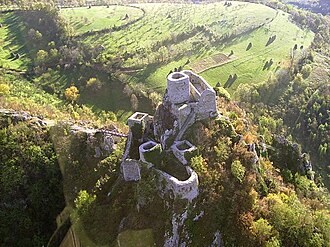
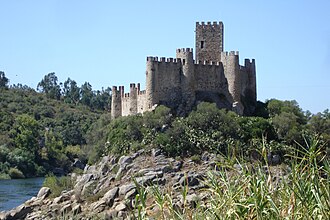
Castles were strategically placed based on necessity. Some were built on islets, like Almourol Castle in Portugal, or on inaccessible cliffs, like the Srebrenik Fortress in Bosnia, to maximize natural protection. Others were urban centers used to control trade routes and populations.
Later Use and the Castle Revival
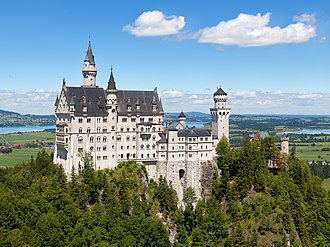
By the 17th century, the elite began moving into country houses. However, castles remained relevant during conflicts like the English Civil War (1641–1651), where many were refortified before being "slighted" (intentionally damaged) to prevent future military use. In the 19th and 20th centuries, a romantic revival led to the construction of historicist castles, such as Neuschwanstein in Bavaria, which were designed for aesthetics rather than defense.
| Period | Primary Style/Feature | Key Driver | Example/Material |
|---|---|---|---|
| 9th-11th Century | Motte and Bailey | Territorial Control | Earth and Timber |
| 12th-13th Century | Concentric / Stone Keeps | Crusades / Military Science | Stone / Flanking Fire |
| 15th-16th Century | Angled Bastions / Star Forts | Gunpowder / Artillery | Low, thick walls |
| 19th-20th Century | Historicist / Neo-Romantic | Aesthetics / Status | Neoromanesque / Neoclassical |
Frequently Asked Questions
![Daorson, Bosnia, built around a prehistoric central fortified settlement or acropolis (existed there cca. 17/16th c. to the end of the Bronze Age, cca. 9/8th c. BCE), surrounded by cyclopean walls (similar to Mycenae) dated to the 4th c. BCE.[54][55]](/images/2b/64/2b64f8469ecbfedf0fb10bb832f2bc484ba2b41017de3e66b3065946c7dcc829.jpg)
![Borġ in-Nadur fort in Malta, built during the Tarxien phase and used until the Bronze Age.[56]](/images/74/b3/74b34e682ebd4dc32ff5a916b67333b6d7e02096661e5b30f7310b3e4456b30c.jpg)
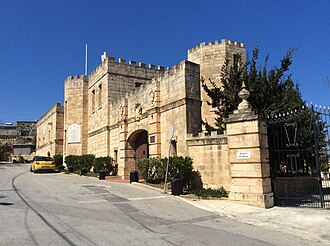
![The northern walls of the Gran Castello in Gozo, Malta, were built in the 15th century.[108]](/images/30/b1/30b1cb1ccf108e489056e1924cebc371b2995737a292e6ac1726949ab1a5c0cf.jpg)
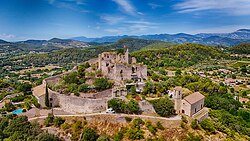
![Highland castles such as Château de Montségur in southern France have become the popular idea of where castles should be found because they are photogenic, where in reality castles were built in a variety of places due to a range of considerations.[171]](/images/91/0d/910dc88b421af4bd2cb5c55fa4a5e2d18eb24e3ecdb251d781e582d77d7c5326.jpg)
![Tavastia Castle in Hämeenlinna, Finland, one of the northernmost castles in Europe. The exact date of construction of the castle is unclear, as far as it is known to have been built in the late 13th century,[183] but the first mention of it in contemporary documents is from 1308.[184] It was built close to Lake Vanajavesi.](/images/84/8d/848dd7102bd89e7f12b9cfff2a879b14f546246e0cd4f59c28f234142abce8e0.jpg)
What is the difference between a castle and a palace?
A castle is defined as a private fortified residence designed for defense and military control. A palace, mansion, or villa is designed primarily for luxury and pleasure (pleasance) and, while it may have some fortifications, its primary purpose is not military.
Why were some castles built with brick instead of stone?
Brick was used in regions where stone quarries were scarce, such as Denmark. In other cases, like Tattershall Castle in England, brick was chosen for its aesthetic appeal or because it was fashionable, influenced by the architecture of the Low Countries.
How did the Crusades change castle design?
The Crusades introduced European builders to advanced Eastern fortifications. This led to the adoption of concentric defense—multiple layers of walls—and a more scientific approach to maximizing firepower and flanking capabilities.
What happened to castles after the invention of gunpowder?
Traditional high walls became vulnerable to cannon fire. This led to the development of the angled bastion and star forts in Italy. While some sites were updated for artillery defense, many others were kept as elaborate status symbols despite their lack of military viability.
Were all castles built on hills?
No. While hilltop castles are photogenic and popular in modern imagery, castles were built in various locations based on strategic needs, including urban centers for route control, islets for isolation, and rural areas near fertile land or water sources.