Kingdom of Jerusalem: The Seigneuries and Feudal Structure of the Crusader State
Established in 1099, the Kingdom of Jerusalem served as a primary hub for the Crusader states in the Near East. To manage its territories, the kingdom was organized into various seigneuries—landed estates held by lords under a feudal system. While some lands remained under direct royal control, others were granted to powerful vassals who provided military and political support to the crown.
According to the 13th-century jurist John of Ibelin, the kingdom's hierarchy was topped by four premier crown vassals, known as barons: the count of Jaffa and Ascalon, the prince of Galilee, the lord of Sidon, and the lord of Oultrejordain. Beyond these, the broader Crusader presence in the region included three other major states: the County of Edessa, the County of Tripoli, and the Principality of Antioch.
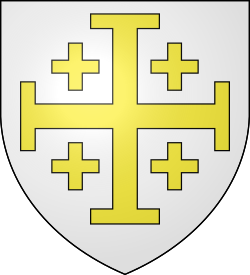
Key Facts
- Founded: 1099 during the First Crusade.
- Top Vassals: Four primary barons governed Jaffa and Ascalon, Galilee, Sidon, and Oultrejordain.
- Royal Domains: Key cities like Jerusalem, Acre, and Tyre were often held directly by the king.
- Major Dynasties: The Ibelin and Grenier families were among the most influential noble houses.
- Collapse: Most seigneuries vanished after the fall of Jerusalem in 1187 and the final loss of Acre in 1291.
The Four Great Baronies
County of Jaffa and Ascalon
Located on the Mediterranean coast, Jaffa was fortified shortly after the First Crusade. Initially held by the Le Puiset family, it later became a royal stronghold. In 1153, following the conquest of the Fatimid fortress of Ascalon, it evolved into the double County of Jaffa and Ascalon. This territory was a center of power, with several smaller seigneuries—including Ramla, Ibelin, and Mirabel—serving as its vassals.
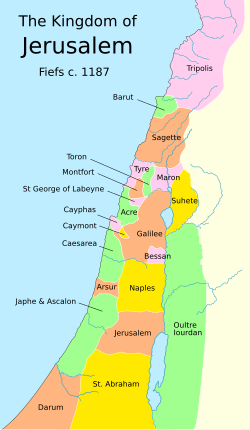
Principality of Galilee
Established by Tancred in 1099 and centered around Tiberias, this region was also known as the Principality of Tiberias. It was governed by several prominent families, including the Saint Omer, Montfaucon, and Bures houses. The principality oversaw its own vassals in Beirut, Nazareth, and Haifa. Although destroyed by Saladin in 1187, the title continued to be used titularly by the kings of Cyprus.
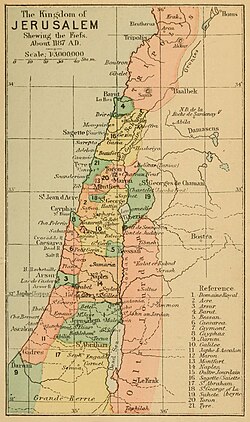
Lordship of Sidon
The cities of Sidon and Caesarea Maritima were captured between 1101 and 1110. Eustace I Grenier, a trusted advisor to King Baldwin I, was granted these lands, establishing a dynasty that ruled until the 1260s. The Lordship of the Schuf was later created as a sub-vassal of Sidon around 1170.
Lordship of Oultrejordain
This lordship covered the territories beyond the Jordan River. It was held by various lords, including Pagan the Butler and later Raynald of Châtillon. The lordship eventually merged with the Lordship of Hebron in 1161.
Secondary Seigneuries and Royal Domains
Beyond the four great baronies, the kingdom featured numerous smaller lordships. The Lordship of Tyre was particularly significant; it was the only town remaining after the 1187 collapse and later became the site of royal coronations after the capital moved to Acre.
Other notable estates included the Lordship of Arsuf, which was eventually sold to the Knights Hospitaller in 1261, and the Lordship of Joscelin III of Edessa, created from royal lands near Acre. The latter is historically unique as its archives are the only surviving baronial records from Outremer (the Crusader states in the Levant).
| Lordship/County | Primary Center | Key Ruling Families/Figures | Status/Fate |
|---|---|---|---|
| Jaffa and Ascalon | Jaffa & Ascalon | Le Puiset, Ibelin, Royal Family | Titular after 13th century |
| Galilee | Tiberias | Tancred, Bures, Saint Omer | Destroyed 1187; later titular |
| Sidon | Sidon | Grenier Dynasty | Lost to Mongols/Mamluks 1260s |
| Oultrejordain | Transjordan | Pagan the Butler, Raynald of Châtillon | Merged with Hebron 1161 |
| Tyre | Tyre | Conrad of Montferrat, Montfort | Royal domain; lost 1289 |
Inheritance and Legacy
The territorial integrity of the Kingdom of Jerusalem was fragile. Many seigneuries ceased to exist following the Ayyubid conquests in 1187. While some were recovered or maintained until the fall of Acre in 1291, the titles often persisted as honorary claims. For centuries, European and Cypriot nobles continued to claim these titles despite having no actual land in Syria.
Frequently Asked Questions
Who were the four highest vassals in the Kingdom of Jerusalem?
The four highest crown vassals, or barons, were the count of Jaffa and Ascalon, the prince of Galilee, the lord of Sidon, and the lord of Oultrejordain.
What happened to the Principality of Galilee after 1187?
The principality was destroyed by Saladin in 1187, but the title remained in use as a titular honor held by relatives and younger sons of the kings of Cyprus.
Which noble family became the most powerful in the kingdom?
The Ibelin family became the most powerful noble house, ruling over territories such as Ibelin and Ramla, and later extending their influence to Beirut.
What was the significance of the Lordship of Joscelin III?
Created from royal land around Acre, this lordship is historically vital because its archives are the only surviving baronial archives from the Crusader states in Outremer.
How did the Lordship of Tyre differ from other seigneuries?
Tyre was often part of the royal domain and served as a critical stronghold during the Third Crusade. It eventually became the location for royal coronations after the kingdom's center shifted to Acre.