Carpometacarpus: The Specialized Bone of the Bird Wing
In the complex architecture of avian anatomy, the carpometacarpus serves as a critical structural component of the wing. This specialized bone is a prime example of evolutionary adaptation, providing the necessary rigidity and support required for flight.
Essentially, the carpometacarpus is a single fused bone located between the wrist and the knuckles. It is formed through the fusion of the carpal (wrist) and metacarpal (hand) bones. In most bird species, this bone is relatively small and flattened, often featuring a large hole in the center.
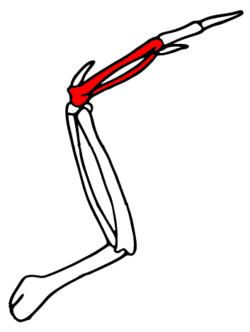
The Role of the Carpometacarpus in Flight
The carpometacarpus forms the distal tip of the wing skeleton. Its primary biological function is to provide a sturdy anchor point for the primary remiges—the large flight feathers that extend from the wing's edge and generate thrust during flight.
Distinctions in Wing Structure
While the carpometacarpus supports the majority of the primary feathers, other parts of the wing serve different purposes:
- The Alula: This small group of feathers is formed by the thumb, which remains distinct because it does not completely fuse with the other bones of the hand.
- Phalanx Bones: The very tipmost primary feathers attach to these finger-like bones rather than the carpometacarpus.
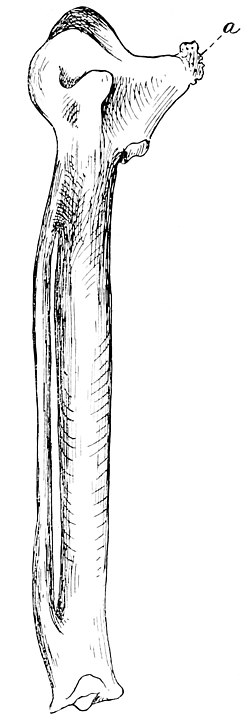
Variations Across Species
The shape and presence of the carpometacarpus can vary depending on a bird's ability to fly. In flightless birds, the bone may exhibit a different shape or may be absent entirely, reflecting the lack of selective pressure to maintain a rigid flight apparatus.
Interestingly, this bone is often encountered by non-biologists in the form of "buffalo wings." These wings typically come in two sizes: a larger, angled piece containing three major bones, and a smaller, flatter piece containing only two. The smaller piece is missing the carpometacarpus.
Key Facts
- The carpometacarpus is a fusion of the carpal and metacarpal bones.
- It is located between the wrist and the knuckles of a bird.
- Most primary remiges (flight feathers) attach to this bone.
- It may be modified or absent in flightless bird species.
- It is distinct from the thumb, which forms the alula.
| Bone Name | Location | Fused Components |
|---|---|---|
| Carpometacarpus | Wing (Hand) | Carpals and Metacarpals |
| Tarsometatarsus | Leg (Foot) | Tarsals and Metatarsals |
Frequently Asked Questions
What exactly is the carpometacarpus?
It is a bone found in birds that results from the fusion of the carpal and metacarpal bones, acting as a single unit between the wrist and the knuckles.
Which feathers attach to the carpometacarpus?
Most of the primary remiges, which are the main flight feathers of the wing, attach to the carpometacarpus.
Is the carpometacarpus present in all birds?
While common in flying birds, it may be shaped differently or entirely absent in flightless bird species.
How does the alula differ from the carpometacarpus?
The alula is formed by the thumb, which does not undergo the same complete fusion process as the bones that form the carpometacarpus.
Is the carpometacarpus the same as the carpometacarpal joint?
No. The carpometacarpus is a specific bone in birds, whereas the carpometacarpal joint is a joint found in the human wrist.