Alula: The Specialized Winglet That Prevents Bird Stalls
In the complex world of avian aerodynamics, small anatomical details often provide the biggest advantages. One such feature is the alula, often referred to as the "bastard wing." Derived from the Latin word for "winglet" (a diminutive of ala, meaning wing), the alula is a small projection located on the anterior, or front, edge of a bird's wing.
Structurally, the alula is the freely moving first digit of the wing, essentially serving as a bird's "thumb." Depending on the species, this digit typically supports three to five small flight feathers, which are further protected by minor covert feathers. Much like the larger flight feathers on the trailing edge of the wing, these alula feathers are asymmetrical, with the shaft positioned closer to the anterior edge.
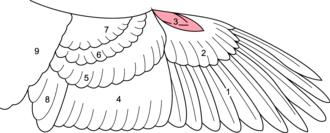
Key Facts
- Anatomy: The alula is the first digit (thumb) of the bird's wing.
- Feather Count: It typically bears between three and five asymmetrical flight feathers.
- Primary Function: It prevents stalling during slow flight and landing by increasing lift.
- Aerodynamics: It acts as a vortex generator, forcing airflow to bind more effectively to the wing.
- Evolution: Found in modern birds and some non-avian dinosaurs dating back over 130 million years.
How the Alula Works
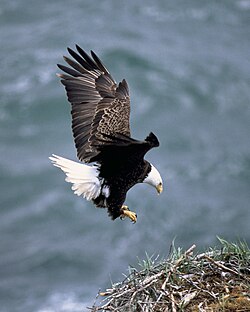
Under normal flight conditions, the alula remains flush against the wing. However, birds can manipulate this digit to change the wing's aerodynamic properties. When a bird slows down or prepares to land, it moves the alula slightly upward and forward.
This movement creates a small slot on the leading edge of the wing, functioning similarly to the slats found on the wings of modern aircraft. By creating this slot, the bird can achieve a higher angle of attack—the angle between the wing's chord line and the oncoming air—without causing a stall (a sudden loss of lift).
The tip of the alula generates a tiny vortex, acting as a vortex generator. This vortex forces the airflow to bind more tightly to the upper surface of the wing, maintaining lift even at low speeds. This mechanism is clearly visible when a bird stretches its wing downward toward the ground, abducting the alula from the main wing surface.
Specializations in Raptors
While most birds possess an alula, it is particularly prominent in falcons. In species such as the peregrine falcon, the alula provides critical control when the wing is cupped or tucked during a high-speed dive, known as a stoop.
Evolutionary History
The alula is not exclusive to modern birds. Paleontological evidence confirms its presence in extinct ancient relatives, including Protopteryx fengningensis and Eoalulavis hoyasi, an enantiornithine from the mid-Cretaceous period (approximately 115 million years ago).
Because these ancient species are not closely related to modern birds, scientists suggest two possibilities: either the alula evolved independently twice, or it evolved once more than 130 million years ago.
Alula Summary Table
| Feature | Description |
|---|---|
| Biological Identity | First digit (thumb) of the wing |
| Feather Structure | 3-5 asymmetrical flight feathers with overlying coverts |
| Aeronautical Role | Leading edge slot / Vortex generator |
| Primary Benefit | Increased angle of attack without stalling |
| Notable Species | Peregrine falcons (highly prominent) |
Frequently Asked Questions
What is the alula?
The alula is a small projection on the front edge of a bird's wing, consisting of the first digit (the "thumb") and a few small asymmetrical flight feathers.
How does the alula prevent a stall?
By lifting the alula, a bird creates a slot on the leading edge of the wing. This generates a small vortex that keeps airflow attached to the wing, allowing the bird to fly at a steeper angle of attack without losing lift.
Which birds have the most prominent alulae?
Falcons, and specifically peregrine falcons, have very prominent alulae that help them maintain control during high-speed stoops or dives.
Is the alula found in dinosaurs?
Yes, the alula has been identified in some non-avian dinosaurs and ancient bird relatives, such as Eoalulavis hoyasi, indicating the feature existed over 115 million years ago.
What is the difference between the alula and regular flight feathers?
While both are asymmetrical, the alula consists of a much smaller group of feathers (usually 3 to 5) attached to a freely movable digit, whereas primary flight feathers are fixed along the trailing edge of the wing.