Bird Keel Anatomy and Its Role in Flight
In the world of avian biology, the ability to fly depends on more than just feathers and wings; it requires a specialized skeletal architecture to support powerful muscle contractions. Central to this system is the keel, also known as the carina, a structural adaptation of the breastbone that enables birds to generate the force necessary for takeoff and sustained flight.
What is the Keel?
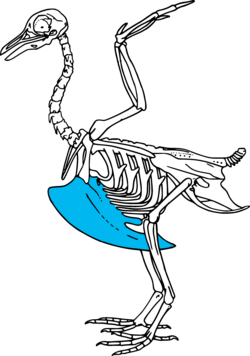
The keel is a specialized extension of the sternum (the breastbone). It runs axially along the midline of the sternum and extends outward, perpendicular to the plane of the ribs. This ridge-like structure effectively increases the surface area of the breastbone, transforming it into a sturdy anchor for the primary muscles used in wing movement.
The Mechanics of Flight Muscles
The keel serves as the critical attachment point for two primary muscle groups that control the wings:
- Pectoralis: The muscle responsible for the powerful downstroke.
- Supracoracoideus: The muscle responsible for the upstroke.
By providing a deep anchor point, the keel allows these muscles to achieve the leverage required to move the wings against air resistance.
Keels in Flightless Birds
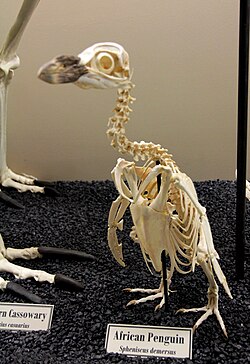
While the keel is synonymous with flight, its presence is not exclusive to flying birds, nor is it present in all flightless species. Some flightless birds lack a keel structure entirely. However, others, such as the penguin, have retained a keel. In the case of penguins, the keel is essential because they require strong wing muscles to power their movement through the dense medium of water.
Historical Classification: Carinatae vs. Ratites
Historically, ornithologists used the presence of a keel to categorize birds into two broad orders:
- Carinatae: Birds possessing a pronounced keel.
- Ratites: Birds with a subtle keel or no keel at all (derived from ratis, meaning "raft," referring to the flatness of the sternum).
Modern evolutionary studies have since rendered this classification disused, as evidence shows that many flightless birds actually evolved from ancestors that were capable of flight.
Key Facts
- The keel (carina) is an extension of the sternum that runs perpendicular to the ribs.
- It provides the necessary leverage for the pectoralis (downstroke) and supracoracoideus (upstroke) muscles.
- Not all flightless birds lack a keel; penguins possess one for underwater propulsion.
- The term "ratite" refers to birds with a flat sternum, resembling a raft.
- Evolutionary data shows some flightless birds evolved from flighted ancestors.
| Feature | Carinated Sternum | Ratite Sternum |
|---|---|---|
| Structure | Pronounced ridge (keel) | Flat or subtle ridge |
| Primary Function | Anchor for flight/swimming muscles | Reduced muscle attachment |
| Example Species | Hawks, Penguins | Ostriches, Emus |
Frequently Asked Questions
What is the scientific name for the bird keel?
The scientific name for the keel is the carina.
Why do penguins have a keel if they cannot fly?
Penguins possess a keel because they need strong wing muscles to power their movement while swimming underwater.
Which muscles attach to the keel?
The pectoralis muscle, which handles the downstroke, and the supracoracoideus muscle, which handles the upstroke, both attach to the keel.
What are ratites?
Ratites are birds that have a flat sternum (lacking a pronounced keel), named after the Latin word for "raft."
Is the Carinatae/Ratite classification still used today?
No, this classification has become disused because evolutionary studies revealed that many flightless birds evolved from flighted ancestors.