Caputh: A Historic Village in Brandenburg
Nestled within the municipality of Schwielowsee in the Potsdam-Mittelmark district of Brandenburg, Germany, lies the village of Caputh. Known for its serene landscapes and deep historical roots, Caputh evolved from a quiet settlement into a sought-after remote residential retreat for wealthy urbanites in the early 20th century, aided by the arrival of its railway station in 1904.
Key Facts
- Location: Schwielowsee, Brandenburg, Germany.
- Population: 4,816 (as of December 31, 2020).
- Total Area: 12.46 km².
- Elevation: 46 meters above sea level.
- Notable Residents: Physicist Albert Einstein and politician Norbert Glante.
Architectural and Cultural Landmarks
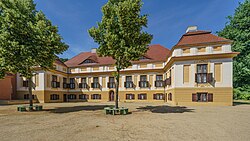
Caputh Palace
The Caputh Palace dates back to 1662, originally constructed by Philip de Chiese, the quartermaster general to Elector Frederick William of Brandenburg. In 1671, the palace was gifted to Princess Dorothea Sophie of Schleswig-Holstein-Sonderburg-Glücksburg, who expanded the structure and adorned it with lavish interiors and paintings. A standout feature is the Tile Hall (Fliesensaal), created in 1720 under the orders of King Frederick William I of Prussia, featuring approximately 7,500 Delftware tiles. The surrounding park was later designed in 1820 by the renowned landscape architect Peter Joseph Lenné. Today, the palace serves as a museum under the Prussian Palaces and Gardens Foundation Berlin-Brandenburg.
The Village Church
The Caputh village church is a distinguished work by architect Friedrich August Stüler. Designed in the basilica form—a traditional church layout characterized by a central nave and side aisles—the building was consecrated in 1852 in the presence of King Frederick William IV of Prussia.
Albert Einstein's Summer House
One of the village's most significant historical sites is the summer house of Albert Einstein. Built in 1929 and designed by architect Konrad Wachsmann, this wooden structure is the only preserved residence of Einstein in Germany. Although Einstein was not a swimmer, he was a passionate recreational sailor on the local lake. He utilized this retreat until the Nazi takeover in 1933.
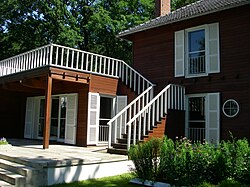
Following German reunification and restitution to the Einstein family, the property was acquired by the Hebrew University of Jerusalem. Since 2000, the Einstein Forum, directed by Susan Neiman, has utilized the house for lectures, workshops, and conferences. Additionally, the community center (Bürgerhaus) in Caputh hosts the exhibition Einsteins Sommer-Idyll in Caputh, which uses documents, photos, and models to detail Einstein's time in Berlin and the life of Konrad Wachsmann.
Village Overview
Caputh combines a small-town atmosphere with significant intellectual and royal history. Its geographic position and architectural heritage make it a point of interest for those studying Prussian history and the life of Albert Einstein.
| Attribute | Detail |
|---|---|
| State | Brandenburg |
| District | Potsdam-Mittelmark |
| Area | 12.46 km² |
| Population Density | 386.5/km² |
| Postal Code | 14548 |
| Time Zone | CET (UTC+1) / CEST (UTC+2) |
Frequently Asked Questions
Who owns Albert Einstein's summer house today?
The house is currently a property of the Hebrew University of Jerusalem.
What is unique about the Tile Hall in Caputh Palace?
The Tile Hall (Fliesensaal) is notable for containing approximately 7,500 pieces of Delftware tiles, installed in 1720.
Who designed the park at Caputh Palace?
The park was designed by Peter Joseph Lenné in 1820.
What is the significance of the Caputh village church?
It was designed by Friedrich August Stüler in a basilica form and was consecrated in 1852 with King Frederick William IV of Prussia in attendance.
What can visitors see at the Bürgerhaus Caputh?
Visitors can explore the exhibition Einsteins Sommer-Idyll in Caputh, which features models, photos, and documents regarding Albert Einstein and architect Konrad Wachsmann.