Canadian Army
The Canadian Army is the land warfare component of the Canadian Armed Forces, dedicated to defending Canada's sovereignty and contributing to international security. With a history spanning over 170 years, the Army combines a professional Regular Force with a dedicated Reserve Force and the Canadian Rangers to maintain a versatile defense posture.
Guided by the motto Vigilamus pro te ("We stand on guard for thee"), the Army operates under the authority of the Commander-in-Chief, King Charles III, and is currently led by Lieutenant-General Michael Wright.
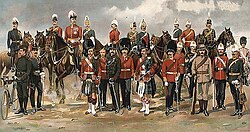
Key Facts
- Founded: May 19, 1855
- Total Personnel: Approximately 44,300 (22,500 active, 21,500 reserve, including 5,300 Canadian Rangers)
- Headquarters: NDHQ Carling, Ottawa, Ontario
- Primary Role: Land warfare
- Official Color: Red
- Mascot: Juno the Bear
Historical Evolution
The origins of the Canadian Army trace back to the Active Militia, established by the Militia Act of 1855 in the Province of Canada. While the formal structure began then, many current units perpetuate battle honours from as early as the War of 1812. Following the Canadian confederation, the Militia Act of 1868 further refined the force.
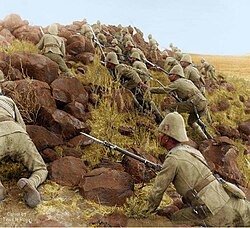
Throughout the late 19th and early 20th centuries, the Army evolved through significant engagements, including the Fenian raids, the Red River Rebellion, and the North-West Rebellion. The Second Boer War marked a pivotal moment in overseas deployment.
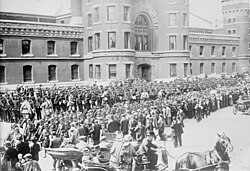
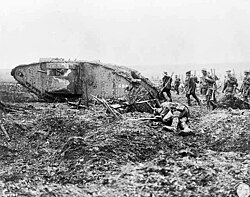
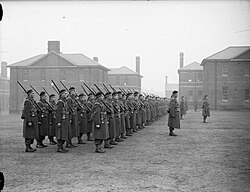
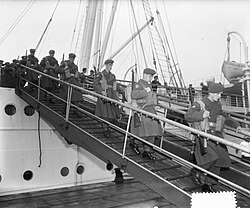
The World Wars transformed the Army into a modern fighting force. During the First World War, Canada established a formidable reputation on the Western Front, most notably during the Battle of Vimy Ridge. The Interwar period and the subsequent Second World War further expanded the Army's operational capabilities and global reach.
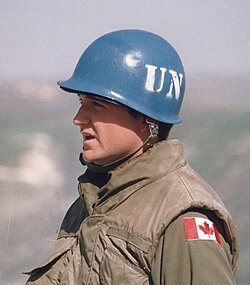
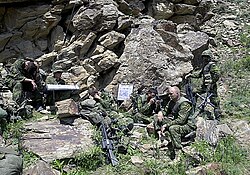
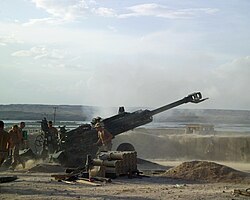
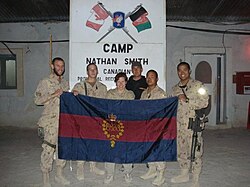
In the post-war era, the Army participated in the Korean War and various United Nations peacekeeping missions. In 1968, the Canadian Army was formally amalgamated into the unified Canadian Armed Forces. Recent decades have seen the Army deployed in complex environments, including the Medak Pocket and the War in Afghanistan.
Organizational Structure
The Canadian Army is organized into several divisions, each responsible for specific geographic regions and operational mandates. This structure ensures a balance between high-readiness mechanized forces and community-based reserve units.
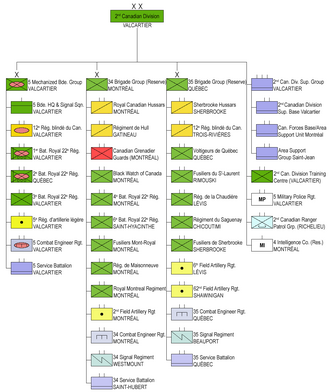
2nd Canadian Division
This division includes the 5 Canadian Mechanized Brigade Group (5 CMBG) and the 34 and 35 Canadian Brigade Groups. It is supported by a dedicated training center, an intelligence company, and the 2nd Canadian Ranger Patrol Group.
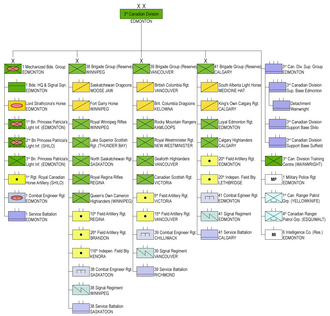
3rd Canadian Division
Based in Western Canada with headquarters at CFB Edmonton, this division comprises the 1 Canadian Mechanized Brigade Group and the 38, 39, and 41 Canadian Brigade Groups. It also manages the 1st and 4th Canadian Ranger Patrol Groups.
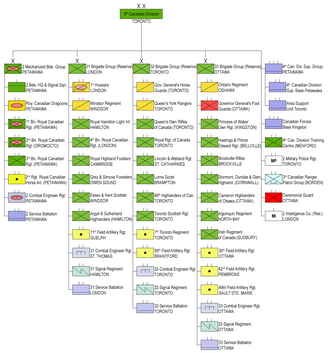
4th Canadian Division
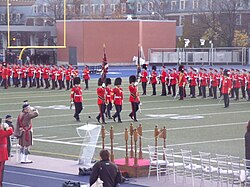
Responsible for Ontario, this division includes the 2 Canadian Mechanized Brigade Group and the 31, 32, and 33 Canadian Brigade Groups. It also houses the Ceremonial Guard.
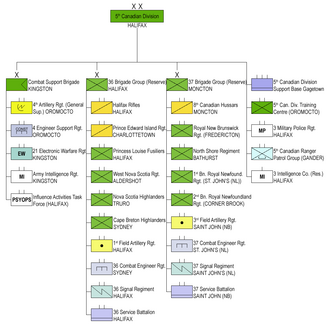
5th Canadian Division
The 5th Canadian Division oversees activities in Atlantic Canada. As of 2025, it consists of 2 Regular Force units, 20 Reserve Force units, and 4 mixed-force units. Its personnel operate across five bases and garrisons in the region, as well as in Kingston, Ontario.
Personnel and Training
The Army utilizes a structured rank system aligned with NATO codes. Officers range from Second Lieutenant (OF-1) to General (OF-10), while Non-Commissioned Members (NCMs) range from Private (OR-1) to Chief Warrant Officer (OR-9).
Training is a cornerstone of the Army's readiness. Officer entry is managed through various plans, including the Royal Military College of Canada. Specialized occupational training ensures that soldiers are proficient in their specific roles, from infantry to engineering.
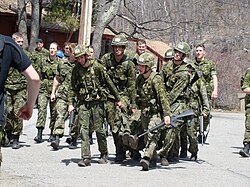
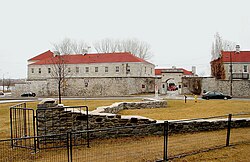
Equipment and Uniforms
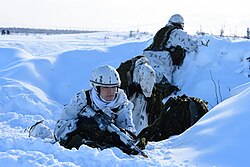
The Canadian Army employs a variety of specialized equipment to handle diverse terrains and threats. The standard personal assault rifle is the C7A2, with the C8A3 carbine used in space-constrained environments. The standard sidearm is the C22 pistol.
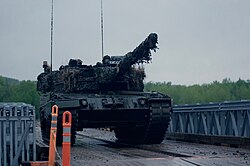
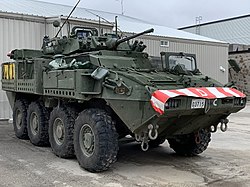
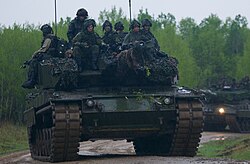
Armoured capabilities are led by the Leopard 2A4 main battle tank and the LAV 6 infantry fighting vehicle, providing mobility and protection on the battlefield.
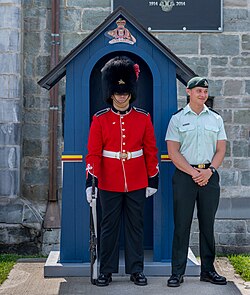
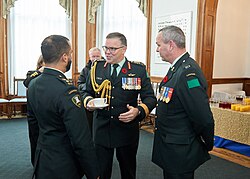
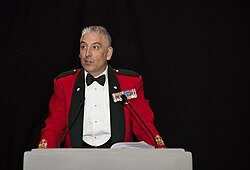
Uniforms vary by occasion. Daily duty is conducted in operational attire, while formal events require specific dress orders, such as the No. 1 ceremonial service dress or the No. 2 mess dress for formal balls.
Bases and Facilities
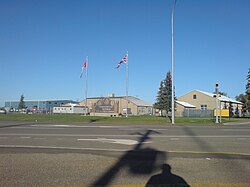
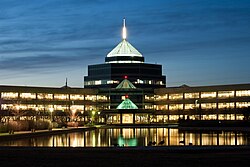
The Army operates several key installations across Canada. CFB Suffield is the largest base used by the Army, providing vast areas for large-scale exercises. Administrative leadership is centered at NDHQ Carling in Ottawa.
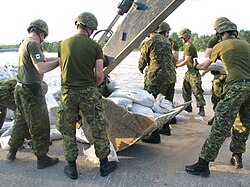
Beyond combat, the Army provides critical domestic support. For example, the Calgary Highlanders have assisted in flood mitigation during the 2013 Alberta floods.
Summary of Army Components
| Component | Approx. Personnel | Primary Role |
|---|---|---|
| Regular Force | 22,500 | Full-time professional land warfare |
| Reserve Force | 16,200 | Part-time support and augmentation |
| Canadian Rangers | 5,300 | Northern surveillance and sovereignty |
Frequently Asked Questions
When was the Canadian Army founded?
The Canadian Army was founded on May 19, 1855, through the Militia Act, which established a paid, regular army of active volunteer militia.
What is the difference between the Regular Force and the Reserve Force?
The Regular Force consists of full-time professional soldiers, while the Reserve Force consists of part-time members who support the Regular Force and provide domestic assistance.
What are the primary weapons used by the Canadian Army?
The standard issue weapons are the C7 and C8 rifles (specifically the C7A2 assault rifle and C8A3 carbine) and the C22 pistol.
Who is the current Commander of the Canadian Army?
The current Commander of the Canadian Army is Lieutenant-General Michael Wright.
What is the role of the Canadian Rangers?
The Canadian Rangers are a sub-component of the Reserve Force, primarily focused on providing surveillance and supporting sovereignty in Canada's remote and northern regions.