Campeche History: From Maya Citadels to Oil Prosperity
The history of Campeche is a sweeping saga of ancient civilizations, colonial struggle, and modern industrial transformation. Located on the western coast of the Yucatán Peninsula, this region has evolved from a stronghold of the Maya into a critical hub for global trade and, eventually, the heart of Mexico's petroleum industry.
The Maya Era and Early Settlements
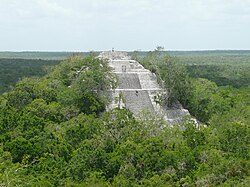
The first dominant presence in the region was the Maya, who migrated to Campeche from Chiapas, Guatemala, and Honduras. Between 600 AD and 900 AD, the Maya civilization reached its zenith, establishing powerful city-states such as Edzná, Xtampak, Becán, and the formidable Calakmul.
Following a mysterious collapse around 1000 AD, these great cities were abandoned. The region transitioned into smaller settlements where the Maya merged with the Chontal people in the south, maintaining commercial links with the central highland cultures of Mexico. This fragmented political landscape persisted from the 11th century until the arrival of Europeans in the 16th century.
Spanish Conquest and Colonial Growth
European contact began in 1517 when Francisco Hernández de Córdoba and Antón de Alaminos landed at Can-Pech, which Córdoba renamed San Lázaro. However, the Spanish encounter with the local population was often violent; Córdoba himself died after being attacked by warriors in Chakanputon (modern-day Champotón), leading the Spanish to name the area the "Bahía de Mala Pelea" (Bay of the Bad Fight).
The formal conquest of the Yucatán Peninsula began in 1540 under Francisco de Montejos, senior and junior. The Spanish established a port at the site of an old Maya village, introducing sugar cane and other crops. The port of Campeche quickly grew into a commercial powerhouse, rivaling Havana and Cartagena in importance.
Trade and Adaptation
Campeche became a vital artery for the Spanish Empire, exporting tropical hardwoods, agricultural goods, and dyewood (a highly valued textile dye in Europe). It also served as a transit point for gold and silver traveling from Mexico to Spain. In return, the city imported luxury goods, including Austrian crystal chandeliers and Italian marble.
To survive the humid tropical climate, Spanish settlers adapted Maya innovations, such as using hammocks for sleeping and hollow gourds for water storage. They utilized local materials for construction, including mahogany, red cedar, and sahcab (a local limestone).
The Age of Piracy and Fortification
The wealth of Campeche's shipping lanes made it a prime target for pirates. Notorious figures such as Francis Drake, Henry Morgan, and John Hawkins targeted the port. While fortifications began in 1610, they were initially insufficient to repel determined attackers.
The most devastating blow came in 1685 when Laurens de Graaf sacked the city and surrounding haciendas for over a month, killing approximately one-third of the population. In response, the Spanish constructed a massive defensive system, including a 2,560-meter irregular polygon wall and numerous forts. These defenses remained in place until 1890, effectively ending the era of pirate raids.
Political Turmoil and the Path to Statehood
The 19th century brought economic decline and political instability. The opening of the port of Sisal in 1811 diverted trade, and the abolition of slavery following independence crippled agricultural output. Politically, Campeche often clashed with Mérida over the governance of the peninsula.
In 1839, both cities joined an insurrection led by Jerónimo López de Llergo to create an independent state of Yucatán. However, internal divisions persisted; Campeche sought to rejoin Mexico to restore trade links with Mexico City. The outbreak of the Caste War in 1847—a massive indigenous rebellion—and foreign debt pressures eventually forced the region to reintegrate into Mexico in 1849.
After further rebellions and a brief period of French Intervention, Campeche finally achieved its status as a separate state through an agreement with Mérida in 1858. During the Mexican Revolution, the region saw further conflict until the establishment of its current constitution in 1917, which abolished serfdom and slavery on the haciendas.
The Modern Era: Oil and Urban Renewal
While the mid-20th century saw modest growth in timber and fishing, the defining moment for modern Campeche occurred in 1971. A fisherman named Rudesindo Cantarell discovered an oil slick in the Sonda de Campeche (a shallow water region off the coast). This led to the launch of the first platform, Chac Number One, in 1975.
This discovery transformed the state into Mexico's leading petroleum producer, providing 70% of the nation's oil. The resulting economic boom tripled the population of Campeche city and expanded the fishing village of Ciudad del Carmen into a major center. However, this growth also brought environmental challenges and social tension between locals and newcomers.
The wealth from oil enabled the restoration of the city's historic center. The State Office of Cultural Heritage Sites and Monuments refurbished over a thousand facades and monuments, leading UNESCO to declare the capital a World Heritage Site in the 1990s.
Key Facts
- Maya Peak: The civilization reached its height in Campeche between 600 AD and 900 AD.
- Pirate Defense: The city was protected by a 2,560-meter wall built after the devastating 1685 attack by Laurens de Graaf.
- Economic Shift: Transitioned from a colonial trade port (dyewood and hardwoods) to a global oil leader.
- Oil Production: The Sonda de Campeche provides approximately 70% of Mexico's total oil production.
- UNESCO Status: The capital city is recognized as a World Heritage Site due to its preserved colonial architecture.
| Era | Key Characteristics | Major Events/Drivers |
|---|---|---|
| Maya Period | City-state dominance | Rise of Calakmul and Edzná (600-900 AD) |
| Colonial Period | Maritime trade and piracy | Establishment of the port (1540); Wall construction (1685) |
| 19th Century | Political instability | Yucatán independence attempt; Caste War (1847) |
| Modern Era | Industrialization | Oil discovery in Sonda de Campeche (1971) |
Frequently Asked Questions
Why was the port of Campeche so important during the colonial era?
It served as a primary commercial hub for the Spanish Empire, exporting valuable tropical hardwoods and dyewood while handling gold and silver shipments from Mexico to Spain.
What caused the construction of the massive walls around Campeche?
The walls were built primarily in response to a brutal attack in 1685 by the pirate Laurens de Graaf, who sacked the city for over thirty days and killed a third of the population.
What was the Caste War?
The Caste War was an indigenous rebellion that began in 1847 across Campeche and the Yucatán Peninsula, contributing to the region's eventual reintegration into Mexico in 1849.
How did the discovery of oil change the state?
The discovery of oil in 1971 made Campeche the top petroleum producer in Mexico, fueling a massive population boom and providing the funds to restore the city's historic colonial architecture.
What is the Sonda de Campeche?
The Sonda de Campeche is a shallow water region off the coast of the state where Mexico's most significant offshore oil deposits were discovered.