California Courts of Appeal: Organization, History, and Jurisdiction
The California Courts of Appeal serve as the critical intermediate layer of the state's judicial system, reviewing decisions from lower courts before they potentially reach the state's highest authority. These courts are organized into six distinct districts, each managing a specific geographic region of the state to ensure legal accessibility and administrative efficiency.
Key Facts
- Six Districts: California is divided into six appellate districts to manage caseloads across the state.
- Panel System: Cases are typically heard by three-justice panels, which are selected randomly or semi-randomly.
- Administrative Leadership: Each court is led by an Administrative Presiding Justice (APJ) responsible for operations and budget.
- No En Banc Review: Unlike federal courts, California state appellate courts do not allow for the rehearing of cases by all justices of a district.
- Supreme Court Integration: The First, Second, and Third Districts share main courthouses and large courtrooms with the Supreme Court of California.
Organizational Structure and Operations
The operational framework of the Courts of Appeal is designed for flexibility and fairness. When a vacancy occurs on the Supreme Court of California, or if a justice recuses themselves, a Court of Appeal justice is temporarily assigned to fill the gap. Conversely, if the Court of Appeal has a vacancy, the Chief Justice may assign a superior court judge or a retired appellate justice to serve temporarily.
The districts utilize different internal structures. The First and Second Districts are divided into divisions of four justices. In contrast, the Third, Fifth, and Sixth Districts are not divided into divisions; instead, three-justice panels are drawn semi-randomly for each case to ensure an even distribution of work. The Fourth District is unique, featuring three geographically based divisions that operate as separate administrative entities.
Leadership is provided by the Administrative Presiding Justice (APJ). In districts with divisions, the Chief Justice designates one presiding justice as the APJ. In non-divided districts, the presiding justice automatically holds the APJ role, managing personnel, facilities, and the court's budget.
The Six Appellate Districts
First District
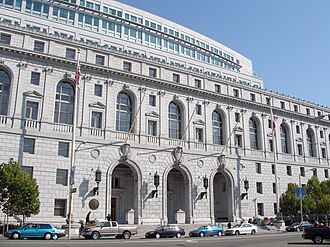
Established in 1904 and based in San Francisco, the First District oversees 12 counties, including Alameda, San Francisco, and Sonoma. It is organized into five non-geographical divisions. Historically, it was the first district to decide a case, ruling on People v. Curtis in 1905 regarding child molestation statutes.
Second District
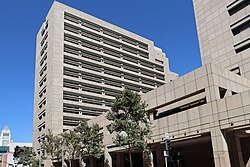
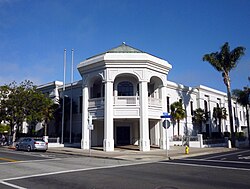
Also created in 1904, the Second District is headquartered in Los Angeles with a secondary courthouse in Ventura. It is divided into eight divisions; Division Six specifically handles appeals from San Luis Obispo, Santa Barbara, and Ventura Counties, while the others focus on Los Angeles County.
Third District
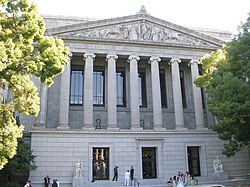
Located in Sacramento, the Third District manages a vast jurisdiction of 23 counties. Unlike the First and Second, it is not divided into divisions and currently employs 11 justices. A notable historical milestone occurred in 1942 when Annette Abbott Adams became the first woman appointed as a justice and presiding justice of the District Courts of Appeal.
Fourth District
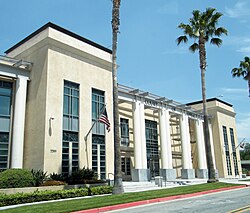
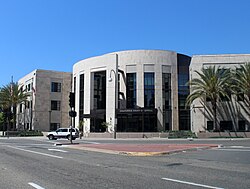
The Fourth District is the most structurally unique, consisting of three administratively separate geographical divisions. It was created in 1929 to reduce the travel burden on lawyers who previously had to travel to Los Angeles.
- Division One: Based in San Diego; handles Imperial and San Diego Counties.
- Division Two: Based in Riverside; handles Inyo, Riverside, and San Bernardino Counties.
- Division Three: Based in Santa Ana; handles Orange County.

Fifth District
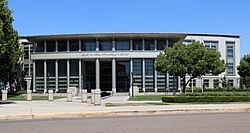
Formed in 1961 and based in Fresno, the Fifth District was created to alleviate the burden on judges who previously had to "circuit-ride" across Southern California. It oversees nine counties, including Kern, Fresno, and Stanislaus.
Sixth District
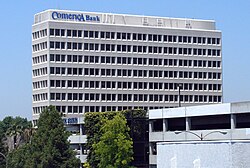
The youngest district, the Sixth was established in 1981 in San Jose to accommodate the population explosion in Silicon Valley. It oversees Monterey, San Benito, Santa Clara, and Santa Cruz Counties. Its first decision was delayed until 1984 due to political disputes over judicial appointments during the transition between governors Jerry Brown and George Deukmejian.
District Summary Table
| District | Main Location | Structure | Key Counties Served |
|---|---|---|---|
| First | San Francisco | 5 Divisions | San Francisco, Alameda, Sonoma |
| Second | Los Angeles | 8 Divisions | Los Angeles, Ventura, Santa Barbara |
| Third | Sacramento | No Divisions | Sacramento, San Joaquin, Shasta |
| Fourth | San Diego/Riverside/Santa Ana | 3 Geo-Divisions | San Diego, Riverside, Orange |
| Fifth | Fresno | No Divisions | Fresno, Kern, Stanislaus |
| Sixth | San Jose | No Divisions | Santa Clara, Santa Cruz, Monterey |
Frequently Asked Questions
How are cases assigned to justices in the Court of Appeal?
Cases are heard by three-justice panels. In districts with divisions, justices are randomly selected from within the division. In districts without divisions, panels are drawn semi-randomly to ensure an even workload across all justices.
What happens if two panels in the same district issue conflicting opinions?
Because California state appellate courts do not have en banc proceedings (where all justices of a district hear a case), a conflict between published opinions persists until the Supreme Court of California resolves the issue in a future case or depublishes the newer opinion.
Who is the Administrative Presiding Justice (APJ)?
The APJ is the lead administrator of a court of appeal. They are responsible for managing the court's budget, facilities, personnel, and overall caseload operations.
Why was the Fourth District originally a "circuit-riding" court?
It was created as a compromise to serve lawyers in San Diego, Fresno, and San Bernardino. To avoid forcing lawyers to travel long distances to Los Angeles, the court rotated its sessions between these three cities throughout the year until permanent divisions were established.
How does the Sixth District differ from the others in its origin?
The Sixth District was created specifically to address the rapid population growth of Silicon Valley and Santa Clara County, reducing the need for local lawyers to travel to San Francisco for appeals.