Caipira People: The Ethnocultural Heritage of Brazil's Interior
The Caipira people represent a distinct ethnocultural group deeply rooted in the heart of Brazil. Originally emerging from the state of São Paulo, this population has expanded its influence across the Brazilian interior, shaping the cultural landscape of several states. To understand the Caipira is to understand the history of Brazil's expansion, from the early explorers to the rural traditions that persist today.
The Caipira identity is closely tied to a geographical and cultural concept known as Paulistânia. This region encompasses not only São Paulo but also significant populations in Goiás, Minas Gerais, Mato Grosso, Mato Grosso do Sul, and Paraná. Historically, their presence also extended to the mountainous regions of Santa Catarina and Rio Grande do Sul.
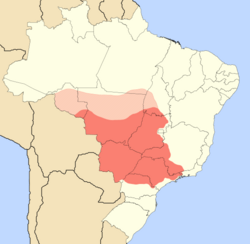
Key Facts
- Population: Estimated between 42 and 48 million as of 2022.
- Origin: Rooted in the state of São Paulo and the culture of the Bandeirantes.
- Language: Predominantly the Caipira dialect and Portuguese.
- Religion: Primarily Roman Catholic.
- Ancestry: A diverse mix of Portuguese, Italian, Spanish, Galician, Indigenous Brazilian, and Jewish origins.
Origins and Etymology
The foundations of the Caipira people lie with the Bandeirantes—explorers who ventured from São Paulo into the backlands in search of precious metals and gemstones. During their expeditions, they encountered the Guaianás, an indigenous group in the Medio Tietê region of São Paulo. It was from this contact that the name "Caipira" emerged, eventually becoming a synonym for the people of São Paulo, much like "gaucho" became synonymous with those from Rio Grande do Sul.
The meaning of the word "Caipira" is subject to different linguistic theories based on the Tupi language:
- Tanned Skin: 19th-century scholar Baptista Caetano d'Almeida suggested it comes from cai (burnt) and pira (skin), referring to the sun-darkened skin of the colonizers.
- Jungle Dweller: Folklorist Luís de Câmara Cascudo proposed the origin is caá (jungle) and pora (inhabitant), meaning "inhabitant of the jungle."
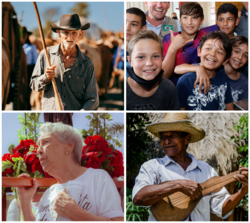
Language and Cultural Evolution
Communication among the early Caipiras was centered around the Paulista General Language, which was spread across the interior by the Bandeirantes. Over time, this evolved into the modern Caipira dialect, which preserves specific elements of both the original Paulista language and Galician-Portuguese.
Intellectuals view Caipira culture as an evolution of the old Paulista society. This heritage is not only linguistic but also ethnic; for instance, Jews who fled the Inquisition in Spain and Portugal settled in São Paulo during the 16th and 17th centuries, contributing to the ancestral makeup of the group.
Stereotypes and Social Perception
In Brazilian society, the term "caipira" has often been used pejoratively to describe rural populations. This is most evident in the works of writer Monteiro Lobato, specifically in his book Urupês. Lobato portrayed the Caipira as an "old plague" or a "parasite of the earth," creating the famous character Jeca Tatu to represent a naive, gullible, and unadaptable rural man.
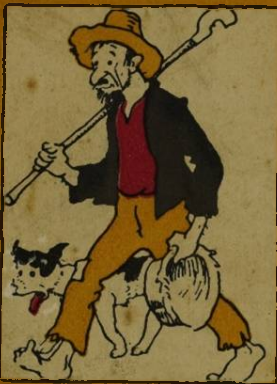
While terms like "hillbilly," "redneck," or "yokel" in English share similarities in how they describe rural people disconnected from urban modernity, "caipira" carries its own specific historical weight. Despite the negative stereotypes, many people use the term as a proud self-identifier. This cultural identity is also celebrated annually during Festas Juninas (June Festivals), where participants dress in traditional, simplified countryside attire.
Genetic Composition
The genetic makeup of the Caipira population reflects Brazil's history of miscegenation. According to the 2022 census, self-identification in Caipira regions consists of 50-55% white, 35-40% pardo (mixed), 6-8% black, and 1% East Asian.
A 2019 systematic review of autosomal DNA provided a more detailed look at ancestry across different Caipira territories:
| Location | European Ancestry | African Ancestry | Amerindian Ancestry |
|---|---|---|---|
| Ribeirão Preto | 86% | 9% | 4% |
| Araraquara | 76% | 18% | 12% |
| Botucatu | 74% | 12% | 9% |
| Campinas | 73% | 20% | 7% |
| Mato Grosso do Sul | 59% | 26% | 15% |
Notable Figures
The Caipira influence extends to many of Brazil's most prominent figures in politics, arts, and sports. Notable individuals include:
- Politics: Multiple presidents, including Prudente de Morais, Campos Sales, and Jair Bolsonaro.
- Arts and Entertainment: Painter Candido Portinari, cartoonist Maurício de Sousa, and singer Marília Mendonça.
- Sports: Football legends Pelé and Oscar, and MMA fighter Fábio Maldonado.
- Culture: Comedian Amácio Mazzaropi and singer Adoniran Barbosa.
Frequently Asked Questions
What is the difference between a Caipira and a Gaucho?
While both are regional identities, Caipiras are originally from São Paulo and the central-southern interior (Paulistânia), whereas Gauchos are from the southernmost region of Brazil, specifically Rio Grande do Sul.
Is the term "caipira" always an insult?
No. Although it has been used pejoratively to mean "naive" or "uneducated" (similar to "country bumpkin"), it is also used as a positive self-identifier to express pride in rural heritage and traditional culture.
What is the Caipira dialect?
It is a distinct way of speaking Portuguese that evolved from the Paulista General Language, preserving elements of old Paulista and Galician-Portuguese linguistic traits.
Who was Jeca Tatu?
Jeca Tatu is a fictional character created by writer Monteiro Lobato. He serves as a stereotype of the rural Caipira man, often portrayed as gullible and disconnected from civilization.
Which states are part of the Caipira cultural region?
The primary areas include São Paulo, Goiás, Minas Gerais, Mato Grosso, Mato Grosso do Sul, and Paraná.