Jesuit Missions of the Guaraní: The Rise and Fall of the South American Reductions
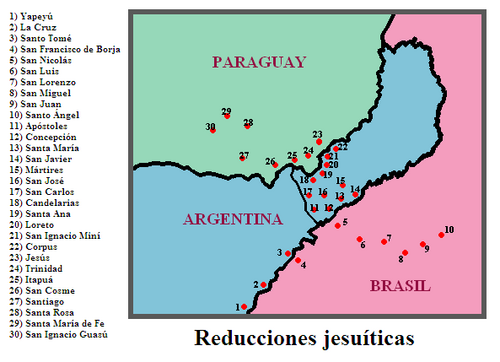
In the heart of South America, straddling the borders of present-day Argentina, Brazil, and Paraguay, the Jesuit Order established a unique system of settlements known as Indian reductions (Spanish: reducciones de indios). These communities were designed to gather native populations, primarily the Guaraní people, to impart Christianity and European culture while shielding them from the harsher realities of colonial exploitation.
Often viewed through contrasting lenses, these missions have been described by some as a "socialist theocracy" or a form of "benign colonialism." Conversely, critics argue that the reductions stripped the indigenous people of their freedom, forced radical lifestyle changes, and exposed them to devastating diseases. Regardless of the interpretation, the missions represented a massive social and religious experiment that lasted for over 150 years.
Key Facts
- Peak Population: The Río de la Plata missions reached a maximum of 141,182 inhabitants in 1732.
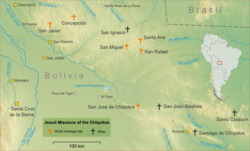
- Geographic Reach: Spanned the "triple frontier" of Argentina, Brazil, and Paraguay, with additional missions in Bolivia.
- Primary Purpose: To convert the Guaraní to Catholicism and protect them from enslavement by colonists.
- End of Era: The missions collapsed following the expulsion of the Jesuits from Spanish territories in 1767.
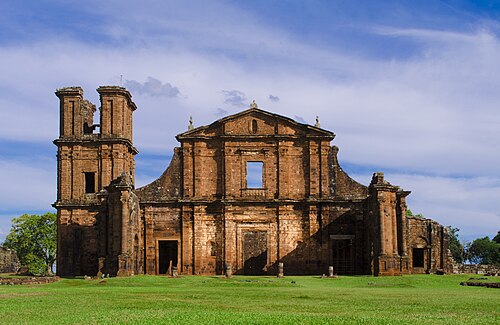
- Legacy: Several mission ruins are now UNESCO World Heritage Sites, and the missions contributed to the development of creole languages like Nheengatu.
The Strategy of Reductions
The Spanish and Portuguese Empires utilized reductions to centralize native populations. The Jesuits, arriving in the New World around 1570, sought to create a "state within a state." By keeping the Guaraní autonomous and isolated from Spanish colonists, the Jesuits aimed to protect them from the encomiendas—a system of forced labor and enslavement.
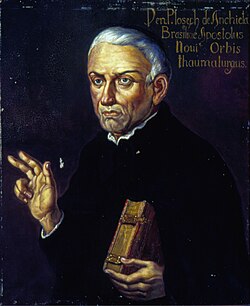
In 1609, a deal between the Spanish governor of Asunción and the Jesuit Provincial of Paraguay allowed the order to establish hamlets along the Paraná river. In exchange for safeguarding the frontier and introducing European culture, the Jesuits were granted a tax holiday that lasted for over a decade.
Early Struggles and the Flight from Guayrá
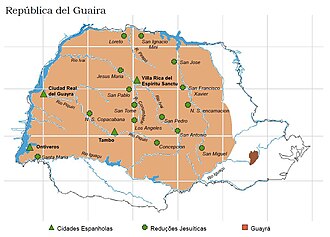
The first reduction was founded in San Ignacio Guazú (present-day Paraguay) in 1609. For over two decades, the Jesuits expanded into the province of Guayrá in modern-day Brazil, establishing 15 missions. However, this growth was met with significant challenges. Guaraní shamans resisted the new faith, and early epidemics killed thousands of natives, as the high density of the settlements facilitated the spread of disease.
The most severe threat came from the Bandeirantes—Portuguese slave hunters from São Paulo. Between 1628 and 1638, these raiders decimated the Guayrá missions. To survive, the Jesuits led approximately 12,000 survivors on a 500-kilometer retreat southwestward into Spanish-controlled territory.
Reestablishment and Military Success
Following the retreat, the Jesuits established 30 reductions in the Río de la Plata region. To defend against continued Bandeirante raids, the Jesuits took the unusual step of arming the Guaraní. They produced gunpowder and muskets within the missions and formed indigenous militias.
This military strategy proved successful in 1641 at the Battle of Mbororé, where a Guaraní militia defeated a force of over 1,500 Bandeirantes and Tupi auxiliaries. At their peak, these militias numbered up to 4,000 troops, featuring cavalry in European-style uniforms.
The Decline and Expulsion
The stability of the missions was shaken by the 1750 Treaty of Madrid, in which Spain ceded territories to Portugal. This led to the Guaraní War (or War of the Reductions), as the native population resisted relocation. The revolt was crushed in 1756 by a combined Spanish and Portuguese force, resulting in over 1,500 Guaraní deaths.
The final blow came in 1767 when King Charles III of Spain expelled the Jesuits from all Spanish dominions as part of the Bourbon Reforms. Seventy-eight Jesuits left the missions, leaving 89,000 Guaraní behind. While some indigenous leaders initially welcomed the liberation from Jesuit rule, the missions quickly fell into financial decay. By 1840, most were in ruins, and the communal lands were eventually redistributed by the Paraguayan government in 1848.
Mission Life and Architecture
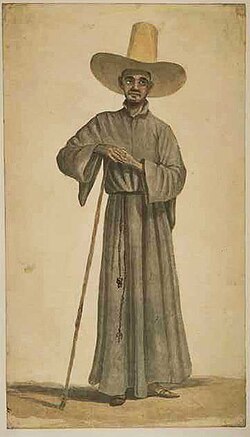
Life in the reductions was highly regimented, managed by Jesuits through Guaraní intermediaries. Despite the strictness, the missions became centers of art and music. Father Martin Schmid, a Swiss Jesuit, is credited with shaping the Baroque architecture and the rich musical culture of the settlements.
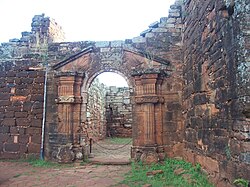
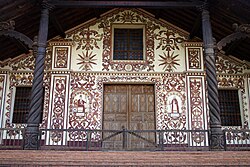
The architecture evolved from simple wood and stucco to massive stone Baroque churches. While many interiors have vanished, the ruins remain a testament to the skill of indigenous craftsmen.
Summary of Jesuit Reductions
| Region | Peak Population | Peak Year | Key Characteristics |
|---|---|---|---|
| Río de la Plata | 141,182 | 1732 | Largest network; strong military militias. |
| Chiquitos (Bolivia) | 25,000 | 1766 | Well-preserved wood and adobe churches. |
| Llanos de Moxos (Bolivia) | 30,000 | 1720 | Established early in 1682. |
Frequently Asked Questions
What were the "Indian reductions"?
Indian reductions were centralized settlements created by religious and secular authorities in Spanish and Portuguese colonies to convert indigenous populations to Christianity and integrate them into European culture.
Why did the Guaraní join the Jesuit missions?
The primary attraction was protection. The missions provided a sanctuary from the encomiendas and the slave raids of the Portuguese Bandeirantes.
How did the missions end?
The missions declined after King Charles III of Spain expelled the Jesuit Order from the Americas in 1767. Without Jesuit leadership, the financial and social structures collapsed, leading to the eventual ruin of the settlements.
What is the lasting legacy of the Jesuit missions?
Beyond the architectural ruins now recognized as UNESCO World Heritage Sites, the missions left a linguistic legacy through the creation of creole languages like Língua Geral and Nheengatu.
Were the missions peaceful?
While they provided protection from external slavers, they were not without conflict. The Guaraní faced internal regimentation, early resistance from shamans, and eventually fought the Guaraní War against Spanish and Portuguese forces.