Spanish Reductions: The Forced Resettlement of Indigenous Peoples
During the era of Spanish colonization, the crown and the Roman Catholic Church implemented a systemic policy of resettlement known as reducciones (reductions). These were urban settlements designed to concentrate indigenous populations—often forcibly—into centralized towns modeled after those in Spain. By relocating people from their ancestral lands into these controlled environments, Spanish authorities sought to streamline the process of religious conversion and administrative governance.
The Royal Spanish Academy defines a reducción as the grouping of indigenous people into settlements for the purpose of assimilation and evangelization. In colonial Mexico, these settlements were more commonly referred to as congregaciones (congregations).
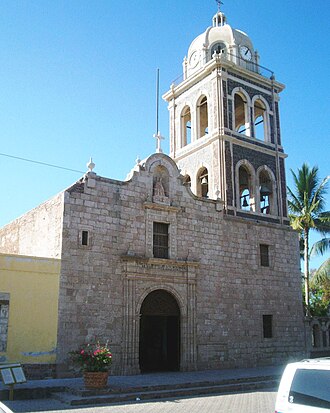
Key Facts
- Purpose: To facilitate civil and religious control, simplify tax collection, and organize indigenous labor.
- Types: Reductions were either religious (administered by Catholic orders, notably the Jesuits) or secular (controlled by government authorities).
- Scope: Implemented across the Caribbean, North and South America, and the Spanish East Indies (the Philippines).
- Impact: Led to the breakdown of ethnic and kinship ties, the spread of disease, and the creation of standardized colonial languages.
The Mechanics of Control and Assimilation
The primary goal of forced resettlement was to concentrate scattered populations into manageable communities. This concentration made it significantly easier for the Spanish to exploit indigenous labor and ensure the promulgation of Christianity. In the Caribbean, where the practice began in 1503, villages were often destroyed to force inhabitants into new sites far from their home territories.
Linguistic Reducción
The logic of the reducción extended beyond physical geography and into language. Scholars use the term reducido to describe standardized colonial registers of indigenous languages. In regions like Yucatán, missionaries created rule-governed varieties of languages—such as Maya reducido and Nahuatl reducido—to facilitate confession, catechesis, and administration. These versions regularized grammar and orthography, introducing Christian semantic categories and syntactic patterns based on Latin and Spanish.
Ecclesiastical Foundations
In the early stages of Christianization, authorities established doctrinas. These were ecclesiastical proto-parish subdivisions used specifically for the indoctrination of the faith before a full parish or curacy was established.
Regional Implementations
| Region | Key Characteristics | Notable Figures/Groups |
|---|---|---|
| Caribbean | Earliest implementation (1503); focused on labor and tax collection. | Spanish Colonists |
| Mexico & California | Known as congregaciones; expanded to Baja and Alta California. | Hernán Cortés (early stages) |
| Andes (Peru/Bolivia) | Massive scale; 1.4 million people moved into 840 communities. | Viceroy Francisco de Toledo |
| Paraguay/Brazil | Religious missions aimed at protecting Guaraní from slavers. | Jesuit Order |
| Philippines | Movement from barangays to a centralized cabecera. | Spanish Colonial Government |
North and South America
In the Andes, Viceroy Francisco de Toledo (1569–1581) executed one of the largest secular reductions, reshaping the former Inca Empire by blending Spanish architectural forms (plazas and cathedrals) with local materials like adobe and stone.
Conversely, the Jesuit reductions in Paraguay and neighboring regions during the 17th and 18th centuries are among the most famous. The Jesuits governed through indigenous chief-turned-governors, attempting to isolate the Guaraní people from European slavers while imposing European customs. This system ended with the global suppression of the Society of Jesus, leading to the sequestration of native wealth and the enslavement of many inhabitants—a factor cited by historian David Brading as a contributor to the Latin American Wars of Independence.
The Spanish East Indies
In the Philippines, the government moved inhabitants from scattered barangays (small villages) to a cabecera (district capital) containing a church and an ayuntamiento (town hall). This allowed for easier population counts and tribute collection. These policies sparked several 17th-century revolts led by babaylan (community shamans), with some villages fleeing deeper into the island interiors to escape control.
Frequently Asked Questions
What is the difference between a religious and a secular reduction?
Religious reductions were established and managed by Catholic orders, most notably the Jesuits, focusing on evangelization and spiritual guidance. Secular reductions were controlled by Spanish government officials and focused primarily on civil administration, labor exploitation, and tax collection.
What was the purpose of the "reducido" language?
Linguistic reducido was a standardized version of an indigenous language. It was designed by missionaries to be "rightly ordered" or "civilized," making it easier to use for religious instruction, legal documentation, and colonial administration.
How did the reductions affect the Guaraní people?
While the Jesuit reductions initially sought to protect the Guaraní from slavers, the eventual transfer of territory to Portugal led to the Guaraní War. This conflict resulted in heavy losses for the Guaraní and the expulsion of the Jesuits.
What was a cabecera in the Philippines?
A cabecera was the centralized town or district capital in the Spanish Philippines. It served as the hub for the reduction system, housing the church and town hall to ensure the colonial government could effectively control and Christianize the population.