Cabin in the Sky: A Landmark All-Black Musical of 1943
Released on April 9, 1943, Cabin in the Sky stands as a significant piece of American cinematic history. Produced by Metro-Goldwyn-Mayer (MGM), this musical film was the directorial debut of Vincente Minnelli and is distinguished by its all-black cast. Based on the 1940 Broadway musical of the same name, the film blends spiritual themes with musical spectacle, featuring some of the most iconic performers of the era.
The film's cultural importance was formally recognized in 2020 when the Library of Congress selected it for preservation in the United States National Film Registry, citing its aesthetic, historical, and cultural significance.
Key Facts
- Director: Vincente Minnelli (with uncredited contributions from Busby Berkeley for the "Shine" sequence).
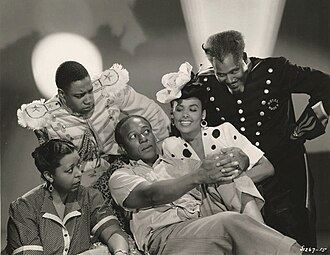
- Cast: Stars Ethel Waters, Eddie "Rochester" Anderson, Lena Horne, and Rex Ingram, with a featured appearance by Louis Armstrong.
- Budget & Profit: Produced for $679,000, it earned $1,953,000 at the box office, resulting in a profit of $587,000.
- Accolades: Nominated for an Academy Award for Best Original Song ("Happiness Is a Thing Called Joe").
- Preservation: Inducted into the National Film Registry in 2020.
Plot Summary: A Tale of Redemption
The story centers on Little Joe, a man whose life of gambling and shiftlessness leads to a fatal confrontation with a man named Domino Johnson. However, Joe is resurrected by angelic powers and granted a six-month grace period to redeem his soul. Guided by "The General" (the Lord's Angel), Joe transforms into a hardworking and loving husband to his wife, Petunia.
This redemption is threatened by Lucifer Jr., the son of Satan, who seeks to drag Joe to Hell. Lucifer Jr. employs various temptations, including sudden wealth via a lottery win and the introduction of Georgia Brown, a beautiful gold-digger. Joe eventually succumbs to these temptations, abandoning Petunia for a life of hedonism with Georgia.
The climax occurs at a nightclub where a violent struggle between Joe and Domino leads to the deaths of both Joe and Petunia. In a twist of fate, Joe is allowed entry into Heaven because Georgia Brown, moved by the tragedy, donated the money Joe gave her to the church. However, the film concludes with a final revelation: the entire supernatural experience was a fever dream. Joe had only been wounded, not killed, and wakes up genuinely reformed and ready to start a new life with Petunia.
Production and Musical Legacy
The production of Cabin in the Sky was notable for its attempt to avoid racial stereotypes. Producers Arthur Freed and Vincente Minnelli sought input from Black leaders, and the script was submitted to the NAACP for review. A writer for the film noted that the NAACP congratulated the production for its treatment of the "black fable."
Musically, the film is a powerhouse. It features the legendary Duke Ellington and his Orchestra, as well as the Hall Johnson Choir. While Louis Armstrong appears as one of Lucifer Jr.'s minions, some of his solo musical contributions were cut from the final theatrical release.
Notable Musical Numbers
- "Happiness is a Thing Called Joe" – Performed by Ethel Waters.
- "Cabin in the Sky" – Performed by Ethel Waters and Eddie "Rochester" Anderson.
- "Things Ain't What They Used To Be" – Performed by Duke Ellington and his orchestra.
- "Honey in the Honeycomb" – Performed by Lena Horne.
Interestingly, a sequence featuring Lena Horne singing "Ain't It the Truth" in a bubble bath was deleted before release. According to Horne, this was due to 1943 standards of moral decency regarding the depiction of a Black woman in a bath.
Film Specifications and Performance
| Category | Details |
|---|---|
| Running Time | 98 minutes |
| Production Company | Metro-Goldwyn-Mayer |
| Budget | $679,000 |
| Box Office | $1,953,000 |
| Language | English |
Reception and Historical Context
Despite its success, the film faced the harsh realities of racial segregation in the 1940s. Many theaters, particularly in the Southern United States, refused to screen films with prominent Black casts. In one instance in Mt. Pleasant, Tennessee, the local sheriff ordered the film to be pulled after only 30 minutes due to threats from a gathered crowd.
Modern critics offer a nuanced view. On Rotten Tomatoes, the film holds an 81% rating, with the consensus noting that while racial stereotypes are present and impossible to ignore, the talent of the cast and the quality of the musical numbers remain irresistible.
Frequently Asked Questions
Who directed Cabin in the Sky?
The film was the first feature film directed by Vincente Minnelli, though Busby Berkeley provided uncredited direction for the "Shine" sequence.
Was the film based on a true story?
No, it is a fictional musical fable based on a 1940 Broadway musical written by Vernon Duke and John La Touche.
Why was the bubble bath scene deleted?
The scene featuring Lena Horne was cut because it was believed that showing a Black woman singing in a bath exceeded the bounds of moral decency for audiences in 1943.
How did the film perform financially?
The film was a commercial success, earning $1,953,000 against a budget of $679,000, resulting in a profit of $587,000.
What is the significance of the National Film Registry induction?
The Library of Congress selected the film in 2020 because it is considered culturally, historically, or aesthetically significant to the United States.