Bukovina History: From Kievan Rus' to Modern Division
Bukovina is a region of profound historical complexity, serving as a crossroads between East Slavic and Romance cultures. Located in Eastern Europe, its territory has transitioned through various empires and states, reflecting the broader geopolitical shifts of the region. From its early days as part of the Kievan Rus' to its current division between Ukraine and Romania, Bukovina's story is one of shifting borders and diverse ethnic coexistence.
Key Facts
- Early Affiliations: Part of Kievan Rus' since the 10th century, later transitioning to the Principality of Galicia-Volhynia.
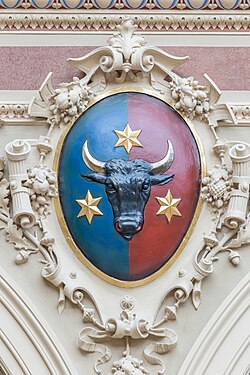
- Moldavian Core: Became the nucleus of the Moldavian Principality in the 14th century; the name "Moldavia" derives from the Moldova River in Bukovina.
- Austrian Rule: Annexed by the Habsburg Monarchy in 1775 and later established as a separate crown land (Duchy of Bukovina) in 1849.
- Interwar Period: United with the Kingdom of Romania in 1918 following the collapse of Austria-Hungary.
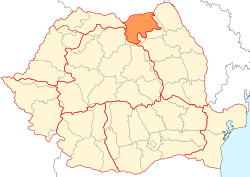
- Modern Division: Divided after World War II, with Northern Bukovina becoming part of the Ukrainian SSR (now Ukraine) and Southern Bukovina remaining in Romania.
Early Medieval Foundations
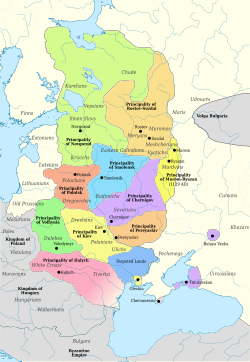
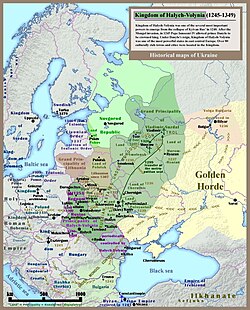
The territory of Bukovina was integrated into Kievan Rus'—a loose federation of East Slavic and Uralic speakers—starting in the late 10th century. Vladimir the Great conquered parts of the region in 981, and by 1084, the remainder was incorporated into the Principality of Terebovlia. Following the fragmentation of Kievan Rus' at the end of the 11th century, the region passed to the Principality of Galicia-Volhynia in 1124.
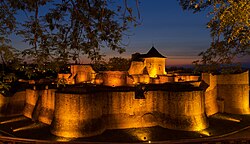
By the mid-14th century, the Moldavian state emerged, with Bukovina serving as its heartland. The capital of the Moldavian Principality moved through several cities, including Baia, Siret, and Suceava, before settling in Iași in 1564. During this era, the state maintained varying levels of vassalage to Poland and later the Ottoman Empire.
The Habsburg Era (1775–1918)
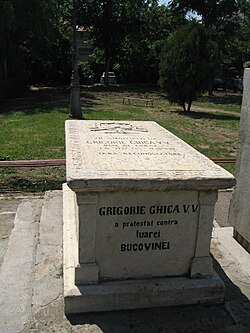
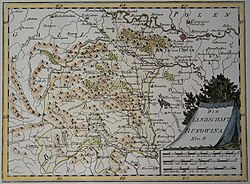
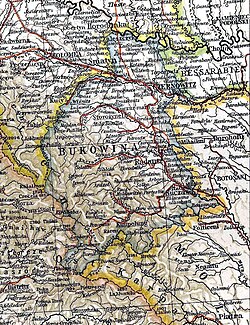
The geopolitical landscape shifted during the Russo-Turkish War (1768–1774). The Habsburg Monarchy occupied north-western Moldavia in 1775, claiming the need for a strategic road between Galicia and Transylvania. Initially managed as a military district, Bukovina eventually became a separate Austrian Kronland (crown land) known as the Duchy of Bukovina in 1849.
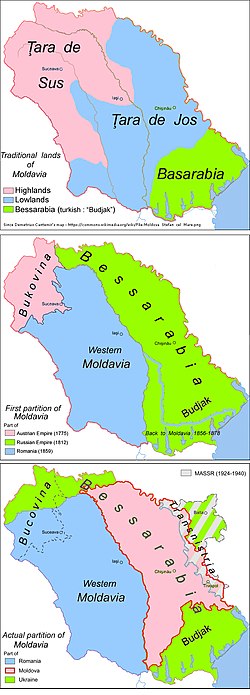
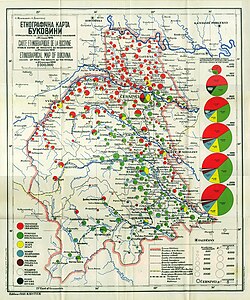
Under Austrian administration, the region was characterized by a delicate ethnic balance. The population consisted primarily of Ukrainians (including the Hutsul subgroup) and Romanians. While Romanians were the majority in the south, the Ukrainian population grew in the north. By the 1880 census, Ruthenians (an archaic term for Ukrainians) and Hutsuls made up approximately 41.5% of the population, while Romanians accounted for 33%.
Integration into the Kingdom of Romania
World War I brought significant instability, with the city of Czernowitz being occupied by Russian forces three times between 1914 and 1917. Following the war's end, the General Congress of Bukovina met in November 1918. Led by Iancu Flondor, the congress voted for union with the Kingdom of Romania, a move supported by Romanian, German, and Polish representatives but opposed by Ukrainians.
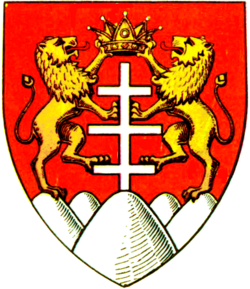
During the interwar period, the region's autonomy was revoked, and it became an ordinary Romanian province. This era saw the suppression of the Ukrainian language and a decline in Ukrainian enrollment at Cernăuți University. According to the 1930 census, Romanians comprised 44.5% of the total population, though Ukrainians remained the majority in the northern districts.
World War II and Soviet Annexation
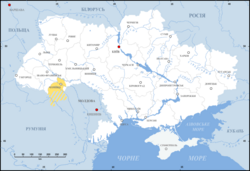
In 1940, the region was divided. Northern Bukovina was incorporated into the Ukrainian SSR, a decision influenced by the strong Ukrainian presence in the north and the leadership of Nikita Khrushchev. This transition was marked by severe violence and mass deportations. Under NKVD orders, thousands of families—primarily ethnic Romanians and Jews—were deported to Siberia and Kazakhstan.
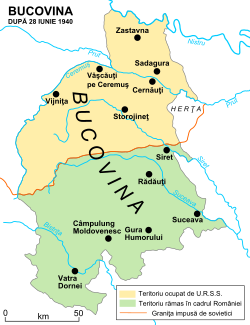
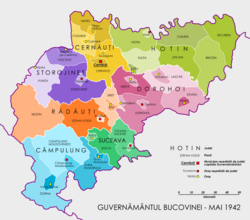
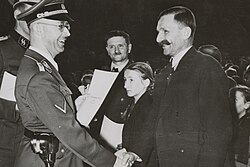
The period was further marred by massacres, such as those at Lunca and Fântâna Albă in 1941, where hundreds of Romanian peasants were killed while attempting to flee to Romania. Additionally, nearly 45,000 ethnic Germans were coerced to resettle in Nazi-occupied Poland between 1940 and 1941.
Post-War Division and Demographics
Following the 1947 Paris Peace Treaty, Romania formally ceded Northern Bukovina to the USSR. The territory became the Chernivtsi Oblast within the Ukrainian SSR. The post-war years saw continued Soviet repressions, including the deportation of approximately 41,000 Romanians, leading to the total abandonment of several Romanian villages.
The demographic shift between 1930 and 1959 was stark. While the Ukrainian and Russian populations increased, the Romanian population decreased by 75,752 people, and the Jewish population decreased by 46,632, largely due to the Holocaust and Soviet deportations.
| Period | Governing Entity | Key Status |
|---|---|---|
| 10th Century – 12th Century | Kievan Rus' | Federation territory |
| 1124 – 14th Century | Principality of Galicia-Volhynia | Regional Principality |
| 14th Century – 1775 | Principality of Moldavia | State Nucleus |
| 1775 – 1918 | Habsburg Monarchy / Austria-Hungary | Crown Land (Duchy) |
| 1918 – 1940 | Kingdom of Romania | Romanian Province |
| 1940 – 1991 | Soviet Union (Ukrainian SSR) | Chernivtsi Oblast (North) |
Frequently Asked Questions
Why is Bukovina divided between two countries today?
The division occurred during World War II. In 1940, the Soviet Union annexed Northern Bukovina, incorporating it into the Ukrainian SSR. The southern portion remained part of Romania, a boundary later formalized by the 1947 Paris Peace Treaty.
What is the origin of the name "Moldavia"?
The name Moldavia (or Moldova) is derived from the Moldova River, which is located within the historical region of Bukovina.
Who were the primary ethnic groups in Bukovina under Austrian rule?
The region was ethnically diverse, primarily composed of Ukrainians (including Ruthenians and Hutsuls) and Romanians, with significant populations of Germans, Jews, and Poles.
What happened to the German population in Northern Bukovina during WWII?
Between September and November 1940, approximately 45,000 ethnic Germans were coerced to resettle from Northern Bukovina to areas of Poland occupied by Nazi Germany.
How did the population change after the Soviet takeover?
Between 1930 and 1959, the Romanian and Jewish populations decreased significantly due to deportations, killings, and the Holocaust, while the Ukrainian and Russian populations increased.