Brest: A Comprehensive History of a Strategic Border City
Brest, one of the oldest cities in Belarus, has served for centuries as a pivotal crossroads between Eastern and Western Europe. Its strategic location has made it a prize for empires, a site of diplomatic breakthroughs, and a witness to some of the most turbulent conflicts in human history. From its early days as a stronghold in Kievan Rus to its role in the World Wars, the city's story is one of constant transition and resilience.
Early Origins and Medieval Struggles
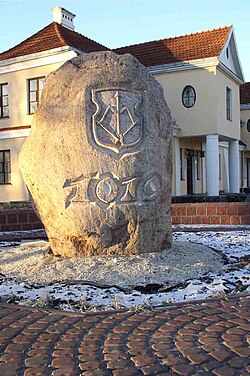
First mentioned in the Primary Chronicle in 1019 as "Berestye," Brest began as a stronghold contested between the princes of Kievan Rus (a federation of East Slavic tribes) and Polish rulers. Throughout the 11th and 12th centuries, the city frequently changed hands between Polish kings and the principalities of Turov and Volhynia.
By 1182, Casimir II the Just of Poland captured the city and established a castle, though it later passed to the Principality of Galicia–Volhynia. The city suffered a devastating blow in 1241 when it was laid waste by the Mongols, remaining largely unbuilt until 1275.
The Era of the Grand Duchy of Lithuania
In 1319, Brest became part of the Grand Duchy of Lithuania. It grew rapidly in importance, becoming the second city in the Duchy (after Vilnius) to receive Magdeburg rights—a set of privileges that granted cities a degree of self-governance and judicial independence. This status transformed Brest into a vital trade hub between Lithuania and Poland.
The city often served as a diplomatic center. In 1409, it hosted a critical meeting between King Władysław II Jagiełło, Grand Duke Vytautas the Great, and Khan Jalal al-Din Khan ibn Tokhtamysh. This alliance ensured Tatar support for the Polish-Lithuanian forces during their decisive victory at the Battle of Grunwald in 1410.
The Polish-Lithuanian Commonwealth
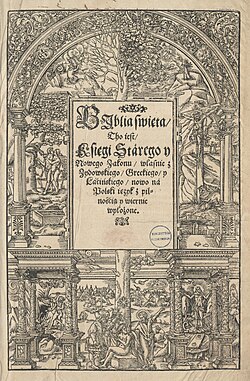
As part of the Polish-Lithuanian Commonwealth, Brest continued to evolve as a cultural and religious center. In 1563, the city saw the publication of the Brest Bible, which was the first Protestant translation and the second complete translation of the Bible into Polish.
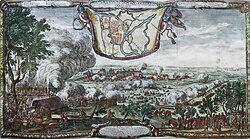
The city was also the site of the 1596 council that established the Uniate Church (the Belarusian and Ukrainian Greek Catholic Churches), bridging the gap between the Roman Catholic and Eastern Orthodox traditions. However, the 17th century brought instability; the city and its castle were captured by Swedish forces in 1657 and 1706. In 1660, the Russian Streltsy launched a surprise attack, resulting in the massacre of approximately 1,700 defenders.
Russian Imperial Rule and the 19th Century
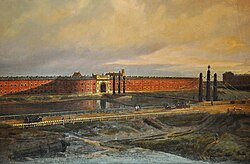
Following the third partition of Poland in 1795, Brest was annexed by the Russian Empire. To secure the region, the Russians constructed the massive Brest Fortress. This project came at a cost to the city's heritage, as the Polish Royal Castle and much of the Old Town were demolished to make room for the fortifications.
During this period, the city's architecture was strictly regulated; because of the fortress, most buildings had to be wooden. A catastrophic fire in 1895 left 15,000 people homeless, though it eventually led to the introduction of more masonry construction.
The World Wars and the 20th Century
World War I and the Treaty of Brest-Litovsk
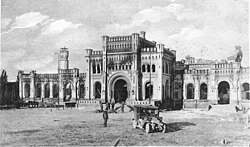
In August 1915, the Imperial German Army captured the town. By March 1918, the city became the site of the Treaty of Brest-Litovsk, a peace agreement between Soviet Russia and the Central Powers that ended their conflict and shifted the region into the German sphere of influence.
Interwar Poland
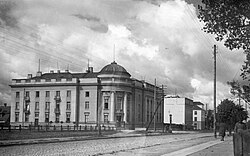
Brest returned to Polish sovereignty in 1919 and was renamed Brześć nad Bugiem in 1923. This era was marked by significant urban development, including the construction of Neoclassical and Modernist public buildings such as the Bank of Poland. The city also had a vibrant Jewish community, which by 1936 made up 41.3% of the population and operated over 80% of private enterprises.
World War II and the Holocaust
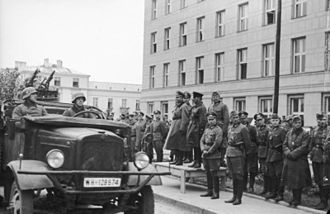
The outbreak of WWII in 1939 saw Brest defended by Polish forces against General Heinz Guderian's Panzer Corps. Following the Molotov–Ribbentrop Pact, the city was occupied by the Soviet Red Army, leading to a joint Nazi-Soviet military parade on September 22, 1939.
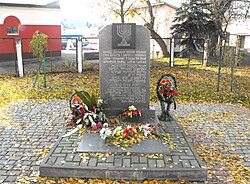
The subsequent Nazi occupation beginning in 1941 was brutal. The Brześć Ghetto was established in December 1941, where approximately 20,000 Jews were sequestered. By October 1942, nearly the entire population was murdered, with only seven survivors. The city also became a site for numerous POW camps and forced labor centers.
Post-War Era
The Red Army re-occupied the city in July 1944, and it was formally annexed by the Soviet Union in 1945. Resistance continued through organizations like the Związek Obrońców Wolności (Freedom Defenders Association), which operated secret schools and preserved monuments until it was dismantled by the NKVD in 1948. In 2019, a mass grave containing 1,214 victims, mostly Jews murdered by the Nazis, was discovered during construction in the former ghetto area.
Key Facts
- First Mention: 1019 in the Primary Chronicle as "Berestye."
- Magdeburg Rights: Granted in 1390, making it a major trade center.
- Religious Milestone: Site of the 1596 council that created the Uniate Church.
- WWI Diplomacy: Host of the 1918 Treaty of Brest-Litovsk.
- Jewish Heritage: In 1936, Jews comprised 41.3% of the population.
- WWII Tragedy: Approximately 20,000 Jews were murdered in the Brześć Ghetto.
| Period | Ruling Power / Affiliation | Key Event/Status |
|---|---|---|
| 11th–13th Century | Kievan Rus / Poland / Galicia–Volhynia | Frequent territorial disputes |
| 1319–1569 | Grand Duchy of Lithuania | Received Magdeburg rights (1390) |
| 1569–1795 | Polish-Lithuanian Commonwealth | Publication of Brest Bible (1563) |
| 1795–1915 | Russian Empire | Construction of Brest Fortress |
| 1919–1939 | Second Polish Republic | Urban modernization and growth |
| 1939–1945 | Soviet Union / Nazi Germany | Holocaust and WWII battles |
| 1945–Present | Soviet Union / Belarus | Post-war annexation and recovery |
Frequently Asked Questions
What were the Magdeburg rights granted to Brest?
Magdeburg rights were a set of legal privileges that allowed the city to govern itself, establish its own courts, and manage trade independently of the local feudal lord, significantly boosting Brest's economic growth.
What was the significance of the Brest Bible?
Published in 1563, the Brest Bible was the first Protestant translation of the Bible into Polish and only the second complete translation in the language, marking a major milestone in Polish literary and religious history.
Why was the Brest Fortress significant in the 19th century?
The fortress was built by the Russian Empire to secure the border. Its construction led to the demolition of the city's Old Town and the Polish Royal Castle, and it strictly limited the type of buildings that could be constructed in the city.
What happened during the Nazi occupation of Brest?
The Nazis established the Brześć Ghetto in 1941, where roughly 20,000 Jews were held before being murdered in 1942. The city also hosted several POW camps and forced labor centers during this period.
What was the Treaty of Brest-Litovsk?
Signed in March 1918, this treaty ended the war between Soviet Russia and the Central Powers, temporarily placing Brest and its surrounding region under the influence of the German Empire.