Bremen Soviet Republic: The Rise and Fall of a Revolutionary State
In the chaotic aftermath of the First World War, Germany became a crucible of political upheaval. Among the most striking episodes of this era was the emergence of the Bremen Soviet Republic (Bremer Räterepublik), an unrecognized revolutionary state that briefly seized control of the industrial port city of Bremen. Though it lasted only a few weeks in its formal capacity, the republic represented a radical attempt to replace traditional parliamentary governance with a system of workers' and soldiers' councils.
The regime presided over the city from November 14, 1918, until its violent suppression on February 4, 1919. Its existence highlighted the deep ideological fractures within the German left and the tension between revolutionary socialism and the emerging democratic order of the Weimar Republic.
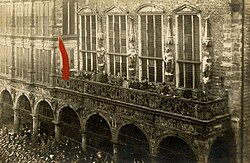
Key Facts
- Established: January 10, 1919 (formally declared).
- Disestablished: February 4, 1919.
- Capital: Bremen, Germany.
- Government Type: Soviet republic (Council-based).
- Key Leader: Alfred Henke (Chairman).
- Legislature: Bremen Workers' and Soldiers' Council.
- Outcome: Suppressed by the regular army and Freikorps (irregular paramilitary forces).
The Path to Revolution
Bremen had long been a stronghold for democratic-left politics. By 1912, the Social Democrats (SPD) and Left Liberals dominated the local vote, yet the city's actual power remained concentrated in an oligarchic Senate and a restrictive eight-class franchise. The deprivations of the Great War shattered the legitimacy of this system.
On November 6, 1918, thousands of shipyard and factory workers demonstrated at the Bremen City Hall. This movement quickly coalesced into a Workers' and Soldiers' Council, consisting of 180 workplace delegates and 30 soldiers. Led by Alfred Henke of the Independent Social Democrats (USPD), the council initially sought a moderate transition, assuring citizens that private property would be protected and calling for cooperation from the existing bureaucracy.
However, the political climate shifted rapidly. Following elections on January 6, 1919, a coalition of the Communist Party of Germany (KPD) and the USPD seized the initiative. On January 10, they formally declared the Bremen Soviet Republic, cutting ties with the more moderate Majority Social Democrats (MSPD) and the remnants of the old Senate.
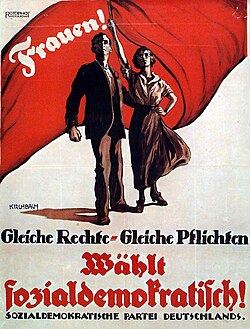
Internal Divisions and Ideological Conflict
The new republic was plagued by internal strife regarding its mandate and the future of socialist reconstruction. Three primary factions emerged:
- The International Communists of Germany (IKD): Led by Johann Knief, they advocated for a Leninist approach, viewing the party as the primary organizational force.
- Council Communists: Influenced by Antonie Pannekoek, they rejected both parties and trade unions, believing power should reside solely in democratic labor councils.
- The USPD: They viewed the councils as transitional tools to facilitate the socialization of the economy.
The Struggle for Gender Equality
The republic also faced criticism over its treatment of women. Despite socialist rhetoric regarding equality, Chairman Alfred Henke expressed skepticism about women's political maturity and their role in the franchise. Women delegates pointed out systemic discrimination, noting that unemployment benefits and council compensation for women were only one-third of those paid to men. This alienation drove many women toward the national parliamentary elections, which promised universal suffrage.
Political Isolation and Collapse
The legitimacy of the Soviet Republic was severely undermined by the national elections for the Weimar National Assembly on January 19, 1919. In Bremen, the MSPD won 42% of the vote, while the USPD received only 18.2%, and the Communists boycotted the vote entirely. This result proved that the majority of the population preferred parliamentary democracy over a council system.
Simultaneously, the city faced a financial crisis. Banks refused further loans unless the former financial administration was restored and free elections for a city assembly were held. By January 18, the USPD-led council agreed to schedule these elections to avoid total collapse, further compromising the republic's revolutionary stance.
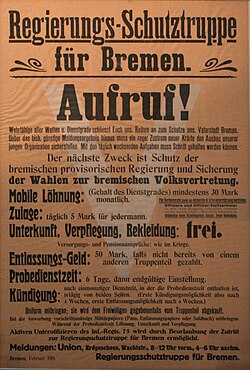
The Military Suppression
The end of the republic came swiftly. The provisional government in Berlin, led by Defense Minister Gustav Noske, ordered a military advance. A force of 3,000 regular troops and 600 Freikorps volunteers converged on the city.
The republic's defenses were disorganized, consisting of roughly 1,000 inexperienced defenders and 250 sailors from Cuxhaven. The heaviest fighting occurred in the working-class districts of Walle and Gröpelingen, involving light artillery and tanks. The conflict resulted in the deaths of 24 government troops, 28 armed workers, and 29 civilians.
Summary of the Bremen Soviet Republic
| Feature | Details |
|---|---|
| Duration | January 10, 1919 – February 4, 1919 |
| Primary Goal | Establishment of a socialist council-based state |
| Key Political Parties | KPD, USPD, MSPD |
| Main Conflict | Council system vs. Parliamentary democracy |
| Ending Force | Reichswehr and Freikorps |
| Long-term Result | Adoption of universal adult suffrage in 1920 constitution |
Frequently Asked Questions
What was the Bremen Soviet Republic?
It was an unrecognized revolutionary state formed during the German Revolution of 1918–1919. It attempted to govern the city of Bremen through a system of workers' and soldiers' councils rather than a traditional parliament.
Who led the Bremen Soviet Republic?
The republic was led by Alfred Henke of the Independent Social Democrats (USPD), who served as the chairman of the executive committee.
Why did the republic fail?
The republic failed due to internal ideological divisions, a lack of popular support (as evidenced by the January 19 elections), a severe financial crisis, and the military intervention of the German army and Freikorps.
How did the republic treat women?
Despite its socialist goals, the republic was discriminatory. Women were paid significantly less than men for both unemployment benefits and council work, and leadership expressed doubts about their political readiness.
What happened after the republic was suppressed?
Elections for a Constituent Assembly were held in March 1919. Eventually, a new constitution was promulgated in May 1920, which abolished the old class-based suffrage and established universal adult suffrage for the city of Bremen.