Brass Bands: A Global History of Styles and Traditions
A brass band is a musical ensemble primarily composed of brass instruments, typically supported by a percussion section. While the core definition focuses on brass, certain regional traditions—most notably in Japan and New Orleans—include woodwinds. In more formal musical terminology, ensembles that blend brass and woodwinds are often categorized as military bands, concert bands, or "brass and reed" bands.
Key Facts
- British-style bands are characterized by a warm timbre due to the use of conical bore instruments.
- New Orleans brass bands were pivotal in the development of traditional jazz, blending European military music with African folk traditions.
- Balkan brass music originated in the 19th century, evolving from military signals into folk entertainment.
- Fanfare orchestras are a specific brass band variation common in Belgium and the Netherlands that includes saxophones.
- Beni is a unique Zanzibari tradition that began as a parody of colonial military bands.
Regional Styles and Traditions
Balkan Brass Bands
Originating in the 19th-century Balkans, this style is deeply rooted in the First Serbian Uprising of 1804. During the revolt against the Ottoman Empire, the trumpet served as a military tool for gathering soldiers and announcing battles. Over time, soldiers began using the instrument to transpose popular folk songs during their downtime. Today, this music is popular in Serbia, Albania, North Macedonia, Romania, Bulgaria, and Northern Greece, often featuring fast tempos and accompanying kolo (a traditional South Slavic circle dance). Performers, known as trubači, include acclaimed artists like Boban Marković Orkestar and Goran Bregović.
British-Style Brass Bands
The British tradition is highly structured, often centered around local industries and community competitions. A full complement of 28 players typically includes a soprano cornet, various B&supb; cornets, a flugel horn, tenor horns, baritone horns, tenor and bass trombones, euphoniums, tubas (basses), and a percussion section.
A defining characteristic of the British style is the conical bore of most instruments (excluding trombones), which produces a warm timbre distinct from the bright, piercing sound of cylindrical bore instruments like trumpets. This tradition is widespread in Great Britain, Australia, New Zealand, Norway, North America, and parts of Europe.
The Salvation Army has also integrated brass bands into its church since 1878, with the International Staff Band in London being its most famous example. These bands often focus on youth training, starting children as young as 7 or 8 years old.
Fanfare Orchestras of the Low Countries
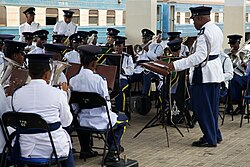
Mainly found in Belgium and the Netherlands, with presence in France, Germany, and Luxembourg, fanfare orchestras differ from British bands by the inclusion of saxophones. While these exist as both military and civil entities, many modern musical associations in the Low Countries now host both fanfare and British-style brass bands.
New Orleans Brass Bands
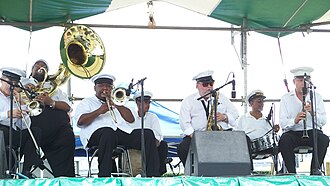
Emerging in the late 19th and early 20th centuries, New Orleans brass bands fused European military music with African folk music brought by enslaved West Africans. This fusion was a cornerstone in the birth of traditional jazz. Early influential groups included the Eureka, Onward, and Excelsior Brass Bands.
These ensembles are famously associated with jazz funerals and "second line" parades. Modern iterations, such as the Treme Brass Band, continue to influence the genre.
Hip-Hop and Funk Influence
In the 1970s and 80s, a renaissance occurred in New Orleans as bands integrated funk, hip hop, and bop. This style, sometimes called Brasspop or Urban Brass, often replaces the double bass with a sousaphone to provide the bass-line. This modern approach emphasizes improvisation and often includes additional percussion, whistles, or even scratch DJs.
This style has spread globally, with notable groups appearing in Japan (Black Bottom Brass Band), Germany (Meute, LaBrassBanda), and various U.S. cities from Boston to Sacramento.
Other Global Traditions
- Polynesia: The Royal Hawaiian Band, founded in 1836, is the second oldest municipal band in the U.S. Similar traditions have developed in Tonga, Samoa, and among the Māori of New Zealand.
- Zanzibar: Beni is a rhythmic, dance-focused wedding entertainment that originated as a mockery of colonial military bands.
Festivals and Competitions
Brass bands are celebrated worldwide through various contests and festivals. The European Brass Band Contest is a major annual spring event, while the North American Brass Band Association hosts a similar competitive convention every March or April.
Cultural festivals like the Tarragona International Dixieland Festival in Spain showcase a mix of Dixieland and world music brass bands. In the U.S., the Great American Brass Band Festival in Kentucky and the HONK! festivals in Boston, Seattle, and Austin bring together diverse groups, ranging from political action bands to Klezmer and DIY community ensembles.
Brass Band Summary
| Style | Primary Region | Key Characteristics | Notable Instruments |
|---|---|---|---|
| British | UK, Commonwealth | Warm timbre, conical bores, competitive | Cornets, Euphoniums, Tubas |
| New Orleans | USA (Louisiana) | Jazz fusion, parade-oriented | Trumpets, Sousaphones, Clarinets |
| Balkan | Southeastern Europe | Fast tempos, folk-based | Trumpets (Trubači) |
| Fanfare | Belgium, Netherlands | Civil and military traditions | Brass and Saxophones |
| Beni | Zanzibar | Wedding dance, rhythmic | Brass and Percussion |
Frequently Asked Questions
What is the difference between a brass band and a concert band?
A true brass band consists primarily of brass instruments and percussion. A concert band (or military band) typically includes a wider array of woodwind instruments, such as flutes, oboes, and clarinets.
Why do British brass bands have a "warm" sound?
This is due to the use of instruments with a conical bore (where the tubing gradually widens), which creates a softer, warmer tone compared to the cylindrical bores of trumpets and trombones.
What is a "second line" in New Orleans?
The second line refers to the parade participants who follow the official brass band (the first line) during jazz funerals and other celebrations, dancing and joining the procession.
What role did the trumpet play in Balkan brass music?
Originally used as a military instrument to wake soldiers and announce battles during the First Serbian Uprising, the trumpet eventually became a tool for entertainment, used to play folk songs.
Which instrument typically provides the bass line in Urban Brass music?
In the Hip-hop and funk-influenced Urban Brass style, the sousaphone is typically used instead of a double bass to play the bass-line or rhythmic riffs.