Borogovia: The Elegant Late Cretaceous Troodontid of Mongolia
Deep within the fossil-rich layers of the Nemegt Formation in present-day Mongolia lived a small, agile predator known as Borogovia. As a member of the Troodontidae family—a group of bird-like, intelligent theropod dinosaurs—Borogovia represents a fascinating chapter in the evolution of small carnivores during the Late Cretaceous Period.
Living during the Maastrichtian stage, this dinosaur occupied an ecosystem teeming with diverse prehistoric life. While many dinosaurs of this era were massive, Borogovia was characterized by its slender build and specialized anatomy, making it a unique subject of paleontological study.
Key Facts
- Scientific Name: Borogovia gracilicrus
- Classification: Troodontidae (Theropoda)
- Temporal Range: Late Cretaceous (Maastrichtian)
- Location: Nemegt Basin, Ömnögovĭ province, Mongolia
- Estimated Size: Approximately 2 meters (6 feet) long
- Estimated Weight: Roughly 20 kilograms (45 pounds)
Discovery and Etymology
The story of Borogovia began in 1971 during a Polish-Mongolian expedition to the Altan Uul IV site in the Nemegt Basin. The remains of a small theropod were recovered, though their exact identity remained a subject of scientific debate for several years. Initially, paleontologist Halszka Osmólska considered the specimen to be a possible relative of Saurornithoides.
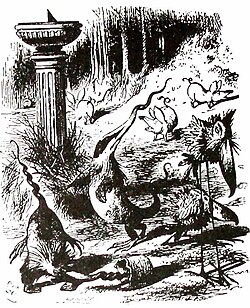
It wasn't until 1987 that Osmólska officially described the find as a new genus and species: Borogovia gracilicrus. The naming of the dinosaur is steeped in literary whimsy; the genus name is derived from the "borogoves," the fantastical creatures mentioned in Lewis Carroll's poem "Jabberwocky" from Through the Looking-Glass. The specific epithet, gracilicrus, combines the Latin words gracilis (meaning "lightly built") and crus (meaning "shin"), highlighting the animal's elegant lower leg structure.
Physical Characteristics and Anatomy
The holotype specimen (ZPAL MgD-I/174) provides critical insights into the animal's biology. The fossil consists of the lower legs of a single individual, including fragments of both tibiotarsi (the bone structure of the lower leg) and parts of the feet, specifically the second, third, and fourth toes.
Borogovia was a relatively small theropod, reaching about two meters in length and weighing approximately 20 kilograms. Its anatomy was notably specialized:
- Elongated Tibiotarsus: The lower leg bones were exceptionally long, measuring an estimated 28 centimeters.
- Unique Toe Structure: Unlike many of its relatives, Borogovia lacked the "falciphoran condition"—the famous sickle-shaped second toe found in dromaeosaurids and other troodontids.
- Weight-Bearing Adaptation: Because the third toe was narrow, researchers have suggested that the second toe, which featured a short phalanx and a relatively flat claw, may have regained a weight-bearing function to provide stability.
: Leg bones of the holotype
Scientific Classification and Relationships
Determining exactly where Borogovia fits on the evolutionary tree has been a complex task for scientists. Since its description in 1987, various studies have proposed different taxonomic placements:
- Original Classification: Osmólska initially placed it within the Troodontidae, noting it might be a junior synonym of Saurornithoides.
- 2021 Revisions: Research by Sellés et al. suggested Borogovia was a member of the Troodontinae subfamily, closely related to Tamarro.
- Current Perspectives: Subsequent analysis by Cau and Madzia in 2021 identified Borogovia as a sister taxon to the Troodontinae, placing it in a distinct but closely related evolutionary position.
Summary of Borogovia Profile
| Category | Details |
|---|---|
| Kingdom | Animalia |
| Phylum | Chordata |
| Class | Reptilia |
| Order | Theropoda |
| Family | Troodontidae |
| Formation | Nemegt Formation |
Frequently Asked Questions
What makes Borogovia different from other troodontids?
The most significant difference is the absence of the "falciphoran condition." While many other troodontids and dromaeosaurids possess a specialized, sickle-shaped second toe, Borogovia's second toe was relatively flat and likely served a weight-bearing purpose.
Where was Borogovia discovered?
The fossils were discovered in the Nemegt Basin of the Ömnögovĭ province in what is now Mongolia.
How large was Borogovia?
Borogovia was a relatively small dinosaur, measuring approximately two meters (6 feet) in length and weighing about 20 kilograms (45 pounds).
What does the name Borogovia mean?
The name is a literary reference to the "borogoves" from Lewis Carroll's poem "Jabberwocky." The species name, gracilicrus, refers to its lightly built or elegant lower legs.
When did Borogovia live?
Borogovia lived during the Late Cretaceous Period, specifically during the Maastrichtian stage.