Cretaceous Period: The Age of Giants and the Great Extinction
The Cretaceous Period represents the final chapter of the Mesozoic Era, spanning from approximately 143.1 to 66.0 million years ago (Ma). It was a time of dramatic geological shifts, extreme climatic fluctuations, and the peak of dinosaur diversity. From the rise of flowering plants to the reign of the most formidable land predators, the Cretaceous shaped the biological landscape of the modern world before ending in one of the most famous cataclysms in Earth's history.
Geologically, the period is divided into two main epochs: the Early Cretaceous and the Late Cretaceous. These divisions help scientists track the evolution of species and the movement of tectonic plates as the supercontinent Gondwana continued to break apart.
Key Facts
- Time Span: 143.1 ± 0.6 Ma to 66.0 Ma.
- Major Event: Ended with the K-Pg mass extinction, widely attributed to a massive meteorite impact.
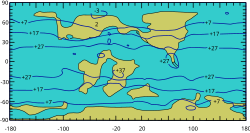
- Climate: Characterized by a "hothouse" environment with three distinct phases: warm-dry, warm-wet, and a later thermal event.
- Iconic Fauna: Home to Tyrannosaurus rex, Triceratops, and the massive flying Quetzalcoatlus.
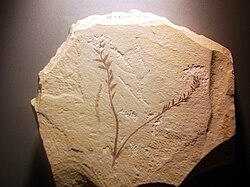
- Botanical Milestone: The emergence and diversification of angiosperms (flowering plants).
Chronology and Subdivisions
The International Commission on Stratigraphy (ICS) divides the Cretaceous into several ages. These stages are defined by the first appearance of specific fossils, such as ammonites or plankton, or by magnetic anomalies in the Earth's crust.
| Epoch | Age/Stage | Start (Ma) | Defining Characteristic/Marker |
|---|---|---|---|
| Late Cretaceous | Maastrichtian | 72.2 ± 0.2 | First occurrence of Pachydiscus neubergicus |
| Campanian | 83.6 ± 0.2 | Last occurrence of Marsupites testudinarius | |
| Santonian | 85.7 ± 0.2 | First occurrence of Cladoceramus undulatoplicatus | |
| Coniacian | 89.8 ± 0.3 | First occurrence of Cremnoceramus rotundatus | |
| Turonian | 93.9 ± 0.2 | First occurrence of Watinoceras devonense | |
| Cenomanian | 100.5 ± 0.1 | First occurrence of Rotalipora globotruncanoides | |
| Albian | 113.2 ± 0.3 | First occurrence of Praediscosphaera columnata | |
| Early Cretaceous | Aptian | 121.4 ± 0.6 | Magnetic anomaly M0r |
| Barremian | 125.77 ± 1.5 | First occurrence of Spitidiscus hugii | |
| Hauterivian | 132.6 ± 0.6 | First occurrence of Acanthodiscus | |
| Valanginian | 137.05 ± 0.2 | First occurrence of Calpionellites darderi | |
| Berriasian | 143.1 ± 0.6 | First occurrence of Berriasella jacobi / Calpionella alpina |
Climate and Environment
The Cretaceous climate was generally warm, though it underwent three broad phases based on palynological (pollen and spore) evidence. The period began with a warm-dry phase (Berriasian–Barremian), transitioned into a warm-wet phase (Aptian–Santonian), and experienced a significant temperature spike known as the Event 6 Thermal Event around 102.5 Ma.
This "supergreenhouse" state allowed life to thrive even in polar regions, though some evidence suggests brief "cold snaps" or icehouse interludes occurred during the mid-Cretaceous.
Flora and Fauna
Terrestrial Life
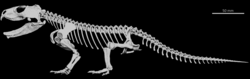
The land was dominated by dinosaurs of all sizes. The Late Cretaceous saw the rise of the Tyrannosaurus rex, one of the largest land predators in history, and the heavily armored Triceratops. Smaller, feathered predators like the Velociraptor (up to 2m long) also roamed the landscape.
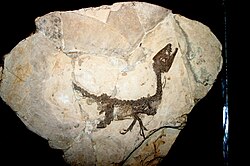
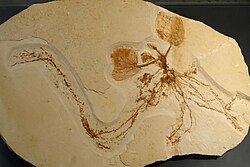
The skies were ruled by pterosaurs, including the Quetzalcoatlus, one of the largest flying animals to ever exist. Early birds also evolved during this time, such as the crow-sized Confuciusornis and the toothed, seabird-like Ichthyornis.
Marine Life
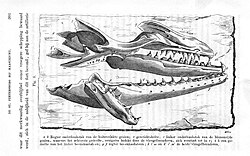
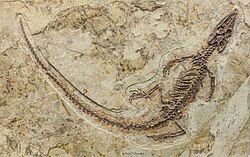
The oceans were equally diverse. Massive marine reptiles like the Mosasaurus became apex predators, while ammonites—spiral-shelled cephalopods—were ubiquitous throughout the seas.
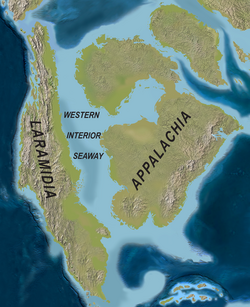
Other notable marine inhabitants included the Cretoxyrhina, a giant shark that hunted pterosaurs and other marine prey in the Western Interior Seaway.
The K-Pg Extinction Event
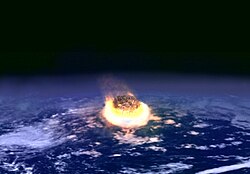
The Cretaceous Period ended abruptly 66 million years ago with the Cretaceous–Paleogene (K-Pg) extinction event. This mass extinction wiped out approximately 75% of all species, including all non-avian dinosaurs.
The primary cause is widely accepted to be a massive meteorite or comet impact. Geologists identify this boundary in the rock record by an iridium-enriched layer—a rare element on Earth's surface but common in asteroids—found globally, with a primary GSSP (Global Boundary Stratotype Section and Point) located in El Kef, Tunisia.
Frequently Asked Questions
What is the difference between the Early and Late Cretaceous?
The Early Cretaceous (approx. 143 to 100 Ma) is characterized by the initial rise of flowering plants and different dinosaur lineages, while the Late Cretaceous (100 to 66 Ma) saw the peak of famous dinosaurs like T. rex and the eventual mass extinction event.
What caused the end of the Cretaceous Period?
The period ended due to the K-Pg extinction event, triggered by a major meteorite impact that caused global environmental collapse, leading to the extinction of non-avian dinosaurs and many marine species.
Were there any mammals during the Cretaceous?
Yes, mammals existed throughout the Cretaceous, though they were generally small and lived in the shadow of the dominant dinosaurs.
How do scientists date the Cretaceous boundaries?
Scientists use a combination of biostratigraphy (the first or last appearance of specific fossils like ammonites) and magnetostratigraphy (changes in the Earth's magnetic polarity recorded in rocks).
What was the climate like during the Cretaceous?
It was generally a "hothouse" climate, significantly warmer than today, with high sea levels and no permanent polar ice caps for much of the period, though it fluctuated between warm-dry and warm-wet phases.