Borana Oromo: Heritage, Governance, and the Gadaa System
The Borana (also known as Boorana) are a prominent Cushitic ethnic group and one of the two primary subgroups of the Oromo people. Primarily inhabiting the Borena Zone of the Oromia Region in Ethiopia and Marsabit County in northern Kenya, the Borana are distinguished by their resilience and their commitment to preserving an ancient social structure. They speak the Borana dialect of the Oromo language, a member of the Cushitic branch of the Afro-Asiatic language family.
Unlike many other groups, the Borana are notable for practicing the Gadaa system—a comprehensive socio-political organization—without interruption, maintaining a way of life that integrates political, economic, and spiritual dimensions.
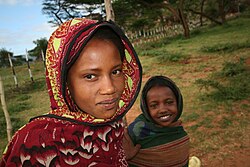
Key Facts
- Population: Estimated at 874,000 in Ethiopia and between 210,000 and 276,236 in Kenya, with smaller populations in Somalia.
- Governance: Governed by the Gadaa system, recognized by UNESCO as protected heritage.
- Language: Borana (a dialect of Oromo).
- Religion: Majority Sunni Islam, with minorities practicing Christianity and Waaqeffanna (traditional belief in a supreme creator).
- Economy: Traditionally semi-nomadic mixed farmers focusing on cattle, camels, goats, and salt extraction.
Demographics and Language
The Borana people are distributed across the border regions of Ethiopia, Kenya, and southwestern Somalia. While population estimates vary, 2019 data suggests approximately 874,000 individuals in Ethiopia and 210,000 in Kenya. They remain the majority population in Moyale and its surrounding areas.
Historically, the Borana utilized the Gadaa system to protect and manage their territories. However, their semi-nomadic lifestyle resulted in slower population growth compared to neighboring groups, which, combined with colonial policies following World War II, led to significant territorial losses.
The Gadaa System of Governance
For over 568 years, the Borana have utilized the Gadaa system, a holistic framework covering all aspects of community life. This system is so culturally significant that it has been recognized by UNESCO as heritage requiring protection.
Political Structure
In the Borana worldview, the ultimate authority is God (Waaq). The community's supreme human leader is the Abba Gadaa, who manages the affairs of the Borana people. The Abba Gadaa is answerable to the Gumi Gayo, a parliament functioning similarly to a modern senate.
The path to leadership is rigorous. An Abba Gadaa is anointed between the ages of 1 and 8 and undergoes a comprehensive education system lasting forty years before assuming leadership. The Gumi Gayo consists of one representative from each of the 17 Borana sub-clans.
Spiritual Leadership
Spirituality is led by the Fite Qalu, the supreme spiritual leader responsible for prayers at all gatherings, including the parliament. The Fite Qalu oversees a hierarchical administrative structure:
- Qalu: Appointed by the Fite Qalu to lead smaller administrative units.
- Jalab: Governors appointed by the Qalu.
- Qae: Village leaders appointed by the Jalab.
Only the Fite Qalu and Qalu possess the authority to open gatherings with prayer.
Economy and Traditional Resources
The Borana economy is rooted in mixed farming, rearing goats, camels, and cattle, alongside planting food crops. A unique economic activity involves the extraction of salt from Chew Bet, the crater of an extinct volcano in southern Ethiopia. This salt is a highly valued commodity in the region.
Central to their survival are the Tulla Saglan (the nine traditional wells). Historically, the Gumi Gayo passed laws to protect these water sources and grazing lands. However, colonial boundaries drawn by Ethiopia, Kenya, and Somalia have fragmented these ancestral lands, making many traditional grazing areas and wells inaccessible to the community.
Defense and Social Structure
The Borana maintain a specialized defense force composed of men aged 32 to 40. These warriors are in the Dori stage of the Gadaa system, the final stage before reaching full Gadaa status. They serve the community for eight years, meeting three times during their tenure to coordinate protection and eventually hand over their responsibilities to the next generation (those in the Raba stage).
Religious Beliefs
The Borana believe in a supreme creator called Waaq. While many have adopted Sunni Islam—finding that it aligns well with their traditional customs—others practice Christianity. Despite these diverse faiths, the community continues to value and uphold the traditional Gadaa system as a core cultural asset.
Historical Challenges
The Borana's history is marked by a struggle against colonial encroachment. On July 31, 1897, following a conquest mission of 15,000 soldiers, the Borana were forced to submit to Fitawrari Habte Giyorgis. This led to significant territorial losses and the imposition of the Neftenya-led Gabbar system of settler colonialism.
| Category | Details |
|---|---|
| Primary Regions | Borena Zone (Ethiopia), Marsabit County (Kenya) |
| Language | Borana (Oromo dialect) |
| Governance | Gadaa System (Abba Gadaa & Gumi Gayo) |
| Key Resource | Chew Bet salt crater and Tulla Saglan wells |
| Spiritual Leader | Fite Qalu |
Frequently Asked Questions
What is the Gadaa system?
The Gadaa system is a traditional Borana form of government that regulates political, social, economic, and spiritual life. It is recognized by UNESCO as a protected heritage site.
Who is the Abba Gadaa?
The Abba Gadaa is the supreme leader of the Borana community, responsible for overall affairs and answerable to the Gumi Gayo (parliament).
What are the Tulla Saglan?
The Tulla Saglan are the nine traditional wells of the Borana, which are critical water sources for their livestock and community survival.
How is the Borana defense force organized?
The defense force consists of men aged 32 to 40 in the Dori stage of the Gadaa system. They serve for eight years to protect the community before passing their roles to the next age group.
What is the significance of Chew Bet?
Chew Bet is an extinct volcano in southern Ethiopia where Borana men extract salt, which is then sold as a highly appreciated commodity in the region.