Bombing of Plaza de Mayo: The 1955 Attempted Coup in Argentina
On June 16, 1955, the heart of Buenos Aires became a battlefield. In a violent attempt to overthrow President Juan Perón, elements of the Argentine Navy and Air Force launched a coordinated air and ground assault on Plaza de Mayo, the city's main square. The attack targeted the Casa Rosada (the seat of government) during a day of official public demonstrations, resulting in one of the deadliest events in the nation's history.
The strike was intended as a decapitation strike—a military tactic aimed at removing the top leadership of a government to cause a total collapse of command—and served as the opening move of an aborted coup d'état.
Key Facts
- Date: June 16, 1955.
- Primary Target: Casa Rosada and Plaza de Mayo, Buenos Aires.
- Casualties: Estimates vary, with identified deaths at 308, including children.
- Belligerents: The Argentine government (loyalists) vs. an anti-Peronist military faction.
- Outcome: Government victory; the coup attempt failed.
- Long-term Result: Perón was eventually overthrown in September 1955 by the Revolución Libertadora.
Historical Background
By 1955, Juan Perón had been in power for nine years. His first term was defined by industrialization, the nationalization of railroads, and significant material benefits for the working class. However, his second tenure faced severe challenges, including stagnant economic growth, rising inflation, and labor strikes.
Beyond economics, Perón's leadership style drew criticism for censorship and the suppression of freedom of expression. Tensions reached a breaking point due to his deteriorating relationship with the Roman Catholic Church. The immediate catalyst for the June 16 attack was a public demonstration to condemn the burning of a national flag, an act allegedly carried out by Perón's detractors during a Corpus Christi procession.
The Attack: Air and Ground Assault
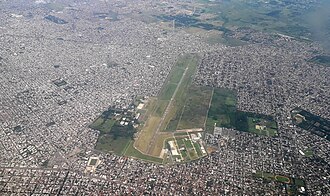
The operation began at 12:40 pm when 30 aircraft—including North American AT-6s, Beechcraft AT-11s, and Consolidated PBY Catalina flying boats—took off from Morón Air Base.
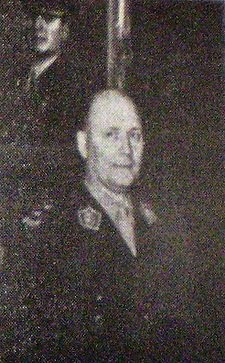
President Perón had been warned of the movement by his Minister of War, General Franklin Lucero, and was advised to seek shelter in a bunker beneath the Libertador Building.
Ground Fighting at Casa Rosada
While the air force attacked from above, two companies of the rebel 4th Marine Infantry Battalion attempted to seize the Casa Rosada. They were pushed back by the Regiment of Mounted Grenadiers and Army troops led by General Lucero. The defense of the palace was modest, relying on two 12.7mm Browning M2 machine guns on the roof and bolt-action Mauser 1909 rifles on the lower floors. Loyal troops were bolstered by armed Peronist civilians.
The Civilian Toll
The tragedy was compounded by a call from union leader Héctor Hugo Di Pietro, who urged workers to gather around the CGT building to defend the government. Despite orders from Perón's adjutant to keep civilians away, thousands arrived in trucks and gathered in the open walkways of Paseo Colón and Belgrano. At 15:00, the main air attacks began, with Gloster Meteor jets bombing and strafing the crowds.
The rebels eventually retreated to the Ministry of the Navy. After a period of siege and a false surrender incident, the rebels finally handed over the building at 17:20 local time.
Casualties and Aftermath
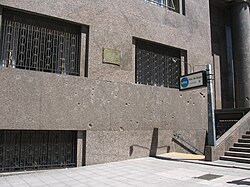
The human cost of the bombing was staggering. While official police reports from 1955 listed 136 deaths, later reports from the Argentine Chamber of Deputies in 2023 suggest higher numbers, including 111 trade unionists and several children. Total ordnance dropped is estimated between 9.5 and 13.8 tonnes.
Following the failure, rebel pilots fled to Uruguay to seek asylum, landing at Carrasco and Colonia airports. Among the coup leaders, Benjamín Gargiulo committed suicide after being informed he would face trial under martial law.
Although Perón survived this specific attempt, the instability persisted. In September 1955, a broader military movement known as the Revolución Libertadora successfully overthrew him, establishing a military dictatorship that lasted until 1958.
Summary of the Conflict
| Category | Government (Loyalists) | Rebels (Anti-Peronists) |
|---|---|---|
| Key Leaders | Juan Perón, Franklin Lucero | Aníbal Olivieri, Samuel Toranzo Calderón |
| Primary Units | Mounted Grenadiers, 1st & 3rd Regiments | 4th Naval Infantry, Naval Aviation, 7th Air Brigade |
| Equipment | Browning M2s, Mauser rifles, Sherman tanks | AT-6, AT-11, PBY Catalina, Gloster Meteor aircraft |
| Outcome | Tactical Victory | Defeat / Exile to Uruguay |
Frequently Asked Questions
Why did the military attempt to bomb Plaza de Mayo?
The attack was driven by growing tensions between President Perón and the Roman Catholic Church, as well as criticism of his censorship and economic policies. The immediate trigger was a dispute over the burning of a national flag during a religious procession.
How many people died in the attack?
Death tolls vary by source. A 1955 police report cited 136 deaths, while other sources identify up to 308 victims. A 2023 report highlights that 111 of the deceased were trade unionists, and at least six were children.
Did the coup attempt succeed?
No, the June 16 attempt failed to remove Perón from power. However, it set the stage for the Revolución Libertadora in September 1955, which successfully overthrew the president.
What happened to the rebel pilots after the bombing?
The pilots were ordered to fly to Uruguay to seek asylum. Most landed at Carrasco Airport and were interned by the Uruguayan government until Perón's eventual fall in September.
What was the role of civilians in the event?
Many Peronist civilians and union workers gathered in the square to defend the government. Unfortunately, this concentration of people made them primary targets for the aerial strafing and bombing, leading to the high civilian death toll.