Bloemfontein: The Judicial Capital and City of Roses
Perched at an elevation of 1,395 meters (4,577 ft), Bloemfontein serves as the judicial capital of South Africa and the provincial capital of the Free State. Known affectionately as the "City of Roses," it is the heart of the Mangaung Metropolitan Municipality. With a blend of deep historical significance, academic prestige, and a vibrant sporting culture, Bloemfontein stands as a pivotal urban center in the South African interior.
The city's identity is shaped by its role as the seat of the Supreme Court of Appeal and its diverse population, which, as of 2011, included 256,185 residents within the city and 747,431 within the broader metro area.
Key Facts
- Official Status: Judicial capital of South Africa and provincial capital of the Free State.
- Nickname: City of Roses.
- Motto: "Floreat" (meaning "Flourish").
- Elevation: 1,395 meters (4,577 ft) above sea level.
- Major Institutions: Home to the Supreme Court of Appeal and the University of the Free State.
- Climate: Characterized by high sunshine hours and a distinct seasonal temperature range.
Historical Evolution
Established in 1846, the city's name is believed to be derived from Jan Bloem II, a Griqua leader, literally translating to "Bloem's fountain." The region underwent several political shifts, transitioning into the Orange River Sovereignty (1848–1854) and later the Orange Free State Republic (1854–1902).
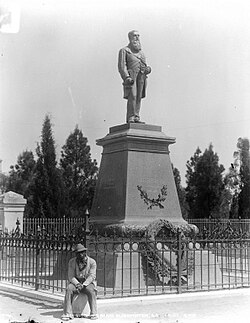
Bloemfontein played a critical role in the lead-up to the Second Boer War. In 1899, the city hosted the Bloemfontein Conference, a final but unsuccessful attempt to prevent conflict between Britain and the South African Republic. Following the war, from 1902 to 1910, it served as the capital of the Orange River Colony before becoming the judicial capital of the Union of South Africa in 1910.
The city also witnessed the birth of the National Party of the Orange Free State in January 1914, founded by James Barry Munnik Hertzog. This party eventually governed South Africa starting in 1948, implementing the system of racial segregation known as apartheid.
Following the end of apartheid in 1994, the administrative landscape shifted. Bloemfontein, Botshabelo, and Thaba Nchu were initially part of the Motheo District Municipality. By May 18, 2011, Mangaung was upgraded to an autonomous metropolitan municipality, with Bloemfontein serving as its primary seat.
Geography and Climate
Bloemfontein experiences a climate with significant temperature variations. Summers are warm, with record highs reaching 39.3°C (102.7°F), while winters can be quite cold, with record lows dipping to -9.7°C (14.5°F). The city receives an average annual precipitation of 535.2 mm (21.07 inches), mostly concentrated in the summer months.
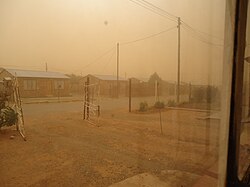
Climate Summary Table
| Metric | Summer (Jan) | Winter (Jul) | Annual Average |
|---|---|---|---|
| Mean Daily Max Temp | 30.8°C (87.4°F) | 18.2°C (64.8°F) | 25.2°C (77.4°F) |
| Mean Daily Min Temp | 15.1°C (59.2°F) | -2.3°C (27.9°F) | 7.2°C (45.0°F) |
| Average Precipitation | 91.8 mm (3.61 in) | 5.3 mm (0.21 in) | 535.2 mm (21.07 in) |
| Sunshine Hours | 287.1 | 265.9 | 3,222.8 |
Culture, Education, and Economy
The city is a hub for education and culture. Public tertiary institutions include the University of the Free State and the Central University of Technology. Notable secondary schools include Grey College and Eunice High School.
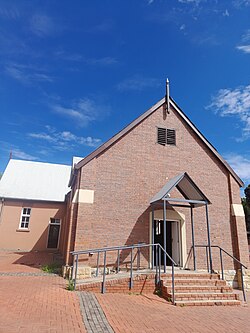
Culturally, the city is famous for its Rose Festival. Much of the activity centers around the Loch Logan Waterfront, the largest shopping center in central South Africa. This hub hosts the Free State Rose Society's champion Rose Cut Competition and the Miss Volksblad Rosebud competition.
Economically, Bloemfontein is driven primarily by the private sector. While its share of the national GDP (1.73%) is lower than some other major South African cities, it is home to significant infrastructure firms such as Raubex Group Ltd and Ruwacon (Pty Ltd).
Sports and Recreation
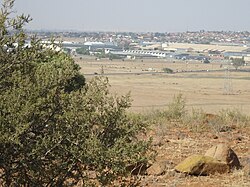
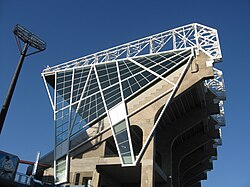
Bloemfontein has a storied sporting history. The Free State Stadium was a host venue for the 2010 FIFA World Cup, notably hosting the match where Germany defeated England 4–1 in the round of 16.
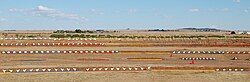
Beyond football, the city is a center for rugby and cricket, producing numerous national players. It is also a recognized destination for shooting sports, specifically Metallic Silhouette Shooting, having hosted the IMSSU World Championships in 2004, 2006, and 2016.
Frequently Asked Questions
Why is Bloemfontein called the "City of Roses"?
The city earned this nickname due to its passion for roses, which is celebrated annually during the Rose Festival, featuring municipal displays and competitions at the Loch Logan Waterfront.
What is the judicial significance of Bloemfontein?
Bloemfontein serves as the judicial capital of South Africa, meaning it is the seat of the Supreme Court of Appeal, the highest court in the land for non-constitutional matters.
Which major sporting events has the city hosted?
The city hosted matches during the 2010 FIFA World Cup at the Free State Stadium and has hosted the IMSSU World Championships for Metallic Silhouette Shooting multiple times.
What are the primary languages spoken in Bloemfontein?
Based on 2011 data, the most spoken first languages are Afrikaans (42.5%) and Sotho (33.4%), followed by Tswana, English, and Xhosa.
What is the role of the Mangaung Metropolitan Municipality?
Mangaung is the autonomous metropolitan municipality that governs the area, with Bloemfontein serving as its main administrative seat.