Black Poor Relief Efforts in 18th Century London
In the winter of 1786, a grassroots movement emerged in London to address the plight of the city's most vulnerable Black residents. What began as a simple act of kindness by a local baker evolved into a structured charitable effort involving the city's financial elite, nobility, and abolitionists. This initiative sought to provide immediate survival aid and long-term solutions for those known as the "Black Poor."
The Origins of the Relief Movement
The movement was sparked on January 5, 1786, when Mr. Brown, a baker located on Wigmore Street in Cavendish Square, placed an announcement in the Public Advertiser. He offered a Quartern Loaf (a standard four-pound loaf of bread) to every "Black in Distress" who visited his shop on the following Saturday between noon and 2:00 PM.
This gesture catalyzed a wider community response. By January 10, a formal meeting was organized to assess the scale of the crisis. While initial concerns focused on Lascars (Asian seamen), the committee discovered approximately 250 individuals in distress. Of these, only 35 were from the East Indies, while the remainder hailed from Africa or the West Indies. Notably, one hundred of these men reported previous service in the Royal Navy.
Organization and Financial Support
The relief effort transitioned from informal gatherings at Mr. Faulder's bookstore on Bond Street to more established meetings at Batson's Coffee House, located opposite the Royal Exchange. The cause attracted significant attention from London's financial and social upper class.
Prominent figures involved in the leadership and funding included George Peters, Governor of the Bank of England; philanthropist and slave owner Thomas Boddington; John Julius Angerstein; and General Robert Melville. The committee's chairmanship shifted over time from Montagu Burgoyne to Benjamin Johnson, and finally to Jonas Hanway. Additionally, abolitionists Samuel Hoare and the Thornton brothers (Henry and Samuel), along with James Pettit Andrews and Sir Joseph Andrews, contributed their support.
The appeal gained further momentum through the patronage of the nobility. The Morning Herald noted on February 14 that the Duchess of Devonshire's contributions inspired other titled figures, including the Countess of Salisbury, the Countess of Essex, and the Marchioness of Buckingham, to join the charitable list.
Funding and Distribution of Aid
By the time the appeal closed on April 18, the committee had raised a total of £890 1s. Contributions came from various sectors, including bishops and clergy such as William Pitt and Herbert Mayo. The largest single donation was collected from the Quakers by Samuel Hoare.
Much of the sympathy for the cause stemmed from the presence of Black Loyalists—individuals who had served in the British Armed Forces and were resettled in London following the British defeat in the American War of Independence.
To distribute these funds, the committee established two primary outlets for outdoor relief (assistance provided to people living in their own homes rather than in an institution): the White Raven tavern in Mile End and the Yorkshire Stingo in Lisson Grove, Marylebone.
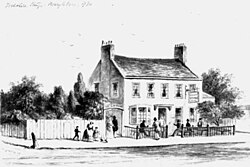
For those requiring more intensive care, the committee established a "sick house" on Warren Street, providing indoor relief (care provided within a residential facility) for 40 to 50 men needing medical attention.
From Immediate Relief to Resettlement
The committee attempted to move beyond alms by helping recipients find employment, particularly as seamen. They provided clothing to make men employable, utilizing charitable methods similar to those used by the Marine Society. However, a general shortage of maritime work, coupled with an influx of surplus labor from the countryside, meant that unemployment remained a persistent issue.
Recognizing that London lacked the industrial capacity to employ everyone, the committee shifted its focus toward emigration. Inspired by individuals like Richard Weaver, who expressed a desire to move to Halifax and other parts of Nova Scotia for better employment prospects, the charity redefined its goals. The objective became providing temporary relief and clothing to prepare the recipients for settlement abroad, where they could live in "freedom and comfort."
Key Facts
- Total Funds Raised: £890 1s by April 18, 1786.
- Population Served: Approximately 250 "Blacks in Distress," including 100 former Royal Navy personnel.
- Primary Distribution Hubs: The White Raven tavern and the Yorkshire Stingo.
- Medical Care: A sick house in Warren Street served 40-50 men.
- Key Demographics: Primarily individuals from Africa and the West Indies, including Black Loyalists from the American War of Independence.
- Ultimate Goal: Transitioned from temporary alms to facilitating resettlement in Nova Scotia.
| Category | Details |
|---|---|
| Initiator | Mr. Brown (Baker, Wigmore Street) |
| Key Donors | Bank of England Governor, Nobility, Quakers, and Clergy |
| Relief Types | Outdoor relief (taverns) and Indoor relief (sick house) |
| Employment Focus | Maritime roles and eventual emigration |
| Destination | Nova Scotia (Halifax) |
Frequently Asked Questions
Who were the "Black Poor" in 18th century London?
The Black Poor were a group of approximately 250 distressed individuals in London, mostly from Africa and the West Indies. Many were Black Loyalists who had served in the British Armed Forces during the American War of Independence.
How did the relief effort begin?
It began with a simple act of charity by Mr. Brown, a baker in Wigmore Street, who offered free bread to Black citizens in distress in January 1786.
What was the difference between the outdoor and indoor relief provided?
Outdoor relief was provided at public venues like the Yorkshire Stingo and White Raven tavern for those living independently. Indoor relief was provided at a dedicated sick house on Warren Street for those requiring medical care.
Why did the committee decide to focus on resettlement in Nova Scotia?
Due to a shortage of maritime work and a lack of new industrial opportunities in London, the committee concluded that the best way for the recipients to achieve "freedom and comfort" was to settle abroad where employment prospects were better.
Who were some of the prominent supporters of the cause?
Supporters included George Peters (Governor of the Bank of England), the Duchess of Devonshire, and abolitionists such as Samuel Hoare and the Thornton brothers.