Understanding the Biological Order: A Key Rank in Taxonomy
In the complex world of taxonomy—the science of naming, describing, and classifying organisms—scientists use a hierarchical system to organize life. One of the most significant levels in this system is the order (Latin: ordo). An order serves as a way to group organisms that share common characteristics and evolutionary history, acting as a bridge between broader groups and more specific ones.
In the standard Linnaean taxonomic hierarchy, an order is positioned between the rank of class (a higher, broader group) and family (a lower, more specific group). For example, all owls are grouped together within the order Strigiformes, reflecting their shared ancestry. Because biological classification is a scientific discipline, the usage and definitions of these orders are governed by nomenclature codes, which are sets of formal rules that ensure every organism has a consistent and universally recognized name.
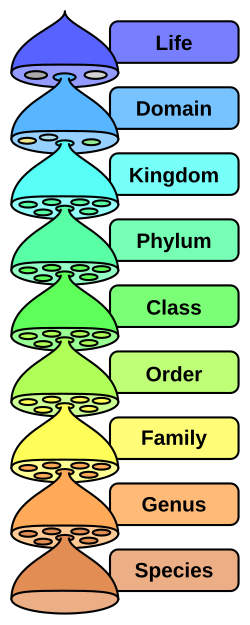
The Role of the Taxonomist
Determining which organisms belong to a specific order is the responsibility of a taxonomist. This process is not always straightforward; taxonomists must decide whether a particular group is distinct enough to be recognized as its own order. Because there are no rigid, universal rules for describing or recognizing these groups, scientific consensus can vary. While some orders are accepted almost universally by the scientific community, others are recognized only occasionally.
Naming Conventions Across Species
The names of orders are typically capitalized and often follow specific linguistic patterns depending on the type of organism being classified. These patterns help scientists immediately identify the rank of a group.
- Plants, fungi, and algae: These orders usually end with the suffix -ales (for example, Dictyotales).
- Birds and fishes: These groups often use the Latin suffix -iformes, meaning "having the form of" (for example, Passeriformes).
- Insects: Most insect orders utilize the suffix -ptera, which refers to "wing" (for example, Lepidoptera).
- Mammals, reptiles, and amphibians: Naming in these groups is less consistent and does not follow a single universal suffix (for example, Primates, Anura, or Crocodylia).
The Zoological Hierarchy
In zoology, the classification of clades—groups of organisms believed to have evolved from a common ancestor—can become quite detailed. While the standard hierarchy is used, several additional intermediate ranks are sometimes employed to provide more precision. For instance, some systems include a superorder above the order or a suborder below it.
In certain specialized classifications, such as those used for mammals, even more granular levels like magnorder, grandorder, and mirorder have been proposed by various researchers to better organize the tree of life.
| Name | Latin Prefix | Examples |
|---|---|---|
| Magnorder | magnus (large, great) | Boreoeutheria, Atlantogenata |
| Superorder | super (above) | Euarchontoglires, Laurasiatheria |
| Grandorder | grandis (large) | Euarchonta, Ferungulata |
| Mirorder | mirus (wonderful, strange) | Primatomorpha, Ferae |
| Order | — | Primates, Carnivora, Artiodactyla |
| Suborder | sub (under) | Haplorrhini, Whippomorpha |
| Infraorder | infra (below) | Simiiformes, Cetacea |
| Parvorder | parvus (small) | Catarrhini, Odontoceti |
Historical Development of the Order Rank
The concept of the "order" as a distinct taxonomic rank—rather than simply being called a "higher genus"—was first introduced by the German botanist Augustus Quirinus Rivinus in the 1690s. However, it was Carl Linnaeus who first applied the rank consistently across the three kingdoms of nature (minerals, plants, and animals) in his landmark work, Systema Naturae.
![Title page of the 1758 edition of Linnaeus's Systema Naturæ.[9]](/images/45/bb/45bbf3fa3d14c6a235d09fb4bc5b0cc139de277f529a04dd6709757d848cdfc5.jpg)
Evolution in Botany
In botany, the application of the term "order" has shifted over time. In Linnaeus's early works, orders were used as artificial tools to subdivide larger classes into smaller, more manageable groups. By the 19th century, when the term was used to describe "natural" groupings, many taxa that were then called "natural orders" are now classified as families.
This historical shift is reflected in the naming of some plant families, which still retain the names of older Linnaean "natural orders," such as Palmae or Labiatae. These are often referred to as descriptive family names.
Classification in Virology
The classification of viruses has also seen significant changes. From 1991 to 2017, the order was the highest rank used in virus taxonomy. However, in 2018, the International Committee on Taxonomy of Viruses (ICTV) introduced higher ranks, extending the hierarchy up to the level of realm. In virology, orders are identified by the suffix -virales.
Key Facts
- The order is a major taxonomic rank located between class and family.
- Orders reflect shared ancestry among organisms.
- Botanical orders often use the suffix -ales, while viral orders use -virales.
- Carl Linnaeus was the first to apply the rank of order consistently across all kingdoms.
- In zoology, additional ranks like suborder and superorder are frequently used to refine classification.
Frequently Asked Questions
Where does the rank of "order" sit in the biological hierarchy?
An order is positioned below the rank of class and above the rank of family.
How can I identify the order of a plant or fungus by its name?
Most orders of plants, fungi, and algae use the suffix -ales at the end of their name.
Is the rank of order used the same way for all living things?
No. While the concept is similar, the specific rules, naming suffixes, and additional sub-ranks vary between botany, zoology, and virology.
Who first introduced the concept of an "order" in classification?
The rank was first introduced by German botanist Augustus Quirinus Rivinus in the 1690s, but Carl Linnaeus was the first to use it consistently across different kingdoms.
What is the highest rank used to classify viruses?
As of 2018, the highest taxonomic rank for viruses is the realm, which sits well above the rank of order.