Biological Domains: The Highest Rank of Life Classification
In the study of biological taxonomy—the science of naming and classifying organisms—the domain represents the highest taxonomic rank. This overarching category groups all living organisms based on fundamental biological differences. While early classification systems relied on observable physical traits, modern taxonomy utilizes genetic markers to map the complex tree of life.
The current three-domain system was introduced in 1990 by Carl Woese, Otto Kandler, and Mark Wheelis. This model shifted the scientific understanding of life by recognizing that some microorganisms, despite looking similar under a microscope, are genetically and biochemically distinct.
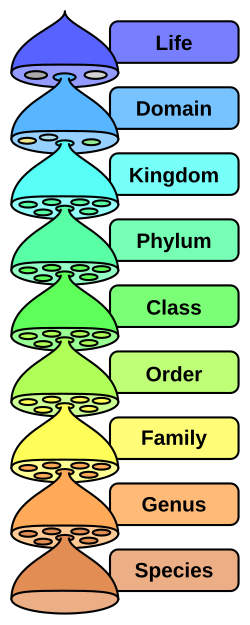
Key Facts
- Highest Rank: The domain is the top level of biological classification.
- Three-Domain Model: Life is divided into Bacteria, Archaea, and Eukarya.
- Genetic Basis: The system is based on differences in 16s ribosomal RNA (rRNA) sequences.
- Prokaryotes vs. Eukaryotes: Bacteria and Archaea are prokaryotes (no nucleus), while Eukarya are eukaryotes (possess a nucleus).
- Exclusions: Non-cellular entities like viruses and prions are not included in the standard three-domain system.
The Evolution of the Domain System
Taxonomy began with Carl Linnaeus in the mid-18th century, and was later refined by Charles Darwin. However, these early systems struggled to classify bacteria because they lacked distinct observable features. In 1974, mycologist Royall T. Moore suggested the term dominion, proposing a system that included viruses, prokaryotes, and eukaryotes, though this did not gain widespread acceptance.
The real breakthrough occurred in 1977 when Carl Woese compared the nucleotide sequences of 16s ribosomal RNA. He discovered that life actually split into three primary branches. Previously, Archaea (then called archaebacteria) were grouped with Bacteria (eubacteria) due to their physical similarities. Woese's research proved that these two groups are internally and biochemically distinct.
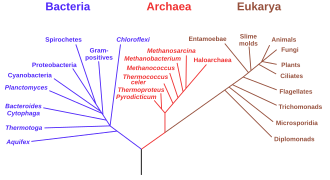
Characteristics of the Three Domains
The primary differentiator for the three-domain system is the unique ribosomal RNA found in each group. While the presence of a nuclear membrane separates Eukarya from the other two, Bacteria and Archaea are distinguished by their RNA markers and the biochemistry of their cell membranes.
Archaea
Archaea are single-celled prokaryotes. They are uniquely characterized by membrane lipids consisting of branched hydrocarbon chains attached to glycerol via ether linkages. These chemical bonds allow many archaea to survive in extreme environments, such as halophiles (high salt) and hyperthermophiles (extreme heat), though many also live in mild conditions.
Physically, they are small, typically ranging from 0.1 μm to 15 μm in diameter and up to 200 μm in length. The genus Thermoplasma represents the smallest known members of this domain.
Bacteria
Like Archaea, Bacteria are prokaryotic. However, their cell membranes are composed of phospholipid bilayers and lack the ether linkages found in Archaea. They also possess different ribosomal RNA structures.
The domain Bacteria is incredibly diverse. This diversity is further complicated by the exchange of genes between different lineages. Because distantly related bacteria often share duplicate genes, it is nearly impossible to organize them into a traditional tree; instead, they are often viewed as a genetic network.
![Phylogenetic tree showing the relationship between the eukaryotes and other forms of life, 2006.[9] Eukaryotes are colored red, archaea green, and bacteria blue.](/images/3c/48/3c4805858c757b0c106d791a4f5b4588a1ba23f2f5acb33e35a93db4a9017863.png)
Eukarya
Eukaryotes are organisms that possess membrane-bound organelles, most notably a nucleus that houses their genetic material. This domain is divided into four kingdoms: Plantae, Protista, Animalia, and Fungi.
Alternative Classifications and Hypotheses
While the three-domain system is widely used, other scientific models exist to explain the relationships between life forms:
- Two-Empire System: Proposed by Mayr (1998), dividing life into Prokaryota and Eukaryota.
- Eocyte Hypothesis: This model suggests only two domains (Bacteria and Archaea), proposing that Eukarya is actually a branch that evolved from within the Archaea.
- Five-Dominion System: Proposed by Stefan Luketa (2012), this adds Virusobiota (acellular with nucleic acid) and Prionobiota (acellular without nucleic acid) to the three standard domains.
![The three-domain tree and the eocyte hypothesis (two-domain tree), 2008.[8]](/images/71/70/71706c22e45b5257c9b3df1b2de66082a71ce310c299c7f08fdac1ec20106f47.png)
| Feature | Bacteria | Archaea | Eukarya |
|---|---|---|---|
| Cell Type | Prokaryotic | Prokaryotic | Eukaryotic |
| Nucleus | Absent | Absent | Present |
| Membrane Lipids | Phospholipid bilayer | Branched hydrocarbons (ether linkages) | Phospholipid bilayer |
| Ribosomal RNA | Unique to Bacteria | Unique to Archaea | Unique to Eukarya |
Frequently Asked Questions
What is the difference between a domain and a kingdom?
A domain is the highest taxonomic rank, sitting above the kingdom. For example, the domain Eukarya contains multiple kingdoms, including Animalia, Plantae, Fungi, and Protista.
Why are viruses not included in the three-domain system?
The three-domain system is designed for cellular life. Because viruses are non-cellular (acellular), they do not fit into the categories of Bacteria, Archaea, or Eukarya.
How did Carl Woese discover the third domain?
Woese used genetic sequencing to compare 16s ribosomal RNA. He found that Archaea were genetically as different from Bacteria as they were from eukaryotes, necessitating a separate domain.
What is the Eocyte hypothesis?
The Eocyte hypothesis is an alternative classification suggesting that eukaryotes did not evolve as a separate primary domain, but instead branched off from the Archaea.
What makes Archaea able to live in extreme environments?
Their cell membranes contain ether linkages in their branched hydrocarbon chains, which provide greater stability under extreme heat and high acidity compared to the membranes of Bacteria or Eukarya.