Biological Class: Defining the Taxonomic Rank
In the vast field of biological taxonomy—the science of naming, defining, and classifying organisms—the class (from the Latin classis) serves as a critical organizational level. A class is a taxonomic rank that groups together related taxonomic orders, acting as a bridge between the broader phylum and the more specific order.
To understand where a class fits, it is helpful to view the hierarchy of biological classification. In descending order of size, the ranks are: domain, kingdom, phylum, class, order, family, genus, and species. While a phylum encompasses a wide array of organisms with a general body plan, a class narrows this down to groups sharing more specific characteristics.
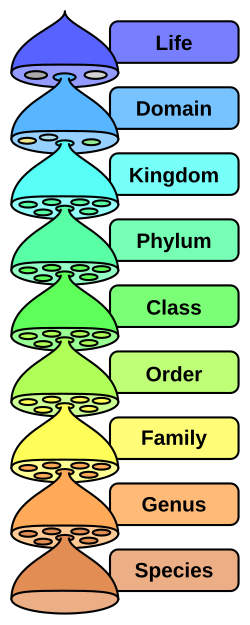
Key Facts
- Position: A class ranks below a phylum and above an order.
- Origin: The rank was first introduced by French botanist Joseph Pitton de Tournefort in 1694.
- Definition: Historically, classes are defined by a distinct grade of organization (complexity of organ systems) and a specific type of construction (layout of those systems).
- Botanical Shift: In modern botany, formal classes are less common, with many researchers preferring informal clades since the 1998 APG system.
- Historical Context: Until the early 19th century, the class was considered the highest level of the taxonomic hierarchy.
The Evolution of the Class Rank
Early Foundations
The concept of the class as a distinct rank with its own name—rather than simply being called a top-level genus (genus summum)—was pioneered by Joseph Pitton de Tournefort in his 1694 work, Eléments de botanique.
The Linnaean System
In 1735, Carl Linnaeus published the first edition of Systema Naturae, where he divided his three kingdoms of nature (minerals, plants, and animals) into classes. While Linnaeus's animal classes remain similar to those used in modern science, his plant classes were designed as an "artificial key" based on the Systema Sexuale (the arrangement of flowers) rather than natural evolutionary groups.
The Shift to Phyla
For a significant period, the class was the peak of the taxonomic hierarchy. This changed in the early nineteenth century with the introduction of embranchements by George Cuvier, which were later termed Phyla by Ernst Haeckel.
Modern Application and Botanical Changes
Defining a class often involves a combination of a "grade of organization"—the level of complexity and differentiation of organ systems—and a "type of construction," referring to the physical layout of those systems. However, the final composition of any given class is ultimately determined by the subjective judgment of taxonomists.
In contemporary botany, the use of the class rank has declined. Since the 1998 publication of the Angiosperm Phylogeny Group (APG) system, which classifies flowering plants up to the order level, many scientists treat ranks higher than orders as informal clades (groups consisting of an ancestor and all its descendants). When formal ranks are still used, they are often scaled down; for example, the class Equisitopsida is used for land plants, with further divisions handled by subclasses and superorders.
| Rank Level | Relationship to Class | Scope |
|---|---|---|
| Phylum | Higher Rank | Broadest structural groups |
| Class | Target Rank | Groups of related orders |
| Order | Lower Rank | Groups of related families |
Frequently Asked Questions
What is a biological class?
A biological class is a taxonomic rank used to group together related orders of organisms. It sits between the phylum (above) and the order (below) in the biological hierarchy.
Who first introduced the rank of class?
The rank of class was first introduced by the French botanist Joseph Pitton de Tournefort in his 1694 publication, Eléments de botanique.
How does the class rank differ in botany versus zoology?
In zoology, classes remain a standard part of the hierarchy. In botany, however, the rank is rarely discussed today, as the APG system (since 1998) favors the use of informal clades for groups higher than the order level.
What criteria are used to define a class?
Historically, classes have been defined by a distinct grade of organization (the complexity of organ systems) and a distinct type of construction (the layout of those systems), though this is often subject to the judgment of the taxonomist.
Was the class always the second-highest rank?
No. Until the early nineteenth century, the class was considered the highest level of the taxonomic hierarchy before the introduction of phyla (originally called embranchements).