Biogeography: The Science of Species Distribution and Geological Time
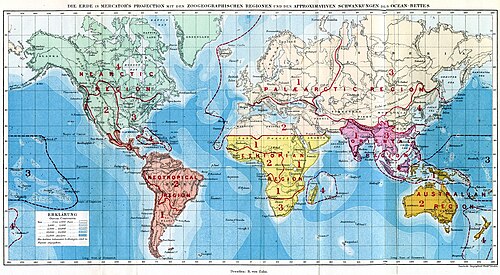
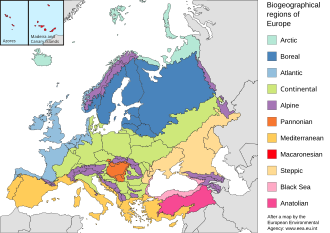
Biogeography is the scientific study of how species and ecosystems are distributed across geographic space and throughout geological time. It examines why certain organisms live where they do and how their presence has shifted over millions of years. Biological communities often vary in predictable patterns based on geographic gradients such as latitude, elevation, isolation, and the total area of a habitat.
Because it seeks to explain the "where" and "why" of life on Earth, biogeography is an integrative field. It synthesizes data from ecology, evolutionary biology, taxonomy, geology, physical geography, palaeontology, and climatology to create a comprehensive picture of life's spatial variation.
Branches of Biogeography
Depending on the type of organism being studied, biogeography is divided into three primary specialized branches:
- Phytogeography: The study of the distribution of plants.
- Zoogeography: The study of the distribution of animals.
- Mycogeography: The study of the distribution of fungi, including mushrooms.
Key Facts
- Biogeography integrates multiple sciences, including geology and evolutionary biology, to map species distribution.
- The Theory of Continental Drift explains how the supercontinent Pangea split, influencing current species locations.
- Modern research relies on massive databases like GBIF (terrestrial) and OBIS (marine).
- Species Distribution Modelling (SDM) allows scientists to predict where species might move due to climate change.
- Allopatric speciation occurs when populations are geographically isolated, leading to the evolution of new species.
The Evolution of Biogeographic Theory
The foundations of biogeography were laid by a series of explorers and biologists, including Alexander von Humboldt, Francisco Jose de Caldas, Hewett Cottrell Watson, Alphonse de Candolle, Alfred Russel Wallace, and Philip Lutley Sclater.
The Impact of Continental Drift
In 1912, Alfred Wegener introduced the Theory of Continental Drift. He proposed that the Earth's continents were once joined in a single landmass called Pangea, which slowly drifted apart due to the movement of tectonic plates. While not widely accepted until the 1960s, this theory revolutionized the understanding of species distribution.
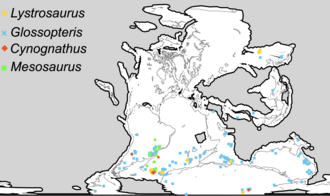
Wegener supported his theory using three primary lines of evidence: the jigsaw-like fit of continental coastlines, geological similarities across distant oceans, and the distribution of fossils—such as the mesosaurs—across different continents.
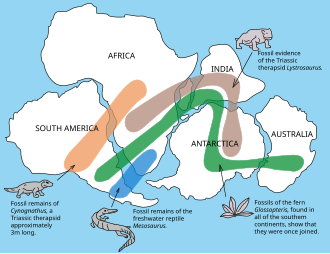
Although Wegener lacked a known mechanism for how the continents moved, his work highlighted how environmental pressures and geographic shifts dictate the biological makeup of a region.
Modern Applications and Technology
Today, biogeography leverages global information systems to track biodiversity on an unprecedented scale. Two primary systems lead this effort:
- Global Biodiversity Information Facility (GBIF): Reported 2.57 billion species occurrence records as of August 2023.
- Ocean Biodiversity Information System (OBIS): Reported 116 million marine species occurrence records as of August 2023.
Using OBIS data, researchers in 2017 identified 30 distinct marine realms, categorized by continental-shelf and offshore deep-sea areas.
Predictive Modelling
Since physical sampling cannot cover every inch of the planet, scientists use Environmental Niche Modelling (ENM) or Species Distribution Modelling (SDM). These methods use environmental preferences—such as food availability and habitat requirements—to predict where a species is likely to exist.
Projects like BiotaPhy (formerly Lifemapper) and AquaMaps utilize these models. As of 2023, they provide modelled distributions for approximately 200,000 terrestrial species and 33,000 species of marine mammals, invertebrates, and teleosts. These models are particularly valuable for forecasting how climate change may shift species distributions in the future.
Core Concepts in Biogeography
To understand the movement and evolution of life, biogeographers rely on several fundamental concepts:
| Concept | Definition |
|---|---|
| Allopatric Speciation | The evolution of new species caused by the geographic isolation of populations. |
| Dispersal | The movement of populations away from their point of origin (related to migration). |
| Evolution | The change in the genetic composition of a population over time. |
| Extinction | The complete disappearance of a species from Earth. |
| Endemic Areas | Regions where a species is found naturally and nowhere else. |
Beyond these basics, Comparative Biogeography investigates biotic area relationships and their hierarchical classification through systematic biogeography.
Frequently Asked Questions
What is the difference between phytogeography and zoogeography?
Phytogeography focuses specifically on the geographic distribution of plants, while zoogeography focuses on the distribution of animals.
How did Pangea affect the distribution of species?
Pangea was a supercontinent that joined most of Earth's landmasses. When it broke apart via continental drift, populations of species were separated by new oceans, leading to allopatric speciation and the distinct biological regions we see today.
What is Species Distribution Modelling (SDM)?
SDM is a predictive method that uses known environmental preferences of a species to create maps of where that species is likely to be found, even in areas that have not been physically sampled.
Why is the Global Biodiversity Information Facility (GBIF) important?
GBIF provides a massive, open-access database of billions of species occurrence records, allowing scientists to analyze global biodiversity patterns and inform conservation efforts.
What is allopatric speciation?
Allopatric speciation occurs when a biological population becomes geographically isolated from its main group, eventually evolving into a separate species due to different environmental pressures and lack of genetic exchange.