Bilad al-Sham: The History and Administration of Islamic Syria
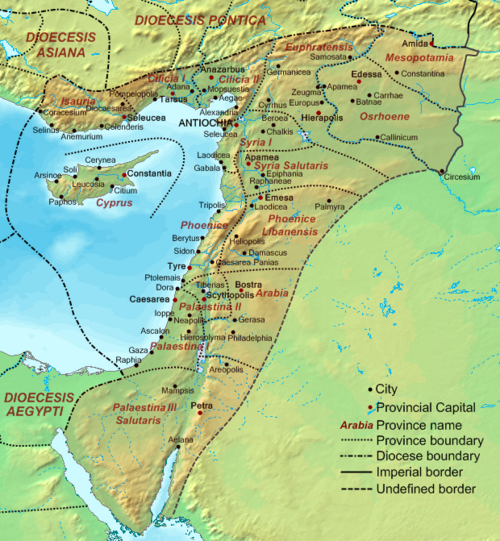
Bilad al-Sham (Arabic: بِلَاد الشَّام), frequently referred to in English as Islamic Syria, was a pivotal province of the early Islamic world. Spanning the Rashidun, Umayyad, Abbasid, and Fatimid caliphates from the 630s until 1099, this region roughly corresponded to the former Byzantine Diocese of the East. From its conquest by Muslim forces to its role as the heart of the Umayyad Empire, Bilad al-Sham served as a strategic bridge between the Arabian Peninsula and the Mediterranean world.
The region's importance peaked under the Umayyad dynasty, when Damascus became the capital of a vast empire. Over the centuries, the province evolved from a frontier zone of conquest into a sophisticated administrative network of military districts, reflecting the complex geography of the Levant.
Key Facts
- Timeframe: Major provincial status from the 630s until the First Crusade in 1099.
- Capital: Damascus served as the primary administrative center, especially under the Umayyads.
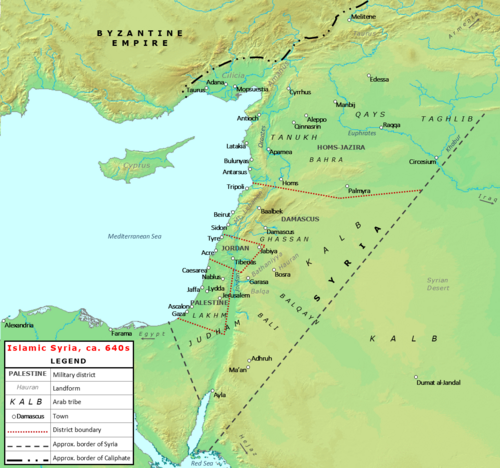
- Administrative Units: Divided into ajnad (military districts), also known as jund.
- Preceding Power: The Byzantine Empire (specifically the Diocese of the East).
- Successor Powers: Control eventually split between the Hamdanids, Fatimids, and later the Crusaders.
The Muslim Conquest of Syria
The transition of Bilad al-Sham from Byzantine to Muslim rule occurred in three distinct phases starting in the 630s, following the Ridda wars in Arabia.
Phase One: Initial Incursions
Under Caliph Abu Bakr, four armies were dispatched from Medina in late 633. Commanders Amr ibn al-As, Yazid ibn Abi Sufyan, Shurahbil ibn Hasana, and Abu Ubayda ibn al-Jarrah were assigned to Palestine, central Transjordan, southern Transjordan, and the Golan Heights, respectively. These early efforts focused on small-scale skirmishes and bringing nomadic and settled Arabic-speaking tribes under Muslim control.
Phase Two: Urban Capture and Decisive Battles
The arrival of Khalid ibn al-Walid in 634 shifted the momentum. Under his supreme command, Muslim forces captured key urban centers including Bosra, Damascus, Gaza, and Beisan. The Byzantine Empire attempted to reclaim the region, but was decisively defeated in three major battles: Ajnadayn in Palestine, and Fahl and Yarmouk in Transjordan between 634 and 636.
Phase Three: Consolidation
By 637, the Muslim armies occupied the northern countryside and isolated towns. Major cities such as Aleppo, Homs, and Jerusalem fell by 638. The conquest concluded with the capture of Mediterranean coastal hubs, including Antioch, Beirut, Tyre, and Ascalon.
The Umayyad Golden Age
Under the Umayyad Caliphate (661–750), Bilad al-Sham became the metropolitan center of the Islamic world. Mu'awiya I established Damascus as the capital, making the province the seat of power for the dynasty.
The Umayyad era was marked by significant cultural and administrative shifts. Caliph Abd al-Malik transformed the government by replacing Greek with Arabic as the official bureaucratic language and introducing a strictly Islamic currency to replace Byzantine coinage. He also commissioned the Dome of the Rock in Jerusalem, establishing it as a major center of Muslim significance.
While the region flourished, it also faced internal strife. The Battle of Marj Rahit in 684 highlighted tribal tensions between the Kalb and Qays tribes. Later, the shift of the capital to Harran under Marwan II increased local opposition, contributing to the eventual collapse of the dynasty.
Post-Umayyad Decline and Fragmentation
The rise of the Abbasid Caliphate in 750 shifted the empire's center of gravity to Iraq (Kufa, Baghdad, and Samarra). Consequently, Bilad al-Sham lost its status as the metropolitan province, and its Arab population was increasingly marginalized by Iranian and Turkish influences.
By the 10th century, centralized Abbasid rule collapsed, leading to a period of fragmentation:
- Tulunids: Controlled the region from 878 to 905.
- Hamdanids: Established an emirate in Aleppo in the north.
- Ikhshidids and Fatimids: Controlled the southern regions.
- Byzantines: Reconquered parts of northern Syria in the 960s under Nikephoros II Phokas.
This division between the north and south persisted until the Mamluk conquest in the late 13th century.
Administrative Structure: The Jund System
Unlike the river-centric administration of Iraq or Egypt, the geography of Syria—characterized by mountains and valleys—required a decentralized approach. Caliph Umar abandoned the idea of a single central garrison at Jabiya in favor of a flexible system of military districts called ajnad (singular: jund).
| Jund (District) | Primary Center/Capital | Notes |
|---|---|---|
| Dimashq | Damascus | The largest of the jund. |
| Hims | Homs | Original district; later split to create Qinnasrin. |
| Filastin | Ramla | Included parts of modern Palestine and southern Jordan. |
| al-Urdunn | Jordan Valley/Galilee | Covered parts of Transjordan and the Galilee. |
| Qinnasrin | Qinnasrin | Created from northern Hims. |
| Al-Sharat | Southern Jordan | Expanded under the Tulunids. |
Over time, additional frontier districts like al-Awasim and al-Thughur were established by Caliph Harun al-Rashid to secure the northern borders. By the 10th century, these divisions became nominal as local potentates seized actual power.
Frequently Asked Questions
What does the term "Bilad al-Sham" mean?
Bilad al-Sham is an Arabic term referring to the region of Greater Syria. In historical contexts, it describes the province encompassing modern-day Syria, Lebanon, Jordan, Israel, and Palestine during the early Caliphates.
Why was the jund system used instead of a single capital?
The complex geography of mountains, plains, and valleys made communication difficult. Multiple regional centers were necessary for efficient defense and administration, a principle that had also been utilized by the Romans and Byzantines.
How did the Umayyads change the administration of the region?
The Umayyads shifted the bureaucracy from Greek to Arabic, replaced Byzantine coins with Islamic currency, and established Damascus as the imperial capital, making the region the center of the Caliphate.
When did the term "Bilad al-Sham" stop being commonly used?
The term remained in use among Arabic-speaking Muslims into the late 19th century, at which point it was generally replaced by "Suriyya" (Syria) in common usage.
What was the impact of the Plague of Amwas?
The plague devastated Muslim camps near Jerusalem around 639, significantly reducing the garrison at Jabiya from 24,000 to 4,000 troops and contributing to the shift toward a more decentralized administrative system.