Sayf al-Dawla: The Warrior Emir of Aleppo and the Hamdanid Dynasty
In the turbulent landscape of the 10th century, few figures embody the struggle between the resurgent Byzantine Empire and the fragmented Abbasid Caliphate as vividly as Sayf al-Dawla. As the Emir of Aleppo, he became the primary defender of the Muslim frontier, leading a life defined by relentless warfare, political intrigue, and a commitment to the defense of his territories against a numerically superior foe.
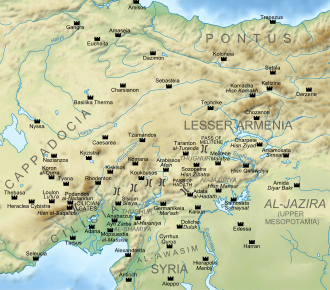
Born into the Hamdanid dynasty, a branch of the Banu Taghlib tribe, Sayf al-Dawla rose to power during a period of systemic collapse within the Abbasid authority. His reign was characterized by a desperate attempt to maintain a buffer state in northern Syria and the Jazira (Upper Mesopotamia), making him a legendary figure in the Arab world for his daring raids into Asia Minor.
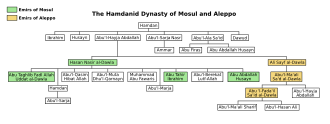
Key Facts
- Full Name: ʿAlī ibn ʾAbū l-Hayjāʾ ʿAbdallāh ibn Ḥamdān.
- Reign: 945–967 CE as the Emir of Aleppo.
- Dynasty: Hamdanid (Banu Taghlib tribe).
- Primary Conflict: The Arab–Byzantine wars of the 10th century.
- Major Adversaries: Byzantine generals and emperors, including Nikephoros Phokas and Tzimiskes.
- End of Reign: Marked by the loss of Cilicia and the decline of Hamdanid power.
Origins and the Rise of the Hamdanids
Sayf al-Dawla was born on June 22, 916, as the second son of Abdallah Abu'l-Hayja. His family, the Hamdanids, were rooted in the Jazira, the region of Upper Mesopotamia. This area served as the power base from which the dynasty attempted to exert influence over the wider Abbasid world.
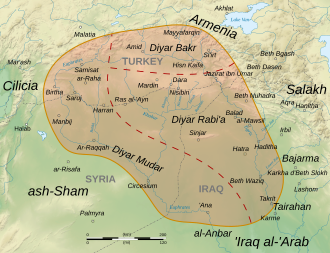
The early career of Sayf al-Dawla was closely tied to his brother, Nasir al-Dawla. Together, they navigated a treacherous political environment where the Abbasid Caliphs were often puppets of powerful warlords. Following a military mutiny in Baghdad in 943, the Hamdanids were forced to retreat, eventually securing an agreement that allowed them to retain the Jazira and nominal authority over northern Syria in exchange for tribute to Baghdad.
The Establishment of the Emirate of Aleppo
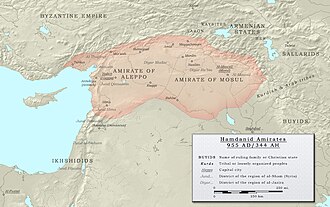
The vacuum left by the collapse of central Abbasid authority led to a period of chaos in Syria. The region shifted between the control of the Tulunids, the Ikhshidids (an Egypt-based dynasty), and various local warlords. In February 944, Aleppo surrendered to the Hamdanids, providing Sayf al-Dawla with the strategic base he needed to establish his own emirate.
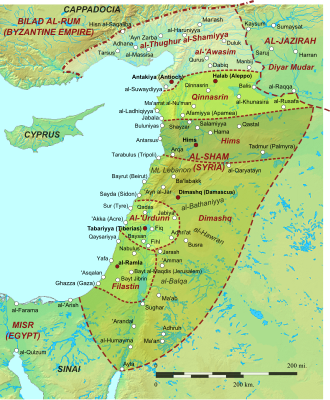
Once established, Sayf al-Dawla focused on consolidating his power. He fought to secure the Syrian littoral and the vital trade routes connecting the coast to the interior. This period was marked by the suppression of internal threats, including Kurdish brigands in the Orontes valley and Qarmatian-inspired revolts by the Kalb and Tayy tribes between 949 and 954.
The Arab–Byzantine Wars
Sayf al-Dawla is most remembered for his role as the chief antagonist of the Byzantine Empire in the East. For over two decades, he engaged in a grueling series of campaigns, fighting in more than forty battles. His strategy relied on destructive raids into Byzantine-controlled Asia Minor to keep the enemy off balance.
Despite initial successes and widespread celebration in the Muslim world, Sayf al-Dawla faced a massive disparity in resources. While his largest forces numbered around 30,000, Byzantine armies were significantly larger and better equipped. The tide turned decisively after 955 with the rise of the Byzantine commander Nikephoros Phokas.
The Turning Tide (945–955)
Early campaigns saw a mix of results. While Sayf al-Dawla scored victories in 948, he suffered a catastrophic defeat in the ghazwat al-musiba (the 'dreadful expedition'), where he lost 8,000 men in a mountain pass ambush led by Leo Phokas.
Byzantine Ascendancy and the Fall of Cilicia
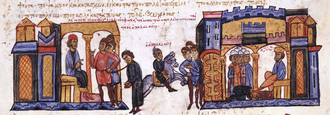
By 956, the Byzantines began a sustained offensive. Despite a hard-fought victory against Tzimiskes in a torrential rainstorm, Sayf al-Dawla could not stop the momentum of the Empire. In 957, the Byzantines razed the stronghold of Hadath. Internal betrayal further weakened the Emir; he was forced to execute 180 of his own ghilman (slave soldiers) after discovering a conspiracy to surrender him for money.
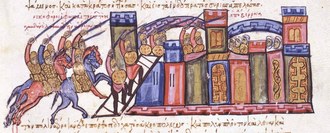
The final blow came with the Byzantine conquest of Cilicia. In 965, the city of Tarsus surrendered, and the region was annexed by the Empire. Nikephoros Phokas proceeded to re-Christianize the area, expelling or converting the Muslim population.
Final Years and Legacy
The twilight of Sayf al-Dawla's reign was marred by physical decline and political instability. He suffered from a debilitating disease and faced repeated rebellions from his own lieutenants, most notably the Circassian general Nadja. Despite these struggles, he attempted to maintain his influence through alliances with the Qarmatians of Bahrayn.
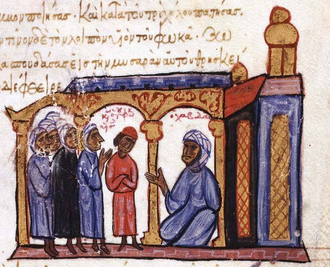
Sayf al-Dawla died on February 8, 967, at the age of 50. He left behind a severely weakened realm. By 969, his successor, Sa'd al-Dawla, saw the loss of Antioch and the Syrian coast, leaving the remaining Hamdanid territories as tributaries to the Byzantine Empire.
| Category | Details |
|---|---|
| Dynasty | Hamdanid (Banu Taghlib) |
| Primary Seat | Aleppo, Syria |
| Reign Period | 945–967 CE |
| Key Military Goal | Defense of the Muslim frontier against Byzantium |
| Major Loss | Cilicia and Tarsus (965 CE) |
| Death | February 8, 967 CE |
Frequently Asked Questions
Who was Sayf al-Dawla?
Sayf al-Dawla was the Hamdanid Emir of Aleppo from 945 to 967 CE, known for his military leadership and his role as the primary defender of the Arab frontier against the Byzantine Empire.
What was the significance of the Jazira to the Hamdanids?
The Jazira, or Upper Mesopotamia, was the ancestral homeland and main power base of the Hamdanid dynasty, providing the resources and tribal support necessary to establish their rule in Syria.
Why did Sayf al-Dawla eventually lose to the Byzantines?
Despite his tactical skill, Sayf al-Dawla was outmatched by the superior numbers and resources of the Byzantine Empire, particularly under the leadership of Nikephoros Phokas, who launched a sustained offensive that broke Hamdanid power.
What happened to the Emirate of Aleppo after his death?
Following his death in 967, the realm continued to weaken. By 969, it had lost Antioch and the Syrian littoral to the Byzantines and was forced to become a Byzantine tributary.
What were the 'ghilman' in the context of his reign?
The ghilman were elite slave soldiers. Sayf al-Dawla's relationship with them was volatile, culminating in the execution of 180 of them after a plot to betray him to the Byzantines was uncovered.