Biblical Ethics: Political Theory, War, Justice, and Gender
While primarily viewed as a religious text, the Bible serves as a significant source of political and ethical thought. Political theorist Michael Walzer suggests that although the Bible lacks a formal political theory, it contains "folk presuppositions" regarding justice, obligation, and the structure of a good society. These ideas are woven through legal codes, accounts of exile, and rules for governance.
Political Ethics and Governance
The Hebrew Bible presents a complex view of authority, advocating for a monarchy in Jerusalem and supporting theocracy—the belief that God is the supreme civil ruler. A prime example is found in the speech of Abijah of Judah, which asserts that only David's progeny were ordained to rule and Aaron's to serve in the Temple, framing any other claims to power as contrary to divine will.
Interestingly, Walzer notes that biblical politics mirror modern consent theory and social contract theory. These concepts suggest that the relationship between the governed and the authority is based on agreement and full knowledge. This framework implies a moral respect for God's laws that exists independently of state law, allowing individuals—such as the herdsman Amos—to publicly challenge kings and priests regarding their moral obligations.
Walzer identifies three pillars of early democratic political ethics in the Hebrew Bible:
- Covenant: An agreement requiring equal adherence from all parties, recognizing poor people, women, and strangers as moral agents.
- Rule of Law: The principle that everyone, including kings, is subject to God's law.
- Prophecy: Prophets from various social strata acted as public interpreters of divine law, offering uninhibited criticism of the powerful.
In the New Testament, political engagement is addressed through the lens of dual loyalty. Scholar Amy E. Black argues that when Jesus commanded the payment of taxes (Matthew 22:21), he was not merely endorsing government but suggesting that loyalty to a secular government is not incompatible with loyalty to God.
Ethics of War and Peace
The Bible addresses warfare through several conflicting ethical lenses: pacifism, non-resistance, just war, and preventive war (crusade). Near Eastern scholar Susan Niditch suggests that these biblical attitudes provide a broader understanding of the nature of war in general.
While the Hebrew Bible does not explicitly advocate pacifism (the opposition to war for any reason), it emphasizes an ethic of peace. The Hebrew term shalom encompasses more than the absence of conflict; it includes social justice, human rights, and economic well-being. Many pacifist arguments draw from the New Testament (e.g., Matthew 5:38–48) or specific Old Testament prophecies, such as Micah 4:3, which envisions swords being beaten into plowshares.
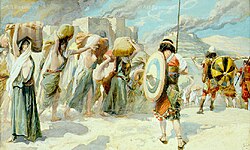
Conversely, scholars Yigal Levin and Amnon Shapira argue that the Bible supports a just war doctrine based on self-defense. They point to prohibitions against wars of expansion and requirements for "purity in the camp" and the humane treatment of prisoners as evidence of a regulated ethical approach to conflict.
The Concept of Herem
A point of significant scholarly debate is herem, or "total war," where God commands the total destruction of certain cities and populations. Some contemporary scholars characterize this as a command for genocide. However, Michael Walzer suggests herem was a common Bronze Age practice imported by Israel. Others, like Paul Copan and Nicholas Wolterstorff, argue these descriptions are examples of hagiographic hyperbole—stylized exaggeration used in ancient religious writing.
Criminal Justice and Legal Principles
Biblical criminal justice is rooted in the belief that God is the ultimate source of justice. Scholar Sam S. Souryal emphasizes that the system relies heavily on the moral character of the administrators, prohibiting racial prejudice, deception, and the abuse of authority.
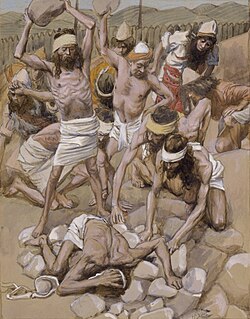
Under Mosaic Law, approximately 20 offenses carried the death penalty. While modern standards may view this as cavalier, biblical ethicist Christopher Marshall explains that these laws were designed to protect the covenant community from "ritual pollution." Despite the severity of some punishments, the Bible introduced elements that mirror modern human rights law, including:
- Due Process: Requirements for fair trials and impartial judgments.
- Equity: Prohibitions against bribes and mandates to treat the rich, poor, native, and stranger equally.
- Protection of the Vulnerable: Special protections for children, women, and strangers.
Gender, Marriage, and Family
Perspectives in the Hebrew Bible
The Hebrew Bible emerged from a predominantly patriarchal society. While male dominance was real, some scholars argue it was fragmentary rather than hegemonic. Notably, the text does not justify the subordination of women by claiming they are innately inferior; instead, Genesis establishes that both males and females are created in the image of God.
Despite this metaphysical equality, legal disparities existed. Adultery was defined more strictly for women, and laws regarding virginity had no male equivalent. The text also discusses the zonah—a woman not under male authority. While often translated as "prostitute," the zonah represented a threat to the patriarchal family structure due to her independence and freedom.
Perspectives in the New Testament
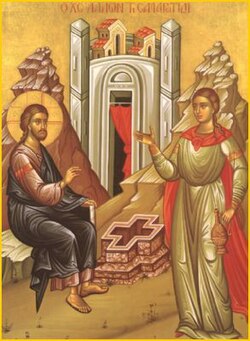
In the New Testament, Jesus is depicted as breaking traditional rabbinic and biblical restrictions on women. He engaged women in public discourse, addressed them with tenderness (calling them "daughters of Abraham"), and held them personally responsible for their own spiritual repentance and forgiveness.

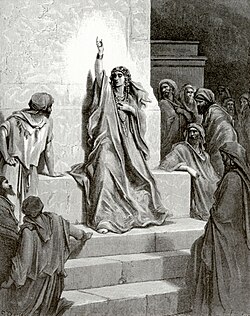
The early church also saw women in significant leadership roles. Scholar Linda Belleville notes that women like Phoebe (a deacon), Lydia, and Nympha (overseers of house churches) held positions of authority. However, traditional patriarchal views continue to cite specific texts, such as 1 Timothy 2:11–15 and 1 Corinthians 14:34-35, to argue for the restriction of women's authority in the church.
Key Facts
- Political Theory: The Bible blends theocratic monarchy with early concepts of social contract and consent theory.
- Warfare: Biblical texts contain a tension between pacifism, just war (self-defense), and herem (total war).
- Justice: Mosaic Law emphasized impartiality and the protection of the vulnerable, though it included capital punishment for ritual pollution.
- Gender: While the Hebrew Bible reflects a patriarchal culture, it asserts that both genders are created in the image of God.
- New Testament: Jesus and the early church expanded the roles of women, including their presence in leadership and public religious life.
| Domain | Key Concept | Primary Ethical Driver |
|---|---|---|
| Politics | Covenant & Consent | Mutual obligation between God, leaders, and the people. |
| Warfare | Just War vs. Herem | Balance between self-defense and divine command. |
| Justice | Impartiality | God as the ultimate judge; fairness for the marginalized. |
| Gender | Imago Dei | Metaphysical equality despite cultural patriarchal structures. |
Frequently Asked Questions
Does the Bible support a specific form of government?
The Hebrew Bible advocates for a theocratic monarchy in Jerusalem, but it also contains elements of consent theory, suggesting that authority requires an agreement between the governed and the ruler.
What is the difference between 'just war' and 'herem' in the Bible?
Just war is based on self-defense and the protection of others, often involving limited conflict and diplomatic attempts at peace. Herem refers to "total war," involving the complete destruction of a city and its inhabitants.
How did biblical law treat the marginalized?
Biblical ethics mandated special protection for the most vulnerable members of society, specifically children, women, and strangers, and required judges to be impartial regardless of a person's social or economic status.
Did Jesus change the role of women in religious life?
Yes, Jesus frequently spoke to women in public, granted them spiritual status equal to men, and rejected traditions that devalued the worth or witness of women.
What is 'hagiographic hyperbole' in the context of biblical war?
It is a scholarly theory suggesting that descriptions of total genocide in the Bible were not literal historical accounts but were written using exaggerated language common to ancient religious texts.