Bessarabian Jews: A History of Community, Tragedy, and Survival
The history of the Jewish community in Bessarabia is a poignant narrative of growth, cultural flourishing, and profound suffering. From the late 18th century, Jews established themselves in the major towns of the region, creating vibrant centers of education and commerce. However, this stability was repeatedly shattered by waves of systemic violence and state-sponsored persecution, most notably during the early 20th century and the horrors of the Holocaust.
Early Growth and Community Life
By the late 19th century, the Jewish population in Bessarabia showed steady growth. In 1889, there were 180,918 Jews out of a total population of 1,628,867. By 1897, this number had risen to 225,637. While the Jewish presence was minimal in rural areas, it was substantial in urban centers.
Chișinău (then known as Kishinev) served as a primary hub. By 1903, the city's Jewish population reached 50,000, representing approximately 46% of the total population of 110,000. Jewish life in Chișinău was thriving, evidenced by the existence of 16 Jewish schools serving over 2,000 pupils.
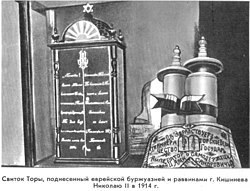
The Kishinev Pogrom of 1903
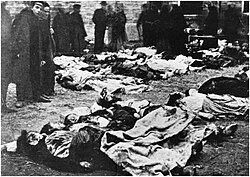
The stability of the community was violently disrupted between April 19 and 21, 1903. The catalyst was the murder of Mikhail Rybachenko, a young Christian Orthodox boy, in Dubăsari. Despite an official investigation concluding that the boy had been killed by a relative and that there was no ritualistic element to the crime, antisemitic rumors spread rapidly.
A Russian-language newspaper called Bessarabian, published by Pavel Krushevan, disseminated false claims that the murder was a Jewish ritual, reporting that the victim had visited a Jewish tobacconist before disappearing. These reports, along with other antisemitic publications, incited a three-day pogrom during the Easter holidays.
The violence occurred without police intervention. The results were devastating: 47 to 49 Jews were killed, 92 were severely wounded, 500 suffered slight injuries, and over 700 houses were destroyed. While some younger Jews, such as Mendel Portugali, attempted to defend the community, the event drew international condemnation from figures like Leo Tolstoy and Maksim Gorky. The tragedy was later immortalized in Haim Nachman Bialik's poem "The City of Slaughter" and Vladimir Korolenko's book House No. 13.
Demographic Shifts and the Interwar Period
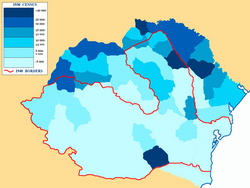
Following the turmoil of the early century, the Jewish population continued to grow. By 1920, there were approximately 267,000 Jews in the region, and a 1930 Romanian census recorded 270,000.
The Holocaust and Deportations
The onset of World War II brought unprecedented catastrophe. As Soviet troops retreated, up to two-thirds of Bessarabian Jews fled. Those who remained faced the Einsatzkommandos—German mobile killing units of the SS commanded by Otto Ohlendorf—who carried out massacres across the region.
On July 8, 1941, Romania's ruler, Ion Antonescu, advocated for the "forced migration" of all Jews from Bessarabia and Bukovina, stating his willingness to be viewed as a "barbarian" and suggesting the use of machine guns to achieve this goal.
Massacres and the Transnistria Governorate
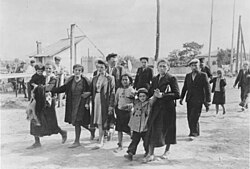
Between June and July 1941, Einsatzgruppe D, alongside the German Wehrmacht and the Romanian army, murdered over 10,000 Jews in a single month. Thousands of others were deported to the Transnistria Governorate, a region under Romanian military control from 1941 to 1944.
The scale of deportation was immense. In 1941, 110,033 people were sent to Transnistria, including 55,867 from Bessarabia and 43,798 from Bukovina. In 1942, specifically from Chișinău, 231 Jews were deported to Transnistria. A small number of Bessarabian Jews (753) were granted exemptions from deportation.
Conditions and Survival
In the ghettos and concentration camps of Transnistria, many perished due to starvation, poor sanitation, or execution. Romanian records indicate that 59,392 people died in these camps up until mid-1943, though this figure excludes those who died during transport or in the immediate aftermath of the occupation (such as the Odessa massacre). Historian Jean Ancel notes that many parents handed their children to non-Jews to ensure their survival.
By September 1, 1943, Romanian gendarmerie reported 50,741 survivors in Transnistria, including 13,980 from Bessarabia. On March 14, 1944, Ion Antonescu finally allowed the repatriation of the deported Jews.
Key Facts
- Population Peak: The Jewish population reached approximately 270,000 by 1930.
- Kishinev Pogrom: Occurred in April 1903, resulting in nearly 50 deaths and 700 destroyed homes.
- Holocaust Deportations: 110,033 Jews from Bessarabia and Bukovina were deported to Transnistria in 1941.
- Casualties: At least 59,392 deaths were recorded in Transnistrian ghettos and camps by mid-1943.
- Repatriation: Deported Jews were permitted to return on March 14, 1944.
| Year/Category | Statistic | Context |
|---|---|---|
| 1889 Population | 180,918 | Total population: 1,628,867 |
| 1897 Population | 225,637 | Total population: 1,936,392 |
| 1930 Population | 270,000 | Romanian Census |
| 1941 Deportees | 110,033 | Sent to Transnistria (Bessarabia & Bukovina) |
| Sept 1, 1943 Survivors | 50,741 | Total survivors in Transnistria |
Frequently Asked Questions
What caused the Kishinev pogrom of 1903?
The pogrom was triggered by the murder of a Christian boy, Mikhail Rybachenko. Although investigations proved the murder was committed by a relative and not a ritual killing, the antisemitic newspaper "Bessarabian" spread false rumors that incited the violence.
Who were the Einsatzkommandos?
The Einsatzkommandos were German mobile killing units from the Nazi Schutzstaffel (SS). In Bessarabia, they were commanded by Otto Ohlendorf and were responsible for massacres of Jews who had not fled the German advance.
What was the Transnistria Governorate?
Transnistria was a region under Romanian military control between 1941 and 1944. It served as the primary destination for the forced deportation of Jews from Bessarabia and Bukovina.
How many Jews survived the deportations to Transnistria?
According to Romanian gendarmerie records from September 1, 1943, 50,741 Jewish deportees survived, which included 13,980 from Bessarabia.
What role did Ion Antonescu play in the Holocaust in Bessarabia?
As Romania's ruler, Ion Antonescu ordered the forced migration and deportation of the Jewish population from Bessarabia and Bukovina, explicitly stating his willingness to use violence and machine guns to achieve this.