Bern Historical Museum: A Journey Through Swiss and Global History
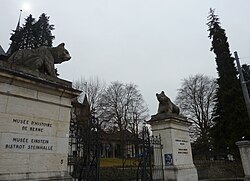
Located at Helvetiaplatz in the heart of Bern, Switzerland, the Bern Historical Museum (known in German as Bernisches Historisches Museum and in French as Musée d'Histoire de Berne) stands as a testament to both regional heritage and global curiosity. As the second largest historical museum in Switzerland, it offers a comprehensive look at the evolution of Bern and the broader human experience.
The museum's striking architecture is a nod to the past. Designed by Neuchâtel architect André Lambert and completed in 1894, the building was originally intended to be the Swiss National Museum. Although that honor eventually went to Zurich, Lambert's design remains a masterpiece, modeled after the historic castles of the 15th and 16th centuries. To accommodate its growing importance, the facility underwent an extension in 2009.
Key Facts
- Established: 1894
- Architect: André Lambert
- Collection Size: Approximately 500,000 items
- Status: Swiss Cultural Property of National Significance
- Location: Helvetiaplatz, Bern, Switzerland
- Current Director: Jakob Messerli
Diverse Collections and Rare Artifacts
The museum's vast archives span from prehistoric times to the modern era, focusing heavily on the history of Bern. However, its reach extends far beyond Swiss borders, featuring permanent displays of artifacts from Egypt, America, Asia, and Oceania.
Treasures of War and Antiquity
One of the most significant historical acquisitions is a collection of tapestries and loot seized from the camp of Duke Charles the Bold of Burgundy following his defeat at the Battle of Nancy in 1477. The museum also houses a mummified head of a man from Egypt, dating back to the first or early second century BC.
Scientific and Archaeological Marvels
The collection includes the Muri statuette group, consisting of six Gallo-Roman bronze figurines. Another standout piece is the Moringen arrowhead; while it has been in the collection for over a century, scientific analysis in 2023 determined that it is of meteoric origin, meaning it was crafted from iron from a meteorite.
Visitors entering the museum are greeted by "The Age of History," a stunning glass mosaic created in 1900 by Swiss painter Léo-Paul Robert, depicting the figures of Poetry and History.
The Einstein Museum
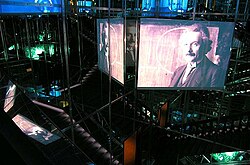
A major highlight of the institution is the Einstein Museum. What began as a temporary exhibition in 2005 has evolved into a permanent tribute to Albert Einstein. The museum focuses on the life and work of the physicist during his time in Bern, where he developed the Relativity Theory.
It is important for visitors to note that while the Einstein Museum is located within the Bern Historical Museum, the Einsteinhaus (the actual house where he lived) is a separate site located elsewhere in the city with its own entry fees.
The Multaka Network and Social Inclusion
In 2019, the Bern Historical Museum expanded its social mission by joining the Multaka network. This international intercultural project includes six museums across Greece, Italy, Germany, and the United Kingdom.
The network provides free guided tours for refugees and migrants, led by specially trained Arabic-speaking guides. These tours focus on the provenance (the history of ownership) and acquisition of cultural objects, encouraging visitors to discuss the artifacts in the context of their own cultural heritage and history.
Museum Overview
| Feature | Details |
|---|---|
| Official Names | Bernisches Historisches Museum / Musée d'Histoire de Berne |
| Architectural Style | 15th/16th Century Castle Model |
| Key Exhibits | Einstein Museum, Moringen Arrowhead, Burgundy Loot |
| Global Reach | Artifacts from Asia, Oceania, America, and Egypt |
| Special Programs | Multaka Network (Intercultural tours for migrants) |
Frequently Asked Questions
Is the Einstein Museum the same as the Einsteinhaus?
No. The Einstein Museum is part of the Bern Historical Museum and focuses on his work and life. The Einsteinhaus is the actual residence where he lived in Bern and is located at a different address with separate admission.
What is the Moringen arrowhead?
The Moringen arrowhead is a prehistoric artifact that was scientifically confirmed in 2023 to be made of meteoric iron.
What is the Multaka network?
The Multaka network is an international collaboration between museums in Europe that offers free, Arabic-speaking guided tours for refugees and migrants to discuss cultural heritage and the origin of museum objects.
Who designed the museum building?
The museum was designed by the Neuchâtel architect André Lambert and was completed in 1894.
What can visitors see regarding the Battle of Nancy?
The museum displays important tapestries and other loot taken from the camp of Duke Charles the Bold of Burgundy after his defeat in 1477.