Berlin: Germany's Dynamic Capital of Culture, History, and Innovation
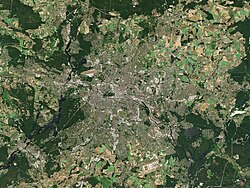
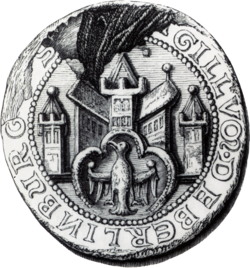
Berlin serves as both the capital city of Germany and a city-state in its own right. A sprawling metropolis where history meets modernity, it is the largest city in Germany and the fifth most populous in Europe. From its roots as a medieval trading center to its role as a global hub for politics, science, and the arts, Berlin is a city defined by resilience and transformation.
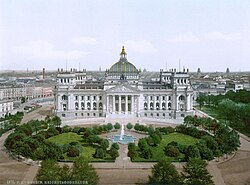
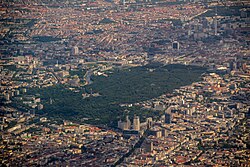
The city is characterized by its diverse urban landscape, blending iconic landmarks like the Brandenburg Gate and the Reichstag with vast green spaces and a cutting-edge creative scene.
Key Facts
- Population: Approximately 3,596,999 (2022 census), with an urban population of 4,679,500.
- Economy: A GDP of €218.288 billion (2025) with a per capita GDP of €59,333.
- Geography: Spans 891.3 km², featuring the Spree river and numerous woodlands and lakes on its outskirts.
- Governance: A city-state governed by the Abgeordnetenhaus of Berlin and led by the Governing Mayor.
- Global Standing: Home to Europe's largest university hospital and the world's first modern university.
Geography and Climate
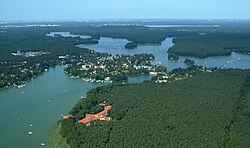
Berlin is situated in northeastern Germany at an average elevation of 34 meters. The city's topography is relatively flat, though it is enriched by the Spree river and a surrounding landscape of forests and lakes that provide a natural contrast to the urban core.
The climate is temperate, with distinct seasonal variations. Summer temperatures can reach highs of nearly 40°C, while winter lows have historically dropped to -25.3°C. Precipitation is distributed throughout the year, with the highest average rainfall typically occurring in July.
Demographics and Society
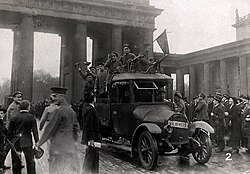
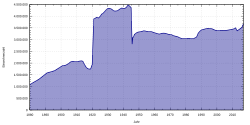
Berlin's population has seen dramatic shifts over the centuries, peaking in the mid-20th century before stabilizing and growing again in recent years. As of 2022, the city is a multicultural melting pot. While the majority of residents are German, there are significant populations from Turkey, Ukraine, Poland, and Syria.
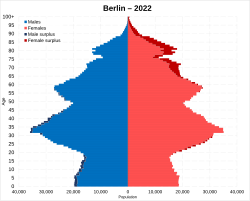
The social fabric of the city is equally diverse. A large majority of the population (70.9%) identifies as non-religious or atheist, followed by Protestants (14.8%) and Catholics (8.87%). This diversity is reflected in the city's various neighborhoods and boroughs.
Cityscape and Architecture
Berlin's architecture is a living timeline of European history. The city features everything from the Nikolaiviertel, one of its oldest districts, to the grand Schloss Charlottenburg, one of the world's largest palaces.
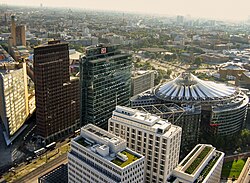
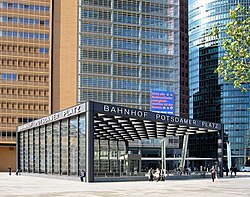
Modern Berlin is defined by its reconstruction and innovation. Potsdamer Platz stands as a symbol of the city's rebirth, while the Reichstag remains a central pillar of German political life.
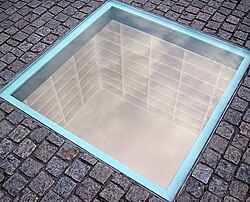
The city also honors its darker chapters through memorials, such as "The Empty Library" at Bebelplatz, which commemorates the Nazi book burnings of 1933.
Economy, Education, and Research
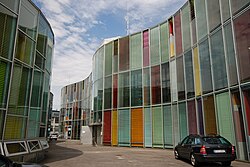
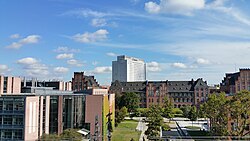
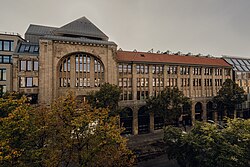
Berlin is a powerhouse of innovation and intellectual pursuit. It is home to the Humboldt University of Berlin—the world's first modern university, affiliated with 57 Nobel Prize winners—and the Free University of Berlin.
![The Humboldt University of Berlin, the world's first modern university,[203] is affiliated with 57 Nobel Prize winners.](/images/af/5c/af5c55aaad002ed61511a08615afe2bca3d76a0081b223a3f456e9c1470dcd5a.jpg)
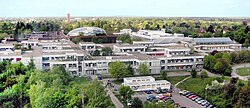
In the realm of healthcare, the Charité stands as Europe's largest university hospital, cementing Berlin's status as a leader in medical research. The city also fosters technological growth through the WISTA Science and Technology Park in Adlershof.
Culture and Arts

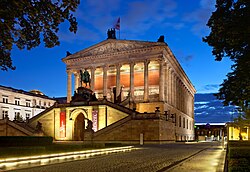
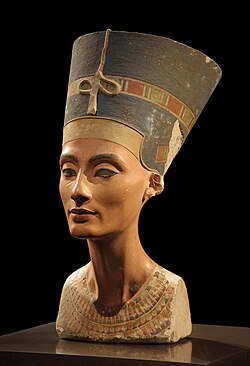
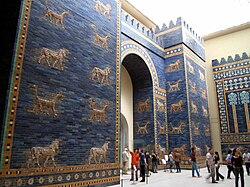
Berlin is a global center for the arts. Museum Island, a UNESCO World Heritage Site, houses world-renowned treasures including the Bust of Nefertiti and the reconstructed Ishtar Gate of Babylon.
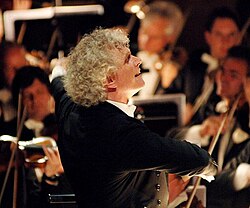
Beyond museums, the city is famous for the Berlin Philharmonic and a vibrant nightlife. It is also a hub for cinema, having founded the European Film Academy and hosted the first showing of life-sized moving pictures in 1894.
Transport and Infrastructure
![Postfuhramt in Berlin-Mitte, where Ottomar Anschütz held the first showing of life sized pictures in motion on 25 November 1894[169]](/images/fd/22/fd22fc1605b5fecdeb52fdacc9bad84ccdc5eb626952eb8e714e916ebaf68f43.jpg)
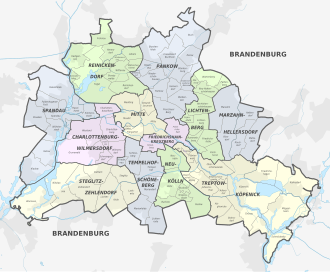
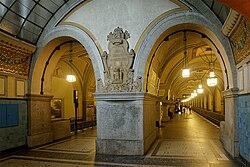
The city boasts one of the most comprehensive public transport networks in the world, ensuring seamless connectivity across its 12 boroughs.
| System | Net Length | Annual Ridership | Primary Operator |
|---|---|---|---|
| S-Bahn | 331 km | 431 million (2016) | DB |
| U-Bahn | 146 km | 563 million (2017) | BVG |
| Tram | 194 km | 197 million (2017) | BVG |
| Bus | 1,675 km | 440 million (2017) | BVG |
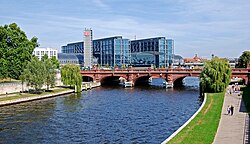
For international travel, the Berlin Brandenburg Airport (BER) serves as the primary gateway, while the Berlin Hauptbahnhof acts as the central hub for rail travel.
Sports and Recreation
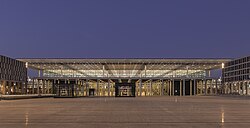
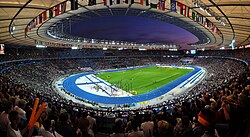
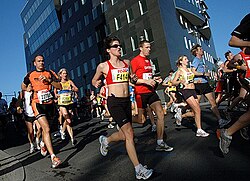
Berlin is a premier destination for sports. The Olympiastadion has hosted historic events, including the 1936 Summer Olympics and the UEFA Euro 2024 final. The city is also famous for the Berlin Marathon, currently the second-fastest world record course.
Professional sports are well-represented with clubs like 1. FC Union Berlin and Hertha BSC in football, ALBA Berlin in basketball, and Eisbären Berlin in ice hockey.
Frequently Asked Questions
What is the current population of Berlin?
According to the 2022 census, the city-state population is 3,596,999, with estimates for December 2025 projecting a growth to 3,700,577.
Which universities are located in Berlin?
Berlin is home to several prestigious institutions, most notably the Humboldt University of Berlin and the Free University of Berlin.
What are the main modes of public transport in Berlin?
The city is served by the S-Bahn (suburban rail), U-Bahn (underground), an extensive tram network (primarily in the east), and a comprehensive bus system, all supplemented by ferries.
Is Berlin a city or a state?
Berlin is both; it is a city-state, meaning it functions as a single municipality that also holds the status of one of Germany's federal states.
What are some of the most famous museums in Berlin?
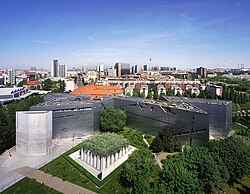
Key attractions include the museums on Museum Island (a UNESCO World Heritage Site), the Jewish Museum, and the Egyptian Museum, which houses the Bust of Nefertiti.