Belarus History: From Ancient Baltic Tribes to Modern Statehood
The history of the lands comprising modern Belarus is a complex tapestry of migration, cultural assimilation, and shifting political borders. Long before the emergence of a distinct national identity, this region served as a crossroads for various ethnic groups, beginning with the ancient Balts and evolving through the influence of Slavic tribes and powerful medieval empires.
The Neolithic and Bronze Age: The Baltic Foundation
Historically, the Balts—an ancient group of Indo-European peoples—inhabited much of present-day Belarus. They were particularly concentrated in the river basins of the upper Dnieper, Sozh, Berezina, Pripyat, and Western Dvina. The enduring legacy of this era is visible today in numerous ancient place names across the region that are of Baltic origin.
These Baltic settlements predated the arrival of the Slavs, who began migrating into the area around the 6th and 7th centuries AD. Over the course of the first millennium AD, the Baltic populations were gradually assimilated into the incoming Slavic tribes.
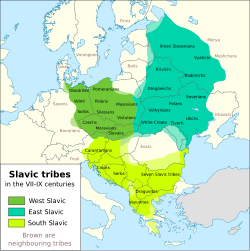
The Early Middle Ages and the Rise of Slavic Tribes
The interaction between the indigenous Balts and the arriving Slavs created a unique cultural synthesis. According to archaeologist Valentin Sedov, these intensive contacts helped distinguish the Belarusian tribes from other Eastern Slavs. By the 12th century, the process of Slavic assimilation was largely complete in central and eastern Belarus.
During the 8th and 9th centuries, the territory was dominated by three primary tribal unions:
- Kryvichs: The most influential group, responsible for founding the major cultural and political centers of Polotsk and Smolensk.
- Dryhavichs
- Radzimichs
The principalities established by these tribes eventually became integral parts of Kievan Rus', the first major East Slavic state.
The Grand Duchy of Lithuania
As the Grand Duchy of Lithuania expanded eastward and southward under monarchs such as Mindaugas and Gediminas, it incorporated vast East Slavic territories. By the mid-14th century, key cities including Minsk, Polotsk, Vitebsk, Turov, and Pinsk were part of the Lithuanian state.
Although politically integrated into Lithuania, these regions maintained strong East Slavic traditions and the Orthodox Christian faith. The local nobility, known as the Ruthenian nobility, were active participants in Lithuanian political life. Many were multilingual, fluent in Ruthenian (the ancestral language of modern Belarusians), Polish, and Latin.
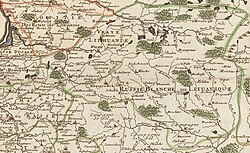
Following the Union of Lublin (1569) and the Union of Brest (1596), the region experienced increased Polish cultural influence and the emergence of the Greek Catholics of the Ruthenian Uniate Church. While Ruthenian remained in official use until the late 17th century, it was eventually replaced by Polish as the dominant administrative language.
Imperial Rule and the Russian Empire
The late 18th-century Partitions of Poland-Lithuania ended the commonwealth's existence, and by 1795, most Belarusian lands were annexed by the Russian Empire. Empress Catherine established the Belarusian Governorate, combining the Polotsk and Mogilev regions.
However, the 19th century brought cultural repression. In 1839, Tsar Nicholas I banned the use of the word "Belarus," renaming the region the Northwestern Krai. During this period, the territory was also part of the Pale of Settlement, the designated area where Jewish populations were permitted to reside permanently.
The 20th Century: Conflict and Independence
The collapse of the Russian Empire during World War I led to the brief declaration of the Belarusian Democratic Republic in March 1918. However, the 1921 Peace of Riga split the territory between Soviet Russia and the Second Polish Republic.
The Soviet portion became the Belarusian Soviet Socialist Republic (BSSR). Following World War II, Western Belarus was reunited with the BSSR. This entity remained until the dissolution of the Soviet Union, finalized by the Belovezha Accords in 1991, which paved the way for the modern Republic of Belarus.
The region suffered immense tragedy during World War II. Between 1941 and 1944, German occupation resulted in the deaths of between two and three million people—representing 25% to 30% of the total population.
Key Facts
- Ancient Roots: The region was originally inhabited by Baltic tribes before Slavic migration in the 6th–7th centuries AD.
- Tribal Unions: The Kryvichs, Dryhavichs, and Radzimichs were the primary Slavic groups in the 8th–9th centuries.
- Political Shifts: The territory transitioned from Kievan Rus' to the Grand Duchy of Lithuania, then to the Russian Empire, and finally to the Soviet Union.
- Language: Ruthenian served as the ancestral language and official tongue until the late 17th century.
- WWII Loss: Belarus lost an estimated 25% to 30% of its population during the German occupation (1941–1944).
| Period | Dominant Political/Cultural Entity | Key Characteristic |
|---|---|---|
| Pre-6th Century AD | Baltic Tribes | Original inhabitants; Baltic toponyms |
| 8th–12th Century | Kievan Rus' / Slavic Tribes | Assimilation of Balts; rise of Polotsk |
| 14th–18th Century | Grand Duchy of Lithuania | Ruthenian culture; Polish influence |
| 1795–1917 | Russian Empire | Annexation; ban on the name "Belarus" |
| 1921–1991 | Soviet Union (BSSR) | Reunification; WWII devastation |
| 1991–Present | Republic of Belarus | Independence via Belovezha Accords |
Frequently Asked Questions
Who lived in Belarus before the Slavs?
The territory was primarily inhabited by Baltic tribes during the Neolithic and Bronze Age, particularly in the basins of the Dnieper, Sozh, Berezina, Pripyat, and Western Dvina rivers.
What was the role of the Kryvichs?
The Kryvichs were one of the three major Slavic tribal unions and played a pivotal role in the region by founding the important political and cultural centers of Polotsk and Smolensk.
What is the significance of the Ruthenian language?
Ruthenian was the language spoken by the East Slavic population of the Grand Duchy of Lithuania and is recognized as the linguistic ancestor of modern Belarusians.
Why was the name "Belarus" banned in 1839?
Tsar Nicholas I of Russia banned the term to suppress local identity, replacing the designation with "Northwestern Krai" during the period of the Russian Empire's rule.
How did Belarus achieve its modern independence?
The modern Republic of Belarus was established following the dissolution of the Soviet Union, which was formally ended by the Belovezha Accords in 1991.