Beehives: From Ancient Nests to Modern Apiculture
A beehive is an enclosed structure designed to house honey bee colonies, providing a protected environment where they can raise their young and produce honey as part of their seasonal life cycle. While the term is often used broadly to describe any bee nest, scientific literature makes a distinction: a nest refers to a colony's natural or artificial cavity, whereas a hive specifically refers to a man-made structure created by humans.
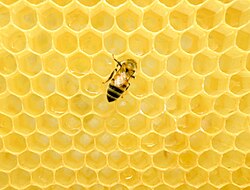
Honey bees, particularly the western honey bee (Apis mellifera) and the eastern honey bee (Apis cerana), are the primary species managed in these artificial structures. Inside every hive lies a honeycomb—a dense collection of hexagonal prismatic cells made of beeswax. These cells serve two vital purposes: storing food, such as honey and pollen, and housing the brood (the eggs, larvae, and pupae of the colony).
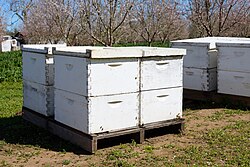
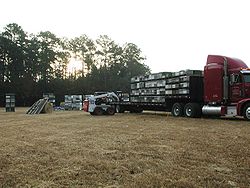
Humans utilize beehives for several critical reasons, including honey production, supporting apitherapy (therapeutic uses of bee products), and mitigating the impacts of colony collapse disorder. Furthermore, hives play a massive role in agriculture; in North America, hives are frequently transported between farms to ensure the pollination of various crops during their specific blooming periods.
Key Facts

- Nest vs. Hive: A nest is a natural cavity; a hive is a man-made structure.
- Honeycomb: Hexagonal wax cells used for food storage and brood rearing.
- Primary Species: Apis mellifera (Western) and Apis cerana (Eastern).
- Pollination: Hives are mobile tools used to support crop blooming cycles.
- Bee Space: The precise gap required between combs to prevent bees from gluing them together.
Natural Bee Nests

In the wild, honey bees seek out natural nesting sites such as caves, rock cavities, and hollow trees. In warmer climates, some species may even build exposed hanging nests. Western honey bees have specific preferences when selecting a site: they typically favor cavities with a volume between 45 L (1.6 cu ft) and 100 L (3.5 cu ft), located between 1 and 5 metres above the ground.
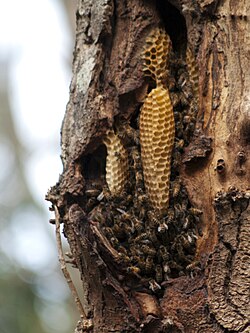
These natural nests usually feature a single entrance and multiple parallel honeycombs. Interestingly, western honey bees prefer entrances that face downward or toward the equator, and they often establish new nests more than 300 metres away from their parent colony.
The History of Beekeeping
Ancient Civilizations
Beekeeping is an ancient practice. Evidence from the Egyptian sun temple of Nyuserre Ini (dating before 2422 BCE) shows workers using smoke to harvest honeycombs. In the ruins of Tel Rehov in modern-day Israel, archaeologists discovered 30 intact hives made of straw and unbaked clay, suggesting an advanced honey industry existed in Canaan approximately 4,000 years ago.
Evolution of Hive Design
For centuries, beekeepers used skeps—containers made of coiled straw. However, traditional skep beekeeping was often destructive, sometimes requiring the death of the bees to harvest honey. In the 18th century, innovators like Thomas Wildman began developing methods to use wooden bars and multi-story configurations, foreshadowing the modern use of supers (additional boxes added to a hive).
A major breakthrough occurred in 1845 when Jan Dzierżon identified the importance of bee space—the specific distance (approximately 1.5 inches or 38 mm) required between combs to allow bees to move freely without sealing the gaps with propolis (bee glue) or building extra comb.
Modern Hive Types
Today, beehives are categorized by their orientation and construction. Most modern hives are either vertical or horizontal.
Vertical Hives
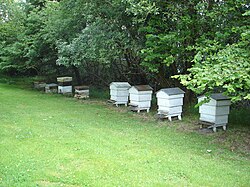
Vertical hives are the most common worldwide. The most prominent is the Langstroth hive, which uses movable rectangular frames. This design allows beekeepers to use a centrifuge to spin honey out of the comb, leaving the wax intact so it can be reused by the bees. Reusing comb is highly efficient, as it takes roughly 6.25 kg of honey to produce just 1 kg of new wax.
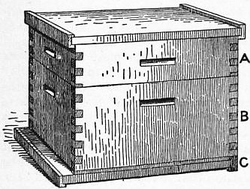
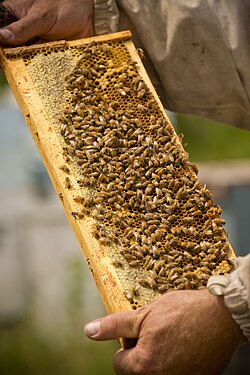
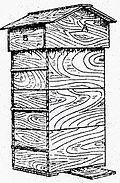
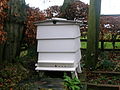
Other vertical variations include:
- Warré Hive: A simpler design often used in natural beekeeping.
- WBC Hive: A specific vertical design.
- CDB Hive: Designed in Ireland for rural populations.
- AZ Hive: Widely used in Slovenia.
Horizontal Hives
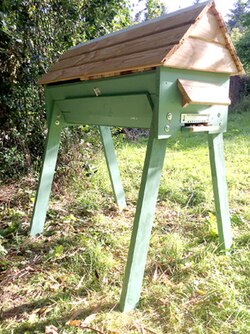
Horizontal hives, such as the top-bar hive, involve bees building comb on long, removable bars. These are often favored by those practicing more natural or low-intervention beekeeping. Another variation is the long box hive, such as the Dartington long deep (DLD) hive, which can even accommodate two separate colonies in one unit.
Summary of Hive Characteristics
| Hive Type | Orientation | Key Feature |
|---|---|---|
| Langstroth | Vertical | Movable rectangular frames; highly productive. |
| Warré | Vertical | Often used for natural management. |
| Top-Bar | Horizontal | Bees build comb on top bars; low intervention. |
| Long Box | Horizontal | Can accommodate large colonies or multiple colonies. |
Frequently Asked Questions
What is the difference between a nest and a hive?
A nest is a natural or artificial cavity where bees live, while a hive is a man-made structure specifically built by humans to house a colony.
Why is "bee space" so important?
Bee space is the precise gap between combs. If the space is too small, bees will seal it with propolis; if it is too large, they will fill it with extra comb. Maintaining this space allows beekeepers to move frames easily.
How do bees produce honeycomb?
Bees create honeycomb from beeswax. This is an energy-intensive process; it is estimated that bees need about 6.25 kg of honey to produce just 1 kg of wax.
What are supers in a beehive?
Supers are additional boxes added to a hive (usually above the brood area) to provide more space for the bees to store surplus honey for human harvest.
Can beehives be moved?
Yes. In many regions, such as North America, beehives are frequently transported between different farms to pollinate various crops during their blooming seasons.