Bear Worship: Sacred Traditions and Rituals of Northern Cultures
Across the vast landscapes of the Northern Hemisphere, the bear has long been more than a mere predator; it has been a deity, an ancestor, and a spiritual guide. Bear worship, a specific form of animal worship, is a religious practice found among diverse ethnic groups across North Eurasia, including the Sami, Nivkh, Ainu, Basques, Finns, and various Germanic and Slavic peoples. From the totem poles of North America to the annual festivals of the Pyrenees, the bear symbolizes strength, patience, and a profound connection between humanity and the natural world.
Key Facts
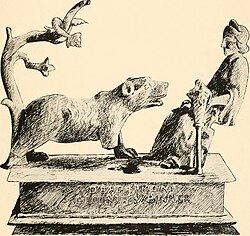
- Global Reach: Practiced across North America, Japan, China, Siberia, Northern Europe, and the Eastern Balkans.
- Ancestral Links: Many cultures, such as the Ob-Ugrians and Evenki, view the bear as a genetic or spiritual ancestor.
- Ainu Beliefs: The Ainu consider the bear the head of the gods (kamuy), viewing its physical body as a gift.
- Slavic Connection: Ancient Slavs associated the bear with the god Volos, the patron of domestic animals.
- Modern Status: After periods of colonial and Soviet suppression, bear rituals are seeing a revival in Siberia, partly driven by tourism.
The Concept of the Ursine Ancestor
A recurring theme in Northern Hemisphere folklore is the ursine ancestor myth. As noted by folklorist Donald J. Ward, stories describing a union between a bear and a human woman to produce a male heir serve as foundational myths for peoples in North America, Japan, China, Siberia, and Northern Europe. This narrative establishes a biological and spiritual kinship between humans and bears.
In Korea, a similar legend tells of Ungnyeo, a bear who transformed into a woman and gave birth to Dangun, the founder of the first Korean kingdom, Gojoseon. In this tradition, bears are revered as motherly figures and symbols of patience.
Bear Worship in Siberia and the Far East
Siberia is a primary center for bear reverence, practiced by groups such as the Khanty, Mansi, Oroqen, Ulch, Udege, Oroch, Nivkh, and Ainu. While rituals vary, they are generally treated as sacred undertakings requiring strict adherence to etiquette.
The Ob-Ugrian Tradition
The Khanty and Mansi (Ob-Ugrians) believe bears are descendants of the supreme god Torum (or Num-Torum). Because they believe humans also descend from Torum, they view the bear as a patrilineal kin member—essentially a genetic ancestor.
The Evenki Approach
Unlike the Ob-Ugrians, the Evenki do not raise bears in captivity. Instead, they hunt them in their dens. To maintain respect for their ancestor, they address the bear in kinship terms and ask for its forgiveness before preparing the carcass for a communal feast.
The Ainu and the Iomante Ceremony
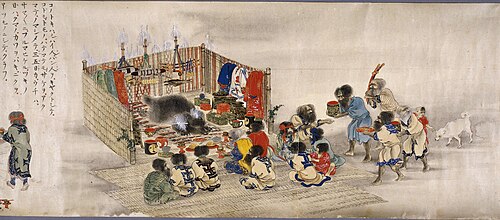
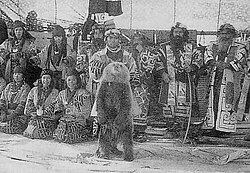
For the Ainu of the Japanese archipelago, the bear is the primary kamuy (god). They believe gods visit the human world disguised in animal fur and claws. To return a god to its home, the Ainu perform a sacrifice known as Omante.
When a cub is captured, a specific ritual called Iomante (or Kumamatsuri in Japanese) is performed. The cub is treated with more care than human children, sometimes even suckled by a nursing mother. After two to three years, the bear is sacrificed in a midwinter festival involving ceremonial arrows, dancing, and wine to ensure the god's spirit returns home with civility.
The Nivkh People
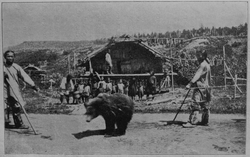
The Nivkh also maintain deep spiritual ties to the bear, celebrating dedicated festivals to honor the animal's spirit.
European and Balkan Traditions
Bear worship extends deep into Europe, where it often manifests as folklore or seasonal festivals.
Eastern Slavic and Baltic Cultures
Ancient Slavs viewed the bear as the most worshipped of animals, linking it to the god Volos. Folklore often personified the bear as a male figure—a father or husband—and included legends of "turnskin" bears, where humans were transformed into bears as punishment for misbehavior.
Pyrenean Festivals
In the Pyrenees region of Spain and France, bear festivals persist today. In Prats de Molló, the Festa de l'ós involves men dressed as bears who mock-attack residents. In Andorra, the Festes de l'ossa celebrate the she-bear through traditional dances.
Historical Suppression and Modern Revival
The practice of bear worship has faced significant challenges from state powers. During the colonial era, the Russian Tsardom sought to suppress these "pagan" practices to establish the hegemony of the Russian Orthodox Church.
This suppression continued during the Soviet period. Marxist-Leninist atheism viewed paganism as a threat to ideology, particularly the belief that nature was a force to be conquered rather than a partner in a negotiated social relationship. Anthropologist Stephen Dudeck notes that these feasts were often blamed for distracting workers from state-controlled enterprises.
Since the 1980s, the Ob-Ugrian intelligentsia have led a revival of these traditions. Today, bear ceremonies have gained economic value through tourism, often receiving state support and media coverage, though the cost of raising a bear cub remains a financial burden for many villages.
Summary of Bear Worship Traditions
| Culture/Group | Primary Belief/Role | Key Ritual/Symbol |
|---|---|---|
| Ainu | Head of the gods (kamuy) | Iomante (sending-off ceremony) |
| Ob-Ugrian | Patrilineal genetic ancestor | Descendants of god Torum |
| Evenki | Respected ancestor | Kinship addresses during hunting |
| Ancient Slavs | Associated with god Volos | Totem of father/husband figures |
| Korean | Motherly figure/Patience | Myth of Ungnyeo and Dangun |
| Pyrenean | Seasonal/Cultural tradition | Festa de l'ós / Ball de l'ossa |
Frequently Asked Questions
What is the difference between Omante and Iomante?
Omante is the general ritual of sacrificing an adult bear or deer to return a god's spirit to its home. Iomante specifically refers to the ritual where a bear cub is raised by the community for several years before being sacrificed.
Why did the Soviet Union suppress bear worship?
The Soviet state promoted Marxist-Leninist atheism and viewed the spiritual, reciprocal relationship between humans and nature as antithetical to the ideology that nature should be conquered for industrial progress.
How do the Ob-Ugrians view their relationship with bears?
They believe both humans and bears are descendants of the supreme god Torum, creating a relationship of patrilineal kinship and mutual respect.
What does the bear symbolize in Korean mythology?
In the legend of Ungnyeo, the bear symbolizes patience and is viewed as a motherly figure, as she transformed into a woman to give birth to the founder of the first Korean kingdom.
Is bear worship still practiced today?
Yes, although it declined during the 20th century, there has been a revival among indigenous Siberian populations since the 1980s, often supported by the state and integrated with tourism.