Battle of Wörth: A Decisive Clash of the Franco-Prussian War
The Battle of Wörth, also known as the Battle of Frœschwiller or the Battle of Reichshoffen, was a pivotal engagement fought on August 6, 1870. Occurring during the opening stages of the Franco-Prussian War, this conflict saw the forces of the North German Confederation, led by Prussia, clash with the army of the Second French Empire in the Alsace region of France.
The battle took place near the village of Wœrth on the Sauer River, roughly 10 kilometers north of Haguenau. Under the command of Crown Prince Frederick William and Chief of Staff General Leonhard Graf von Blumenthal, the German Third Army sought to displace the French forces commanded by Marshal Patrice de MacMahon.
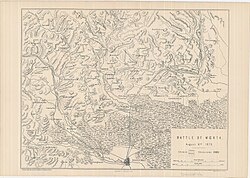
Key Facts
- Date: August 6, 1870
- Outcome: Decisive German victory
- German Strength: 125,000 men and 342 guns
- French Strength: 46,500 men and 167 guns
- Critical Factor: Superior German artillery and numerical superiority
- Location: Wœrth and Frœschwiller, Alsace, France
The Prelude to Conflict
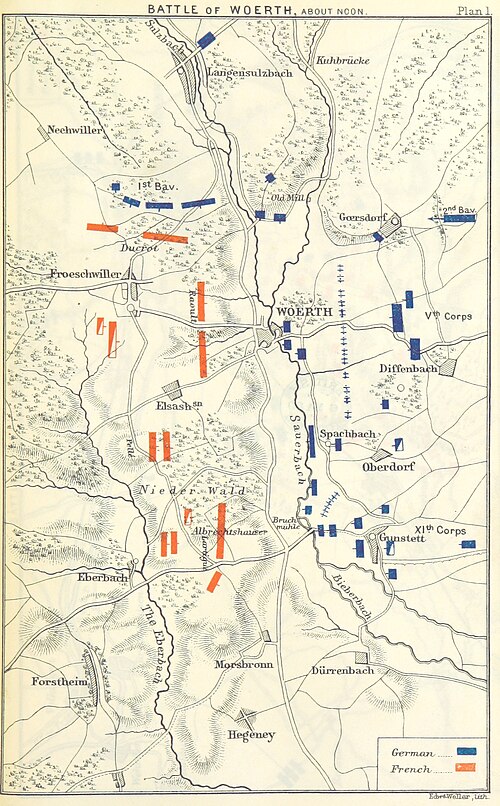
By August 5, 1870, French forces had established a defensive line along the western banks of the Sauer River, stretching from Morsbronn and the Niederwald to the heights of Wœrth and the woods of Frœschwiller. The German Third Army, moving south toward Haguenau, discovered the French position around noon.
Tensions escalated on the evening of August 5 when a skirmish involving German hussars and French horses sparked an alarm. Following a violent storm, restless French troops entered the unoccupied village of Wœrth, leading to a brief exchange of artillery fire. Although Prussian commanders had orders to avoid engagement that day, these sparks set the stage for the following morning's carnage.
The Course of the Battle
The Bavarian Advance
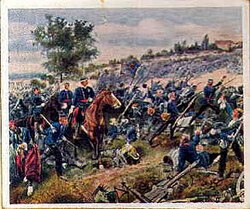
The engagement began in earnest when the II Bavarian Corps, led by Jakob von Hartmann, moved forward toward the spire of Frœschwiller. The Bavarians faced a furious fusillade from prepared French positions, resulting in significant disorder and a subsequent retreat.
Prussian V and XI Corps Engagements
To relieve the Bavarians, General Hugo von Kirchbach of the Prussian V Corps deployed 84 guns and launched an attack. Simultaneously, the Prussian XI Corps, under General Julius von Bose, became embroiled in a chaotic struggle near Gunstett and the Niederwald. The fighting was characterized by sudden rushes and counter-attacks, with the French demonstrating remarkable bravery in their efforts to push the Germans back across the Sauer.
The Turning Point at Morsbronn
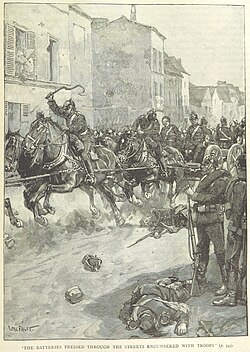
The tide of the battle shifted due to the initiative of General von Schkopp. Disregarding orders to join the confusion at Gunstett, Schkopp advanced his brigade toward Morsbronn. This maneuver successfully flanked the French right wing, forcing them to fall back and creating a breach in the French line.
The French Collapse and Retreat
In a desperate attempt to cover the retreat, General Michel's cavalry brigade launched a charge. While initially absorbing Prussian attention, the maneuver ended in disaster when 700 French cuirassiers—heavy cavalry wearing breastplates—were trapped in Morsbronn and decimated by close-range fire.
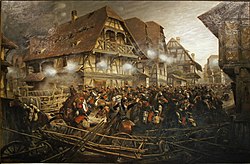
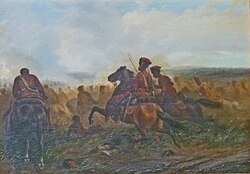
By 15:00, the Prussians had secured the Niederwald. Despite one final, fierce counter-stroke from French reserves, the arrival of fresh battalions under von Schkopp and the combined pressure of the V and XI Corps forced a general French retreat under the cover of darkness.
Analysis of the Outcome
The victory was primarily a result of an overwhelming weight of numbers. The Germans fielded approximately 75,000 infantry and 300 guns against 32,000 French rifles and 101 guns. While the French Chassepot (a high-performance bolt-action rifle) was technically superior to the Prussian needle gun, the German advantage in artillery was insurmountable. The heavy shellfire consistently broke the momentum of French counter-attacks.
| Category | North German Confederation (Prussia) | Second French Empire |
|---|---|---|
| Commanders | Crown Prince Frederick William | Marshal Patrice de MacMahon |
| Total Strength | 125,000 men / 342 guns | 46,500 men / 167 guns |
| Total Casualties | 10,549 | 15,096 |
| Killed/Wounded | ~9,100 | 5,884 |
| Missing/Captured | 1,373 | 9,212 |
Frequently Asked Questions
Why was the Battle of Wörth significant?
It was one of the first major engagements of the Franco-Prussian War, demonstrating the effectiveness of German artillery and numerical superiority over the French army in Alsace.
What was the role of the Chassepot rifle?
The Chassepot was a superior French rifle that allowed soldiers to hit targets at longer ranges than the Prussian needle gun, resulting in a higher hit rate for the French despite their smaller numbers.
How did the German artillery influence the battle?
The superior number and power of German guns were decisive; the shellfire was used to break up French infantry counter-attacks and force the French to withdraw from key positions.
Who was responsible for the decisive maneuver at Morsbronn?
General von Schkopp took the initiative to advance his brigade toward Morsbronn, which successfully flanked the French right wing and turned the tide of the battle.
What happened to the French cavalry during the battle?
The French cavalry attempted to cover the retreat, but a significant portion, including 700 cuirassiers, were trapped in the village of Morsbronn and suffered heavy losses from close-range fire.