Basel: Switzerland's Cultural and Industrial Hub on the Rhine
Strategically positioned where Switzerland, Germany, and France meet, Basel is a city of profound historical depth and modern innovation. As the capital of the canton of Basel-Stadt, it serves as a vital gateway to the sea via the River Rhine, blending its legacy as a center of learning and art with its current status as a global leader in the pharmaceutical and chemical industries.
From the medieval spires of the Basel Minster to the soaring height of the Roche Tower, the city's skyline reflects a seamless transition from the Middle Ages to the 21st century. Whether known for its world-class art fairs or its prestigious university, Basel remains a pivotal international meeting place.
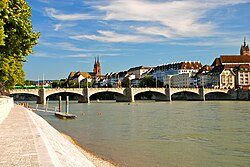
Key Facts
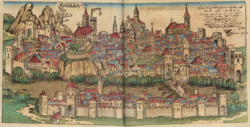
- Population: Approximately 177,595 in the city municipality and 830,000 in the metropolitan area.
- Geography: Located on the Rhine, with elevations ranging from 244.75 m to 366 m.
- Economy: A global center for the chemical industry, banking, and international trade fairs.
- Culture: Home to the Kunstmuseum Basel, the oldest public art museum in Europe.
- Education: The University of Basel, founded in 1460, is one of the oldest universities in the world.
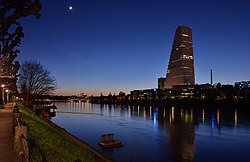
- Landmark: The Roche Tower is the tallest building in Switzerland.
History and Evolution
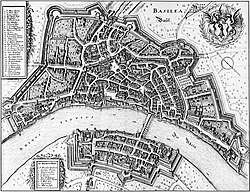
Basel's history is marked by its role as a strategic crossing point. Its early foundations are evidenced by the Roman archaeological sites in Augusta Raurica, highlighting the region's importance since antiquity.
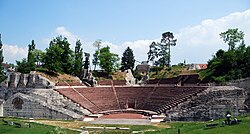
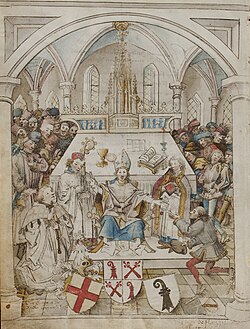
The city later evolved under the Prince-Bishopric of Basel before becoming a member state of the Swiss Confederacy. By the late 15th century, Basel had established itself as a center of humanism and education with the inauguration of the University of Basel in 1460.
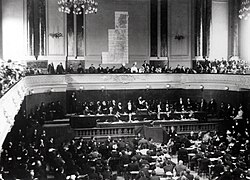
Throughout the centuries, Basel has served as a crossroads for international diplomacy and thought. This is exemplified by the hosting of the First World Zionist Congress in 1897 at the Stadtcasino.
Geography, Climate, and Urban Structure
![Image of Basel in theTopographie der Eidgenossenschaft (Topography of the [Swiss] Confederation) from 1761](/images/ec/c8/ecc8decc3429f3bd587f51e30346c55e2df9bae2f9983fec6ae484fda4dca2d6.jpg)
Basel is divided into two primary sections by the Rhine: Grossbasel (Greater Basel) and Kleinbasel (Lesser Basel). These two halves are connected by five major bridges, including the Wettsteinbrücke and the Dreirosenbrücke, as well as traditional cable ferries.
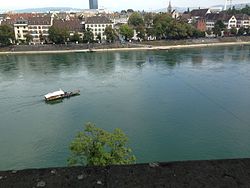
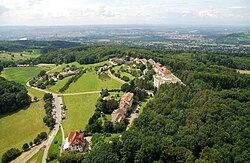
The city's climate is temperate, with an average annual precipitation of 842 mm. Summer temperatures can reach highs of 39°C, while winter lows have historically dropped to -24.2°C. The topography varies from the Rhine shores to the higher elevations of the Bruderholz area.
Politics and Administration
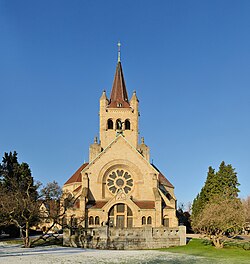
Basel is governed by an executive body known as the Regierungsrat (consisting of 7 members) and a parliament called the Grosser Rat (consisting of 100 members). The city is organized into 19 distinct quarters, ranging from the historic Altstadt to industrial and residential zones like Klybeck and Gundeldingen.
The city maintains strong international ties, with sister city relationships including Shanghai, Seoul, Miami Beach, and Abidjan, as well as a long-standing partnership with Rotterdam.
Economy and Infrastructure
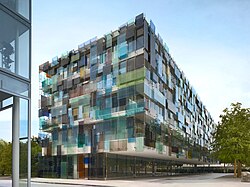
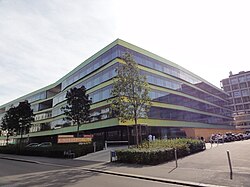
Basel is a powerhouse of the Swiss economy, driven largely by the chemical and pharmaceutical industries. The presence of the Novartis Campus and the Roche Tower underscores the city's role as a global hub for life sciences.
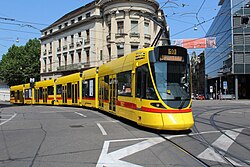
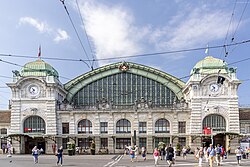
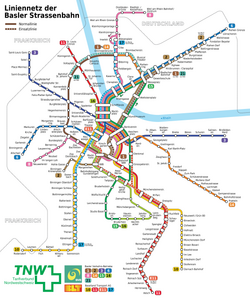
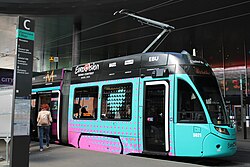
Beyond industry, banking is a cornerstone of the local economy, and the city is a premier destination for trade fairs. Its infrastructure is highly efficient, featuring a comprehensive tram network and the Basel SBB station, which connects the city to the rest of Europe.
Culture, Art, and Education
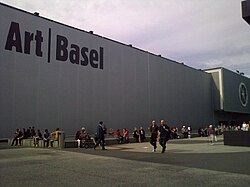
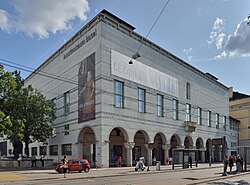
Basel is widely regarded as the cultural capital of Switzerland. It hosts Art Basel, one of the world's most prestigious art fairs, and houses the Kunstmuseum Basel, the oldest public art museum in Europe.
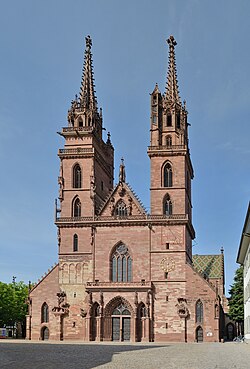
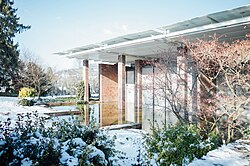
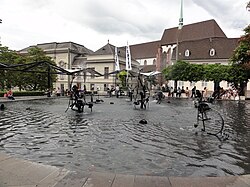
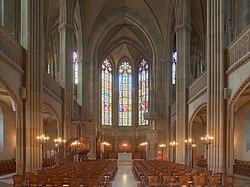
The city's architectural landscape is a mix of the ancient and the avant-garde, from the Basel Minster and St. Paul's Church to the modern Fondation Beyeler designed by Renzo Piano.
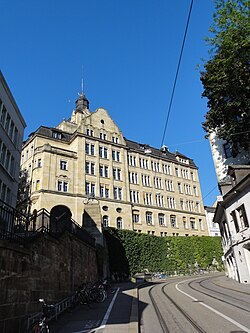
Education remains a priority, with the University of Basel and various specialized institutions like the Gymnasium Leonhard continuing the city's tradition of academic excellence.
Summary of City Statistics
| Category | Detail |
|---|---|
| Total Area | 22.75 km² |
| City Population | 177,595 (2024) |
| Metropolitan Population | 830,000 |
| Highest Point | 366 m (Wasserturm Bruderholz) |
| Lowest Point | 244.75 m (Rhine shore) |
| Main Language | German |
Frequently Asked Questions
What is the significance of the Roche Tower in Basel?
The Roche Tower is a landmark of modern architecture and the tallest building in Switzerland, symbolizing Basel's global leadership in the pharmaceutical industry.
Which is the oldest public art museum in Europe?
The Kunstmuseum Basel holds the distinction of being the oldest public museum of art in Europe.
How is the city of Basel divided geographically?
The city is split by the River Rhine into two main sections: Grossbasel (Greater Basel) on the left bank and Kleinbasel (Lesser Basel) on the right bank.
What are the primary economic drivers of Basel?
Basel's economy is primarily driven by the chemical and pharmaceutical sectors, banking, and the hosting of major international trade fairs.
When was the University of Basel founded?
The University of Basel was inaugurated in 1460, making it one of the oldest universities in the world.