Zurich: Switzerland's Global Hub of Finance, Culture, and Innovation
Zurich, known locally in Alemannic German as Züri, is the largest municipality in Switzerland and a world-renowned center for banking, education, and culture. Situated at the northern tip of Lake Zurich and split by the Limmat river, the city blends a rich medieval history with a cutting-edge modern infrastructure. From its role as a global financial powerhouse to its status as a sanctuary for academic research, Zurich represents the pinnacle of Swiss quality of life.
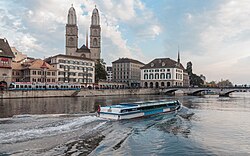
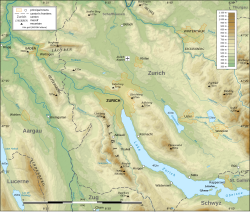
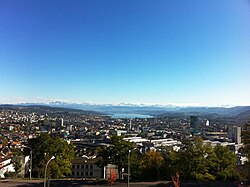
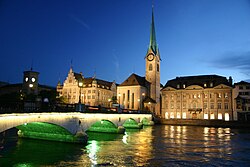
The city's geography is defined by its relationship with water and mountains. The Limmat flows out of Lake Zurich, creating a scenic corridor that defines the city center, while the Alps provide a dramatic backdrop to the horizon.
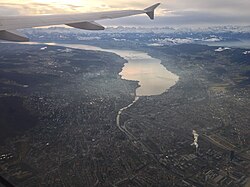
Key Facts

- Population: 436,551 (as of December 31, 2024).
- HDI: 0.993, reflecting a very high Human Development Index.
- Geography: Spans 87.93 km², with elevations ranging from 392 m at the Limmat to 871 m at Uetliberg.
- Governance: Led by a 9-member executive (Stadtrat) and a 125-member parliament (Gemeinderat).
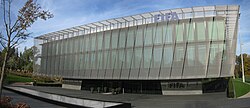
- Global Status: Home to the Swiss Stock Exchange and the FIFA Headquarters.
History and Evolution
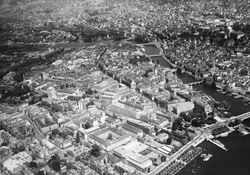
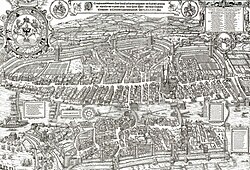
Zurich's origins stretch back to Roman times, with archaeological findings and early engravings depicting a settlement centered around the river and the Lindenhof hill.
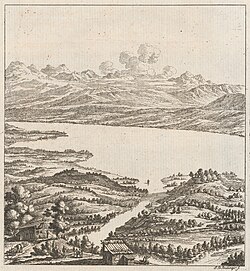
The city played a pivotal role in the Old Swiss Confederacy and underwent significant political transformations, eventually becoming the capital of the Canton of Zurich in 1812. Its history is marked by both conflict and growth, including the Old Zurich War in 1443 and the more recent political unrest known as the Züriputsch, which saw fighting on the Paradeplatz.
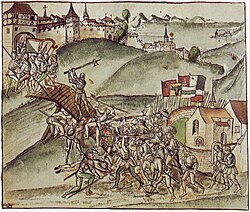
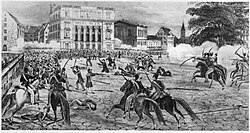
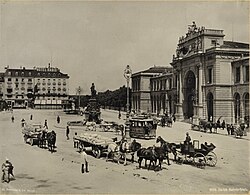
The city's urban development is well-documented, from the Murerplan of 1576 to the rapid expansion of the late 19th and early 20th centuries, which saw the population surge from roughly 41,000 in 1850 to over 168,000 by 1900.
Geography and Climate

Zurich is characterized by a diverse topography. The city stretches across the Limmat river, with the Uetliberg mountain offering the highest point in the municipality. The surrounding landscape is a mix of urban density and natural beauty, including the Felsenegg overlooking the lake.
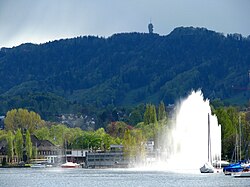
The climate is temperate, with an average annual precipitation of 1,107.9 mm. Summers are generally mild to warm, with record highs reaching 37.7°C, while winters can be cold, with record lows dropping to -24.2°C. The region is also influenced by the Föhn, a warm, dry wind descending from the Alps.
Below is a summary of the climate normals for the Fluntern area (elevation 556 m):
| Metric | Winter (Jan) | Spring (Apr) | Summer (Jul) | Autumn (Oct) | Annual Average |
|---|---|---|---|---|---|
| Mean Daily Max (°C) | 3.5 | 14.8 | 24.3 | 13.8 | 14.0 |
| Daily Mean (°C) | 0.9 | 9.6 | 19.0 | 10.0 | 9.8 |
| Mean Daily Min (°C) | -1.4 | 5.1 | 14.4 | 7.1 | 6.2 |
| Precipitation (mm) | 63.0 | 80.4 | 126.0 | 85.2 | 1,107.9 |
Demographics and Society
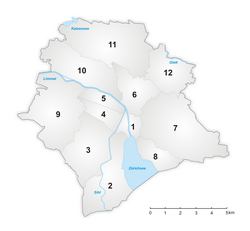
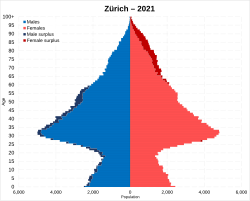
Zurich is a cosmopolitan city with a significant foreign-born population. Germany, Italy, and Spain are among the top countries of birth for residents. The city is religiously diverse, with Roman Catholics, Swiss Reformed, and unaffiliated individuals making up the largest groups, alongside growing Muslim and Jewish communities.
Economy, Education, and Infrastructure
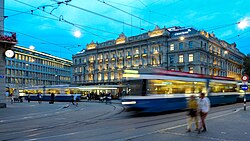
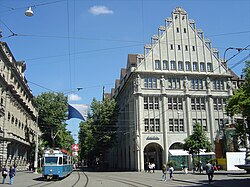
Zurich is a global economic powerhouse, driven by the financial sector and the Swiss Stock Exchange. The Paradeplatz serves as the heart of this financial district.
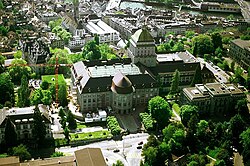
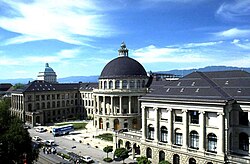
The city is also a premier destination for higher education. It hosts the ETH Zurich (Swiss Federal Institute of Technology) and the University of Zurich, both of which are world-leading research institutions.
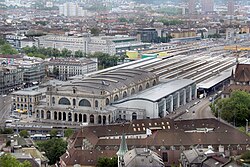
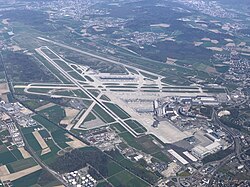
Transport infrastructure is highly efficient. Zurich Hauptbahnhof is Switzerland's busiest railway station, and the Zurich Airport in Kloten serves as a primary international gateway. Within the city, a robust network of public transport and a growing commitment to bicycle transport (via the Masterplan Velo) ensure high mobility.
Culture and Lifestyle
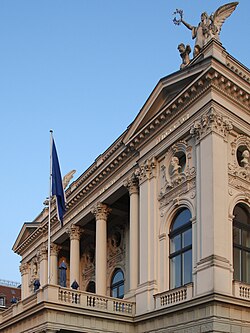
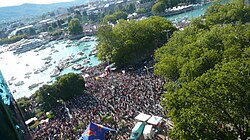
Cultural life in Zurich is vibrant, ranging from the high arts at the Opernhaus (Opera House) to massive public events like the Street Parade. The city is also a hub for cinema, hosting the annual Zurich Film Festival.
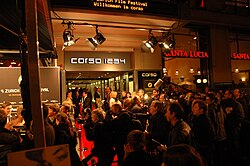
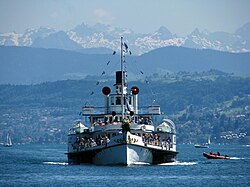
For leisure, residents and tourists enjoy the lake via paddle steamers or explore the city's numerous museums and parks. The city's skyline is increasingly modern, featuring structures like the 88-metre Sunrise Tower.
![The 88-metre (289 ft)[94] high Sunrise Tower (2005) was the first approved high-rise building in twenty years.](/images/e7/79/e779002c957073c3eb2cf145bde6e9ab73cf9c3cc2f9061082ea3a158eb8f0a7.jpg)
Frequently Asked Questions
What is the population of Zurich?
As of December 31, 2024, the total population of Zurich is 436,551, making it the most populous municipality in Switzerland.
Which educational institutions are most prominent in Zurich?
The city is home to two world-class institutions: the University of Zurich and the Swiss Federal Institute of Technology (ETH Zurich).
What is the significance of Paradeplatz?
Paradeplatz is considered the heart of Zurich's financial centre and is a focal point for the city's banking industry.
How is the climate in Zurich?
Zurich has a temperate climate with distinct seasons. It experiences mild to warm summers and cold winters, with an annual average precipitation of approximately 1,107.9 mm.
What are some of the major cultural events in the city?
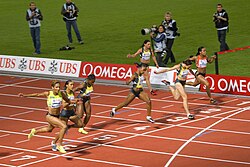
Major events include the Zurich Film Festival, the Street Parade, and the Zurich Weltklasse athletics meet.