Bangladesh Liberation War: The Struggle for Independence in 1971
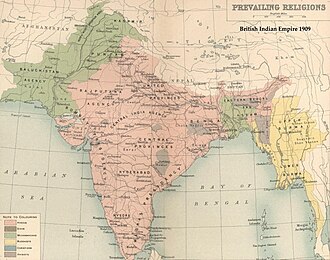
The Bangladesh Liberation War was a pivotal conflict that took place from March 26 to December 16, 1971. This struggle resulted in the secession of East Pakistan from Pakistan and the birth of the sovereign People's Republic of Bangladesh. The war was the culmination of decades of political, cultural, and economic tension between the two wings of Pakistan, eventually drawing in India and becoming a significant flashpoint during the Cold War.
At its core, the conflict was driven by a desire for self-determination among the Bengali population in the east, who felt marginalized by the ruling elite in West Pakistan.
Key Facts
- Duration: March 26 – December 16, 1971 (approximately 8.5 months).
- Outcome: Victory for Bangladeshi and Indian forces; independence of Bangladesh.
- Key Leaders: Sheikh Mujibur Rahman (Bangladesh), Indira Gandhi (India), and Yahya Khan (Pakistan).
- Primary Combatants: The Mukti Bahini (Bengali resistance) and Indian Armed Forces vs. the Pakistan Armed Forces.
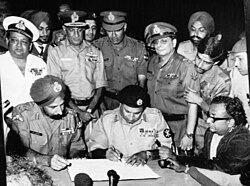
- Major Event: The surrender of Pakistani forces in Dhaka on December 16, 1971.
Roots of the Conflict
Language and Cultural Identity
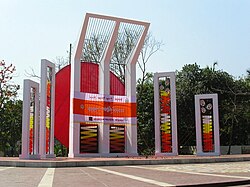
The seeds of independence were sown early through the Language Movement. The attempt by the central government in West Pakistan to impose Urdu as the sole official language sparked widespread protests among Bengalis, who fought to preserve their native Bengali language as a symbol of their cultural identity.
Economic and Political Disparities
Significant economic inequality fueled resentment. Between 1950 and 1970, spending on West Pakistan vastly outweighed spending on East Pakistan. In the period from 1955 to 1960, for example, East Pakistan received only 31.7% of the spending allocated to the West.
| Period | West Pakistan Spending (Millions PKR) | East Pakistan Spending (Millions PKR) | East as % of West |
|---|---|---|---|
| 1950–55 | 11,290 | 5,240 | 46.4% |
| 1955–60 | 16,550 | 5,240 | 31.7% |
| 1960–65 | 33,550 | 14,040 | 41.8% |
| 1965–70 | 51,950 | 21,410 | 41.2% |
| Total | 113,340 | 45,930 | 40.5% |
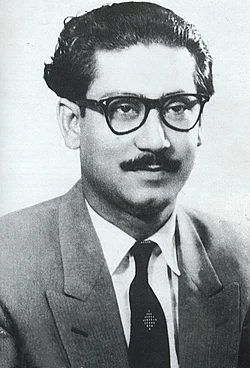
Political frustration peaked following the 1970 general elections and the government's perceived indifference toward the devastating 1970 cyclone. Sheikh Mujibur Rahman emerged as the primary leader of the Bengali people, advocating for autonomy.
The Outbreak of War
Operation Searchlight
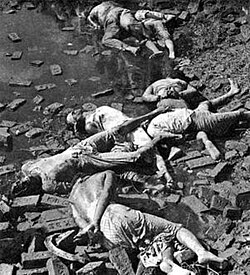
On March 25, 1971, the Pakistani military launched Operation Searchlight, a violent crackdown intended to crush the Bengali nationalist movement. This operation targeted intellectuals, students, and political activists, leading to widespread atrocities.
The Resistance and the Mukti Bahini
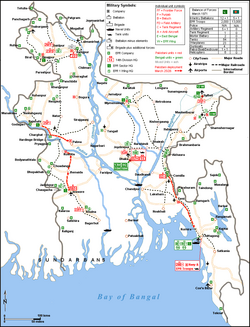
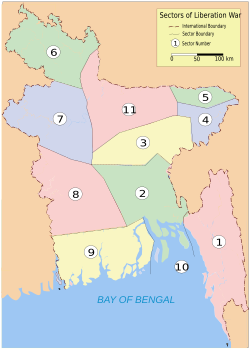
Following the declaration of independence on March 26, the Mukti Bahini (People's Army) was formed. This guerrilla force, consisting of Bengali soldiers and civilians, engaged in asymmetric warfare against the Pakistani military across eleven strategic sectors.
International Involvement and Escalation
The Role of India
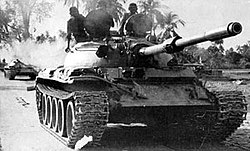
India provided critical support to the Mukti Bahini and hosted millions of refugees fleeing the violence. On December 3, 1971, India formally entered the war, launching a full-scale military offensive on both the Eastern and Western fronts.
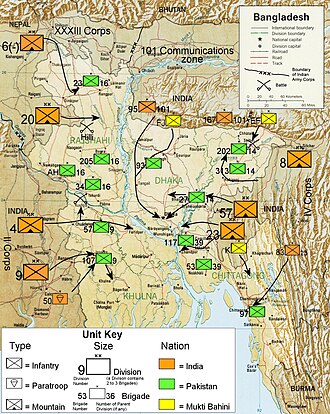
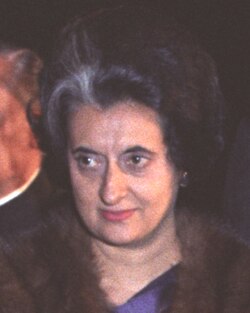
Under the leadership of Prime Minister Indira Gandhi, Indian forces coordinated with the Mukti Bahini to rapidly advance toward Dhaka.
Global Reactions
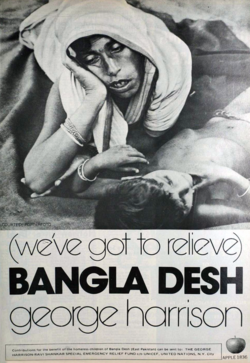
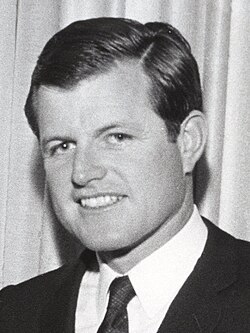
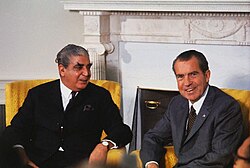
The conflict drew international attention. Former Beatle George Harrison released the single "Bangla Desh" in July 1971 to raise funds for refugees. Politically, the world was divided; while the US Nixon administration maintained ties with the Pakistani junta, others, such as Senator Ted Kennedy and French minister André Malraux, expressed support for Bangladeshi independence.
![Former French minister André Malraux vowed to fight alongside the Mukti Bahini in the Liberation War.[146][147]](/images/22/3f/223f3503d4e3340af0759f48ec6092089b869904e28c9dc7c947008819483bf7.jpg)
Surrender and Aftermath
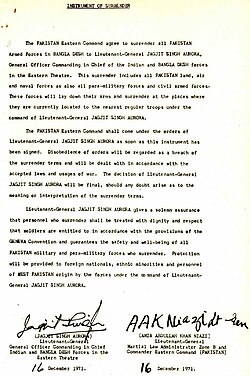
The war concluded on December 16, 1971, when Lieutenant General A. A. K. Niazi signed the Instrument of Surrender in Dhaka, surrendering to Lieutenant General Jagjit Singh Aurora of the Indian Army. This marked the official end of the conflict and the establishment of Bangladesh.
The Human Cost
The victory came at a staggering cost. The war was marked by severe atrocities, including the targeted killing of intellectuals just before the surrender to cripple the new nation's leadership.
Frequently Asked Questions
When did the Bangladesh Liberation War take place?
The war lasted from March 26 to December 16, 1971.
What was the Mukti Bahini?
The Mukti Bahini was the Bengali resistance force, composed of both regular soldiers and civilian volunteers, that fought against the Pakistani military.
Why did India intervene in the conflict?
India intervened to support the independence movement, manage the crisis of millions of refugees entering its borders, and secure its strategic interests in the region.
Who were the primary political leaders during the war?
The key leaders included Sheikh Mujibur Rahman for Bangladesh, Indira Gandhi for India, and Yahya Khan for Pakistan.
What was the result of the war?
The war resulted in a Bangladeshi-Indian victory, the surrender of approximately 90,000 Pakistani personnel, and the independence of Bangladesh from Pakistan.