Kashmir Conflict: History, Territorial Disputes, and Geopolitical Impact
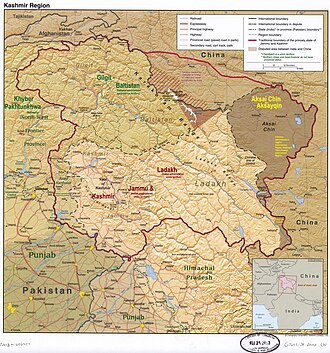
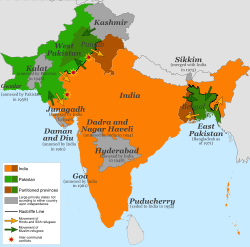
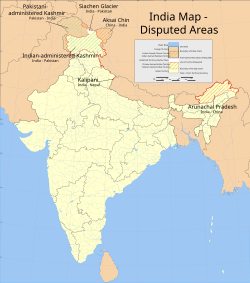
The Kashmir conflict is a long-standing territorial dispute centered on the region of Kashmir. While primarily a struggle between India and Pakistan, the conflict also involves China in the northeastern sectors. This geopolitical tension began following the 1947 partition of British India, as both newly formed nations claimed the former princely state of Jammu and Kashmir.
Over the decades, this dispute has escalated into three major wars and numerous armed skirmishes, fundamentally shaping the security landscape of South Asia.
Key Facts
- Territorial Control: India controls approximately 55% of the land area; Pakistan controls about 30%; China controls the remaining 15%.
- Population Distribution: India administers roughly 70% of the region's population.
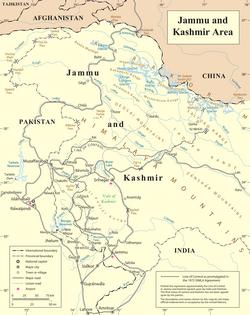
- Major Boundaries: The Line of Control (LoC) serves as the military control line between Indian and Pakistani administered territories.
- Core Legal Document: The 1947 Instrument of Accession is the basis for India's claim to the entire state.
- Chinese Involvement: China controls the Aksai Chin region and the Trans-Karakoram Tract.
The Origins of the Conflict (1947–1948)
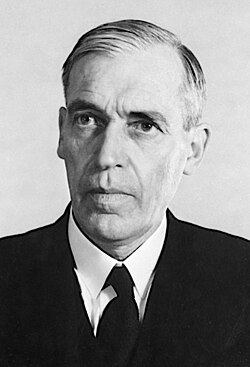
The conflict was triggered by the 1947 partition of India. Following a rebellion in the western districts of the state, Pakistani tribal militias invaded Kashmir. In response, the Hindu ruler of Jammu and Kashmir, Maharaja Hari Singh, signed the Instrument of Accession, formally joining the Union of India.
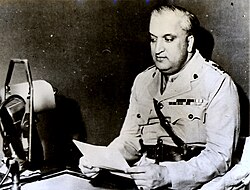
This move led to the first Indo-Pakistani War. The conflict eventually ended with a United Nations-mediated ceasefire, establishing a boundary that would later be formalized as the Line of Control.
Escalation and International Involvement
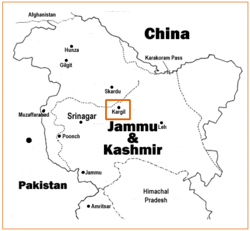
The dispute expanded in complexity as other powers and internal pressures mounted. In 1962, China entered the conflict by invading and fighting a war with India along the disputed border, specifically in Indian-administered Ladakh.
Further hostilities broke out in 1965 when Pakistan attempted to infiltrate Indian-administered Kashmir to spark an insurgency. Following the 1971 war, the Simla Agreement was signed, which formally established the Line of Control (LoC) between the two nations.
The status quo was again challenged in 1999 during the Kargil War, though the conflict ended without altering the existing territorial boundaries.
Internal Insurgency and Civil Unrest
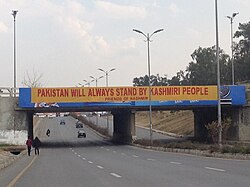
In 1989, an armed insurgency erupted in the Kashmir Valley against Indian rule, driven by political alienation and supported logistically by Pakistan. While the movement initially sought self-determination or independence, it was largely taken over by Pakistan-backed Jihadist groups aiming for a merger with Pakistan.
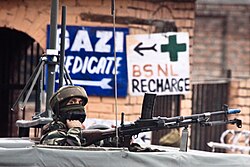
This period of militancy led to significant casualties and the exodus of Kashmiri Hindus (Kashmir Pandits) from the valley in the early 1990s. The Indian government responded with counterinsurgency operations and increased militarization.
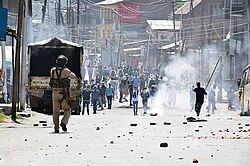
The 2010s saw continued civil unrest, characterized by violent clashes between local youths and security forces, particularly during the 2010 and 2016 unrests, and further tensions following the 2019 Pulwama attack.
Regional Administration and Demographics
The region is currently divided among three powers, each administering different sectors with varying demographic compositions.
| Administered By | Region | Approx. Population | Primary Demographics |
|---|---|---|---|
| India | Kashmir Valley | ~4 million | 95% Muslim, 4% Hindu |
| India | Jammu | ~3 million | 66% Hindu, 30% Muslim |
| India | Ladakh | ~0.25 million | 50% Buddhist, 46% Muslim |
| Pakistan | Gilgit-Baltistan | ~1 million | 99% Muslim |
| Pakistan | Azad Kashmir | ~2.6 million | 100% Muslim |
| China | Aksai Chin / Shaksgam | Uninhabited | N/A |
Frequently Asked Questions
What is the Line of Control (LoC)?
The Line of Control is the military control line that separates the Indian-administered and Pakistani-administered parts of the former princely state of Jammu and Kashmir, formally established via the Simla Agreement.
Why does India claim the entire region?
India bases its claim on the Instrument of Accession signed in October 1947 by Maharaja Hari Singh, the ruler of the state at the time of partition.
What is Pakistan's primary argument for claiming Kashmir?
Pakistan bases its claim largely on the region's Muslim-majority population and the principle of self-determination.
Which parts of Kashmir does China control?
China controls the largely uninhabited Aksai Chin region, the Trans-Karakoram Tract, and a portion of the Demchok sector.
What happened during the 1989 insurgency?
An armed insurgency began in the Kashmir Valley against Indian rule, supported by Pakistan. This led to decades of militancy, the exodus of Kashmiri Hindus, and increased militarization of the region by the Indian government.