Baltic States: History, Geopolitics, and Economic Evolution
The Baltic states—comprising Estonia, Latvia, and Lithuania—form a distinct geopolitical grouping in Northern Europe. While sharing a geographic proximity to the Baltic Sea, these nations possess unique linguistic and cultural identities, having navigated a turbulent history of foreign rule, hard-won independence, and eventual integration into the Western political and economic sphere.
From the ancient Baltic tribes to their current status as high-income members of the European Union, the trajectory of these three nations is a testament to resilience and strategic adaptation.
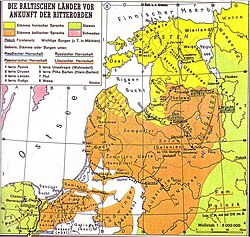
Key Facts
- Composition: Three sovereign nations: Estonia, Latvia, and Lithuania.
- Political Integration: All three are members of the European Union (EU) and NATO as of 2004.
- Economic Status: Classified as high-income economies and members of the Eurozone and OECD.
- Historical Turning Point: Restored independence in 1991 following the dissolution of the Soviet Union.
- Demographics: Total combined population of approximately 6.07 million people.
Historical Foundations and Foreign Rule
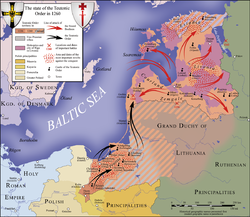
Before the 20th century, the region was a crossroads of empires. The outcome of the Great Northern War placed Estonia and much of Latvia under the Russian Empire. Similarly, the partitions of the Polish–Lithuanian Commonwealth between 1772 and 1795 ended Lithuania's independence.
By the 19th century, all three lands were incorporated into the Russian Empire, though their experiences differed. Estonia and Latvia maintained some autonomy through influential German landowners, while Lithuania faced aggressive Russification—the policy of imposing Russian language and culture—following repeated uprisings.
The First Wave of Independence (1918–1940)
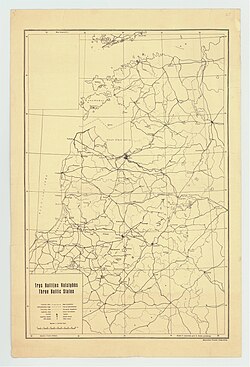
The end of World War I provided a window for sovereignty. Estonia declared independence in February 1918, followed by Lithuania and Latvia. Each nation fought successful wars of independence against Soviet Russia, securing their status as sovereign states by 1920.
The Era of Occupation (1940–1991)
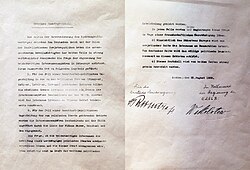
The sovereignty of the Baltic states was violently interrupted during World War II. In 1940, the Soviet Union invaded and annexed the region, a move facilitated by the Molotov–Ribbentrop Pact, which divided Eastern Europe into German and Soviet spheres of influence.
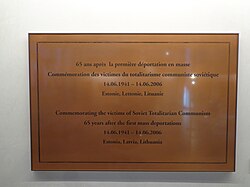
This period was marked by extreme repression. Between 1940 and 1953, the Stalinist regime deported over 200,000 people to remote areas of the USSR, and at least 75,000 were sent to Gulags (forced labor camps). In total, roughly 10% of the adult population was deported or imprisoned.
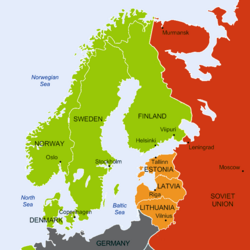
The region suffered further instability when Nazi Germany occupied the territories in 1941, before the Soviet Union re-established control in 1944. For the next several decades, the Baltic states remained isolated from the outside world under Soviet totalitarian rule.
The Singing Revolution and Restoration
In the late 1980s, a non-violent campaign of civil resistance known as the Singing Revolution emerged. A defining moment occurred on August 23, 1989, with the Baltic Way, where approximately two million people formed a human chain stretching 600 km from Tallinn to Vilnius.
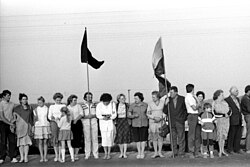
This mass demonstration signaled that the departure of the Baltic republics was inevitable. The Soviet Union officially recognized their independence on September 6, 1991. Russian military forces were gradually withdrawn, with the final radar station, Skrunda-1, closing in August 1998.
Modern Integration and Regional Cooperation
Following 1991, the Baltic states pivoted toward Western Europe. This strategic shift culminated on March 29, 2004, when all three joined NATO, and on May 1, 2004, when they entered the European Union.
To maintain stability and influence, the nations established several cooperative bodies:
- The Baltic Assembly (1991): Facilitates inter-parliamentary cooperation.
- The Baltic Council of Ministers (1994): Coordinates intergovernmental policy.
- Council of the Baltic Sea States (1992): Extends cooperation to Nordic neighbors.
Economic Performance and Energy Security
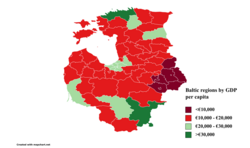
Today, the Baltic states are high-income economies with very high Human Development Index (HDI) scores. All three have adopted the euro: Estonia in 2011, Latvia in 2014, and Lithuania in 2015.
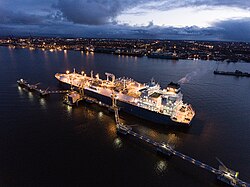
Energy security remains a critical priority. To reduce dependence on external sources and meet EU climate goals, the region has invested in renewables and infrastructure, such as the Klaipėda LNG terminal, which can supply gas to all three countries.
Cultural and Geographic Profile
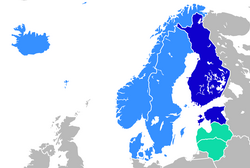
The region is characterized by a mix of linguistic branches. While Estonia shares Finnic language roots with Finland, Latvia and Lithuania speak Baltic languages.
Ethnic compositions vary across the states. Latvia has the highest minority population at 33%, followed by Estonia at 27.6% and Lithuania at 12.2%, with Russians forming the largest minority group in Estonia and Latvia.
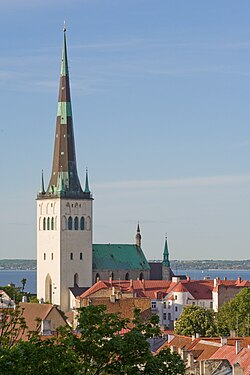
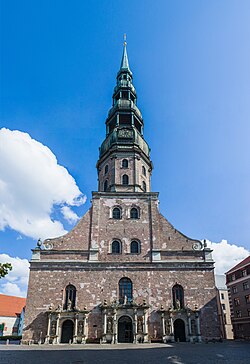
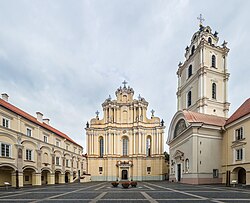
Architectural landmarks reflect the region's diverse history, from the Lutheran churches of Tallinn and Riga to the Catholic traditions of Vilnius.
| Metric | Estonia | Latvia | Lithuania | Total |
|---|---|---|---|---|
| Capital | Tallinn | Riga | Vilnius | N/A |
| Population (2025) | 1,362,954 | 1,823,500 | 2,886,000 | 6,072,454 |
| Area (km²) | 45,339 | 64,589 | 65,300 | 175,228 |
| GDP Nominal (2024) | €41.62 Billion | €43.03 Billion | €84.06 Billion | €168.08 Billion |
| GDP Per Capita (2024) | €30,380 | €23,410 | €29,100 | N/A |
| Military Budget (2026) | €2.4 Billion | €2.16 Billion | €4.79 Billion | €9.35 Billion |
| HDI (2023) | 0.905 | 0.889 | 0.895 | Very High |
Frequently Asked Questions
When did the Baltic states regain their independence?
The Baltic states restored their independence in 1991 following the collapse of the Soviet Union, with official recognition occurring on September 6, 1991.
What was the Baltic Way?
The Baltic Way was a massive anti-Soviet demonstration on August 23, 1989, consisting of a human chain of approximately two million people stretching 600 km from Tallinn, Estonia, to Vilnius, Lithuania.
Are the Baltic states part of the Eurozone?
Yes, all three countries use the euro. Estonia adopted the currency in 2011, Latvia in 2014, and Lithuania in 2015.
How do the languages of the Baltic states differ?
Estonia speaks a Finnic language (related to Finnish), while Latvia and Lithuania speak Baltic languages, which are a separate branch of the Indo-European family.
What is the significance of the Molotov–Ribbentrop Pact?
The Molotov–Ribbentrop Pact was a 1939 agreement between Nazi Germany and the Soviet Union that divided the Baltic states into their respective "spheres of influence," leading to the subsequent Soviet occupation in 1940.