Bad Ischl: A Journey Through Imperial History and Heritage
Nestled in the heart of the Salzkammergut region, Bad Ischl is a town where prehistoric roots meet the opulence of the Habsburg Empire. From its early days as a salt-producing settlement to its transformation into a world-renowned spa destination, the town has served as a silent witness to some of Europe's most pivotal historical moments.
Early Settlements and the Salt Trade
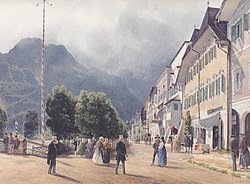
Human presence in the Bad Ischl area stretches back to the prehistoric Hallstatt culture. While ancient roots run deep, the first documentary evidence of the settlement appears in a deed from 1262, where the town was referred to as Iselen. The region's economic foundation was built upon "white gold"—salt.
In 1419, Archduke Albert V of Austria established the local seat of the Salzkammer (the Salt Chamber) at Wildenstein Castle. The town's growing importance was recognized in 1466 when Emperor Frederick III granted Ischl the privileges of a market town. This industrial growth culminated in the opening of the first salt mine in 1563, followed by the establishment of a Saline (a salt evaporation pond) in 1571.
The Rise of a Fashionable Spa Resort
By the early 19th century, the medical popularity of brine (concentrated salt water) surged across Continental Europe. Bad Ischl capitalized on this trend, evolving into a sophisticated spa resort that attracted the elite of the era. Notable guests included Prince Klemens Wenzel von Metternich, Archduke Rudolf of Austria, and Archduke Franz Karl of Austria.
The town's hospitality infrastructure expanded rapidly to meet this demand, highlighted by the opening of the Hotel Post in 1828, the first hotel of its kind in the entire Salzkammergut area.
The Imperial Era and the Habsburgs
Bad Ischl's prestige reached its zenith in 1849 when Emperor Franz Joseph I of Austria selected the town as his summer residence. The town became inextricably linked with the romantic and political life of the imperial family.
On August 19, 1853, the engagement of Franz Joseph and Elisabeth of Bavaria, affectionately known as Sisi, took place at the Seeauerhaus (Esplanade No. 10). Today, this historic site houses the Museum der Stadt Bad Ischl.
The Kaiservilla: Heaven on Earth
In 1854, Archduchess Sophie presented her son, the Emperor, with the Kaiservilla (Imperial Villa) as a wedding gift. Franz Joseph cherished the estate, describing it as "Heaven on Earth." The villa served as the family's primary summer retreat, and the Emperor even provided a nearby mansion for his mistress, Katharina Schratt, connected by a discreet hidden footpath.
However, the Kaiservilla also served as the backdrop for a global tragedy. On July 28, 1914, Emperor Franz Joseph signed the declaration of war against the Kingdom of Serbia, an act that triggered the start of World War I. The Emperor departed Bad Ischl the following day and never returned. To this day, the Habsburg-Lorraine family retains ownership of the villa, though the grounds and portions of the residence are open to the public.
Post-War Recovery and the DP Camp
Following the defeat of Nazi Germany in 1945, Bad Ischl played a critical role in the humanitarian effort to support survivors of the Holocaust and Nazi concentration camps from Eastern Europe. The town hosted a displaced persons (DP) camp, primarily for Jewish survivors from Poland and neighboring countries.
From 1945 until 1952, the camp provided essential lodging, food, medical care, and administrative support to those seeking permanent homes. Many of these residents eventually emigrated to the United States, Israel, or Canada.
Key Facts
- First Mention: Documented as "Iselen" in a 1262 deed.
- Salt Industry: First mine opened in 1563; first Saline (evaporation pond) opened in 1571.
- Imperial Connection: Became the summer residence of Emperor Franz Joseph I in 1849.
- WWI Trigger: The declaration of war against Serbia was signed at the Kaiservilla on July 28, 1914.
- Humanitarian Role: Hosted a DP camp for Holocaust survivors from 1945 to 1952.
| Year/Period | Event | Significance |
|---|---|---|
| 1262 | First documentary evidence | Town appears as "Iselen" |
| 1466 | Market town status | Granted privileges by Emperor Frederick III |
| 1828 | Hotel Post opens | First hotel in the Salzkammergut area |
| 1853 | Engagement of Franz Joseph and Sisi | Occurred at Seeauerhaus |
| 1914 | WWI Declaration of War | Signed at the Kaiservilla |
| 1945–1952 | DP Camp Operation | Support for Holocaust survivors |
Frequently Asked Questions
What is the significance of the Kaiservilla?
The Kaiservilla was the summer residence of Emperor Franz Joseph I, gifted to him by his mother in 1854. It is historically significant as the place where the Emperor signed the declaration of war against Serbia in 1914, marking the start of World War I.
Why was Bad Ischl important for the salt industry?
The town was a key site for the Salzkammer (Salt Chamber) and established its own salt mine in 1563 and a salt evaporation pond (Saline) in 1571, making it a center for salt production.
Who was Sisi and what is her connection to Bad Ischl?
Elisabeth of Bavaria, known as Sisi, was the wife of Emperor Franz Joseph I. Their engagement took place in Bad Ischl on August 19, 1853, at the Seeauerhaus.
What happened in Bad Ischl after World War II?
Between 1945 and 1952, Bad Ischl hosted a displaced persons (DP) camp that provided food, medical care, and administrative aid to Holocaust survivors, primarily Jews from Poland and Eastern Europe, before they emigrated to countries like the US, Israel, and Canada.
When did Bad Ischl become a spa resort?
Bad Ischl became a fashionable spa resort in the early 19th century due to the medical popularity of brine in Continental Europe, attracting high-profile guests and leading to the opening of the Hotel Post in 1828.