Understanding Bacteriology: The Science of Bacteria
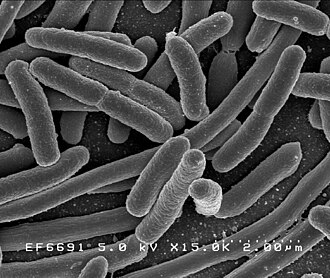
While often grouped under the broader umbrella of microbiology, bacteriology is a distinct and specialized branch of biology. It is the dedicated study of bacteria, focusing on their morphology (shape and structure), ecology, genetics, and biochemistry. By identifying, classifying, and characterizing different bacterial species, bacteriologists unlock secrets that affect everything from human health to the stability of our global ecosystems.
Because the methods used to study bacteria often overlap with the study of other microorganisms—such as fungi, protozoa, and viruses—the terms are sometimes used interchangeably. However, the specific scientific rigor applied to bacterial life makes bacteriology a unique field of expertise.
Key Facts
- Core Focus: The study of bacterial morphology, genetics, biochemistry, and ecology.
- Historical Milestone: Bacteria were first observed by Antonie van Leeuwenhoek in 1676.
- Medical Impact: Bacteriology led to the development of the germ theory and life-saving vaccines like those for diphtheria and tetanus.
- Modern Classification: Bacteria are defined as prokaryotic cellular entities, meaning they lack a nucleus.
- Evolutionary Discovery: In 1977, Carl Woese discovered that Archaea represent a separate evolutionary line from bacteria.
The Role of a Bacteriologist
A bacteriologist is a trained professional—often a microbiologist—who specializes in the investigation of bacteria. Their work is diverse, ranging from fundamental laboratory research to critical clinical applications. They study how bacteria interact with their environments and how their genetic makeup influences their behavior.
In professional settings, bacteriologists serve in various capacities:
- Medical and Veterinary Scientists: Investigating pathogens to diagnose diseases in humans and animals.
- Diagnostic Technicians: Working in hospitals, clinics, and blood banks to perform essential testing.
- Public Health Researchers: Developing vaccines and monitoring disease outbreaks to protect populations.
- Biotechnologists: Utilizing bacterial properties for industrial and scientific advancements.
Culturing Bacteria in the Laboratory
The primary method used by bacteriologists to study these organisms is culturing, which involves growing bacteria in a controlled environment. To achieve this, scientists use different types of media:
Solid and Liquid Media
Liquid culture media are used for certain types of growth, while solid culture media—most commonly nutrient agar in a petri dish—allow scientists to isolate individual colonies. The composition of the agar is carefully tailored to the specific needs of the bacteria being studied.
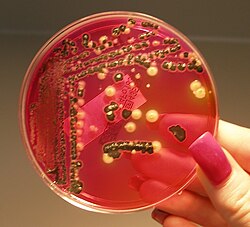
For example, the bacterium Haemophilus influenzae requires specific nutrients like hemin and nicotinamide adenine dinucleotide to grow; therefore, blood (typically from a horse or sheep) is added to the medium. Similarly, when studying intestinal bacteria like Salmonella, scientists use XLD agar, which contains ingredients such as deoxycholic acid to support their growth.
![An agar plate with bacteria spread by the streak plate method.[4]](/images/ad/23/ad23579c6ef316fc5f4d90ac21f307c1388381978ea05c7eba13e1d11c1b3379.jpg)
Isolation is often achieved through techniques like the streak plate method, which spreads bacteria across the surface of the agar to produce distinct, individual colonies for study.
Specific media are also used to identify certain species. For instance, Salmonella can be identified when grown on specialized XLD agar.
A Brief History of Bacteriology
The journey to understanding the microscopic world began in the 17th century and evolved through centuries of groundbreaking discovery.
The First Observations
In 1676, Dutch microscopist Antonie van Leeuwenhoek became the first person to observe bacteria. Using a single-lens microscope of his own design, he described these tiny organisms as "animalcules." While he did not yet realize bacteria were a distinct category from protists or microscopic animals, his letters to the Royal Society of London laid the foundation for microbiology.

The Rise of Germ Theory
The 19th century marked a turning point as physicians sought to understand how diseases spread in hospitals. Louis Pasteur played a pivotal role by demonstrating that microorganisms cause fermentation and disproving the theory of "spontaneous generation." Pasteur, alongside Robert Koch, became a leading advocate for the germ theory of disease—the idea that specific microscopic organisms are the cause of specific illnesses.
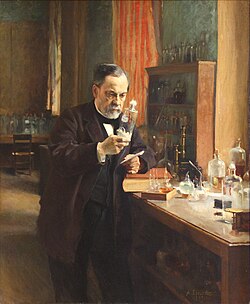
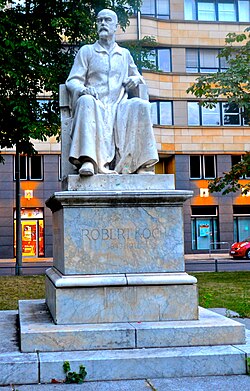
Robert Koch furthered this field by establishing Koch's postulates, a set of criteria used to prove that a particular bacterium causes a specific disease. His work on anthrax, cholera, and tuberculosis earned him a Nobel Prize in 1905 and revolutionized medical science.
Sanitation and Antibiotics
The link between bacteria and disease led to critical changes in medical hygiene. While Ignaz Semmelweis early on suggested the importance of sanitary techniques, his ideas were initially rejected. It was not until Joseph Lister published work supporting hand washing and sanitation, backed by germ theory, that medical practices began to shift. Interestingly, while doctors began sanitizing hands in the 1870s, mandatory handwashing did not become common practice until the 1980s.
The 20th century brought the era of treatment. In 1910, Paul Ehrlich developed the first antibiotic by modifying dyes to selectively kill Treponema pallidum (the bacterium that causes syphilis). His work pioneered the use of stains to identify bacteria, forming the basis for modern techniques like the Gram stain.
Evolution of Bacterial Classification
As technology improved, so did our understanding of what a bacterium actually is. Early scientists like Ferdinand Cohn were among the first to classify bacteria by their cell shapes, though he initially placed them in the plant kingdom.
The development of the transmission electron microscope allowed scientists to see internal cell structures more clearly. This led to a more precise definition of bacteria as prokaryotes—cells that lack a nucleus and internal membranes. In 1977, Carl Woese revolutionized the field again by using 16S ribosomal RNA sequencing to show that Archaea are a separate evolutionary lineage, distinct from bacteria, leading to the modern three-domain system of life.
Summary of Key Scientific Milestones
| Era/Year | Scientist/Event | Contribution |
|---|---|---|
| 1676 | Antonie van Leeuwenhoek | First observation of "animalcules" (bacteria). |
| 1859 | Louis Pasteur | Demonstrated microorganisms cause fermentation. |
| 1884 | Robert Koch | Rediscovered cholera bacterium; established Koch's postulates. |
| 1910 | Paul Ehrlich | Developed the first antibiotic. |
| 1977 | Carl Woese | Identified Archaea as a separate evolutionary domain. |
Frequently Asked Questions
What is the difference between bacteriology and microbiology?
Microbiology is the broad study of all microscopic organisms, including fungi, protozoa, and viruses. Bacteriology is a specific sub-discipline of microbiology that focuses exclusively on bacteria.
What are Koch's postulates?
Koch's postulates are a set of scientific criteria used to establish a causal relationship between a specific microorganism and a specific disease.
What does it mean that bacteria are prokaryotic?
Being prokaryotic means that the bacterial cells lack a defined nucleus and other membrane-bound internal organelles, distinguishing them from eukaryotic cells (like those found in humans, plants, and fungi).
How do scientists grow bacteria in a lab?
Scientists use culture media, which can be liquid or solid. Solid media, such as nutrient agar, are often used in petri dishes to allow bacteria to grow into visible, isolated colonies.
Why is handwashing important in bacteriology?
The study of bacteria and the germ theory proved that microorganisms are responsible for many diseases. This realization led to the development of sanitation and antiseptic practices to prevent the spread of pathogens.