Exploring the Invisible World: An Introduction to Microbiology
The word microbiology is derived from the Ancient Greek terms mikros (small), bios (life), and logia (study of). At its core, it is the scientific study of microorganisms—life forms that are so small they often require specialized tools to observe. These organisms can be unicellular (consisting of a single cell), multicellular (composed of complex cell structures), or acellular (lacking cells entirely).
Because the microbial world is so diverse, the field is divided into several specialized sub-disciplines. These include virology (the study of viruses), bacteriology (the study of bacteria), mycology (the study of fungi), parasitology (the study of parasites), immunology (the study of the immune system), and protistology (the study of protists).
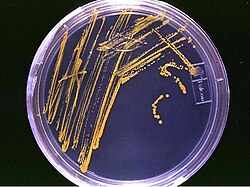
The Nature of Microorganisms
Microbiologists categorize the living organisms in this field into two primary groups based on their cellular structure: prokaryotes and eukaryotes.
- Prokaryotes: These organisms lack membrane-bound organelles. This group includes Bacteria and Archaea.
- Eukaryotes: These organisms possess membrane-bound organelles and include fungi and protists.
While scientists traditionally identified microbes through culture (growing them in a lab), staining, and microscopy, modern technology has expanded our reach. Currently, less than 1% of microorganisms found in common environments can be grown in isolation using traditional culture methods. To overcome this, microbiologists now use biotechnology and molecular biology tools, such as DNA sequence-based identification (for example, using the 16S rRNA gene sequence to identify bacteria).
The Complexity of Viruses and Prions
The classification of viruses remains a subject of debate; they are variously viewed as either very simple microorganisms or highly complex molecules. Similarly, prions—which are infectious proteins—have been studied by virologists. While prions are not considered microorganisms, they were originally investigated by virologists because their clinical effects were initially thought to be caused by chronic viral infections.
Key Facts
- Definition: Microbiology is the study of unicellular, multicellular, or acellular microscopic organisms.
- Classification: Microbes are divided into prokaryotes (Bacteria and Archaea) and eukaryotes (fungi and protists).
- Identification: Modern science uses DNA sequencing to identify the 99% of microbes that cannot be grown in a lab.
- Core Branches: Major fields include bacteriology, virology, mycology, and immunology.
- Industrial Use: Microbes are used to produce amino acids, antibiotics, and vitamins.
A Journey Through History
The concept of "unseen life" existed long before the technology to see it was invented. As early as the 6th century BCE, Jainism in India postulated the existence of microscopic creatures, known as nigodas, which were said to inhabit earth, water, air, and fire. In ancient Rome, Marcus Terentius Varro warned that swamps contained minute, invisible creatures that could enter the body through the mouth and nose to cause disease.
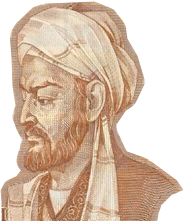
Persian scientists also contributed to these early hypotheses. Avicenna discussed these concepts in The Canon of Medicine, while Ibn Zuhr (Avenzoar) discovered scabies mites, and Al-Razi provided early descriptions of smallpox. In the 10th century, Taoist texts in China also described "micro organic worms" that resembled vegetable seeds.
The Era of Discovery
The transition from hypothesis to observation began in the 17th century. While Robert Hooke made the first recorded microscopic observation of mould fruiting bodies in 1665, the Jesuit priest Athanasius Kircher likely observed microbes in milk and putrid material as early as 1658. However, Antonie van Leeuwenhoek is widely considered a father of microbiology due to his work in the 1670s, using high-quality single-lens microscopes of his own design to observe bacteria.

The Birth of Modern Bacteriology
The 19th century marked the formal establishment of microbiology as a rigorous biological science. Ferdinand Cohn laid the groundwork for bacteriology by classifying bacteria and discovering endospores (highly resistant, dormant structures). During this same era, Louis Pasteur famously disproved the theory of spontaneous generation—the idea that life could arise from non-living matter.
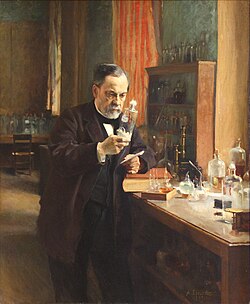
Pasteur’s contributions were vast, ranging from the development of pasteurization (a method of food preservation) to creating vaccines for anthrax, fowl cholera, and rabies. His contemporary, Robert Koch, became a founder of medical microbiology. Koch proved the germ theory of disease—the principle that specific diseases are caused by specific pathogens—and developed Koch's postulates, a set of criteria used to establish a causative link between a microbe and a disease.
![Statue of Robert Koch, one of the founders of microbiology,[13] in Berlin](/images/0c/8e/0c8e7f96a5422b8dfa44fb97e9f453f10883e466e46f7e47d0bdf541ef8c085e.jpg)
Expanding the Scope of Microbiology
While Pasteur and Koch focused on medically relevant microbes, other scientists revealed the true diversity of the microbial world. Martinus Beijerinck discovered viruses and developed enrichment culture techniques, which allowed scientists to grow microbes with diverse physiological needs. Sergei Winogradsky discovered chemolithotrophy (how some organisms obtain energy from inorganic compounds) and identified the role of bacteria in nitrogen fixation and nitrification.
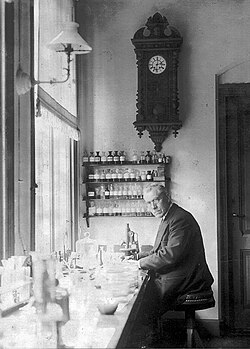
Practical Applications of Microbiology
Microbiology is not just a theoretical science; it has profound impacts on industry, medicine, and the environment.
Industrial and Medicinal Uses
Bacteria are essential for the mass production of metabolites. For example, Corynebacterium glutamicum is used to produce over two million tons of amino acids annually. Additionally, certain bacteria like Streptomyces are used to synthesize antibiotics.

Environmental and Human Health
Microorganisms play a critical role in bioremediation—the process of using microbes to degrade toxic waste in soil and water. Furthermore, the microbiome (the community of microbes living in or on a host) is vital to human health, aiding digestion and suppressing pathogens. This has led to the study of probiotics (beneficial bacteria) and prebiotics (substances that promote the growth of beneficial microbes).

| Scientist | Primary Contribution |
|---|---|
| Antonie van Leeuwenhoek | First detailed observation of bacteria using custom microscopes |
| Louis Pasteur | Disproved spontaneous generation; developed pasteurization and vaccines |
| Robert Koch | Established germ theory and Koch's postulates |
| Martinus Beijerinck | Discovered viruses and developed enrichment culture techniques |
| Sergei Winogradsky | Discovered chemolithotrophy and nitrogen-fixing bacteria |
Frequently Asked Questions
What is the difference between a prokaryote and a eukaryote?
Prokaryotes, such as bacteria, lack membrane-bound organelles within their cells. Eukaryotes, such as fungi and protists, possess these specialized internal structures.
Why can't all microbes be grown in a laboratory?
Current cultivation methods can only isolate and grow less than 1% of the microorganisms found in nature. To identify the remaining 99%, scientists must use molecular tools like DNA sequencing.
What is the role of microbes in the environment?
Microbes are essential for geochemical processes, such as nitrogen fixation, and are used in bioremediation to break down environmental pollutants and toxic waste.
How do microbes benefit human health?
Symbiotic microbial communities in the human microbiome aid in digestion, produce essential vitamins and amino acids, and help suppress harmful pathogenic microbes.
What is the difference between a probiotic and a prebiotic?
Probiotics are live bacteria that can provide health benefits to the digestive system, while prebiotics are substances consumed to encourage the growth of those beneficial microorganisms.